Repair or Replace? A Practical Guide for Hotel Lobby Leather Furniture
A lobby is the first thing a guest sees and the last thing a budget covers. The good news is that most lobby furniture is worth keeping.
Quick answer
Repair when the frame is sound and the material is still flexible, which describes most contract lobby furniture — it is built to a far higher standard than domestic furniture and the covering fails long before the structure does. Replace when the material has stiffened throughout, when the foam has collapsed, when the pieces no longer suit the brand direction, or when the frames themselves have failed. The decision is about structure and material condition, not about how tired the pieces look.
At a glance
| Check first | Frame and suspension — contract frames usually outlast coverings |
|---|---|
| Repair when | Material still flexes and the damage is localized |
| Replace when | Stiffened material, collapsed foam, or failed frames |
| Timing | Overnight and in zones, so the lobby never closes |
| Brand standards | Check what the flag requires before choosing either route |
Why lobby furniture is worth taking seriously
A hotel lobby does more work per square foot than any other space in the building, and almost all of it is impression.
A guest forms a view of the property in the first thirty seconds, mostly from what they can see while waiting to check in.
That view sets expectations for the room, the service and the value of the rate they are paying.
Lobby seating is a large part of what is visible, and it is at close range — guests sit in it, put hands on it, and look at it while they wait.
It also photographs. Lobby images appear in listings, reviews and social posts, and a cracked chair arm in the background of a guest photograph reaches far more people than the guests who saw it in person.
So the question is rarely whether tired lobby furniture matters. It is which route restores it for the least cost and disruption.
Contract furniture is built differently
This is the single most important thing to know before pricing replacement, and it favors repair more often than operators expect.
Furniture specified for hospitality is contract grade. Frames are hardwood, joints are doweled and corner-blocked, and suspension is engineered for continuous public use.
It is designed for a service life measured in many years of heavy use, and the frame typically outlasts several coverings.
Domestic furniture is the opposite: the frame is often the weakest part and replacing the covering rarely makes sense.
So on a piece of contract lobby furniture, a failed covering usually sits on a structure with plenty of life left in it.
That changes the economics completely. Recovering or refinishing a sound contract frame delivers a piece that is effectively new for a fraction of replacement.
It is worth checking the specification if the original purchase records exist, since a contract piece and a lookalike domestic one need very different decisions.
The four checks that decide it
Go piece by piece rather than treating the lobby as one decision, and apply the same four checks to each.
Frame. Sit in it, shift your weight, and lean back. Creaking, racking or give means the structure needs attention, and that is where the decision usually tips toward replacement.
Material. Press a thumb into the leather or vinyl beside a worn area and flex it. Yielding and springing back means sound. Board-like resistance, or fine cracks appearing under pressure, means the covering has aged out.
Foam and suspension. Sit properly, not just perch. A seat that bottoms out, dips, or lets you feel the frame is a foam or webbing issue, and no surface work changes it.
Fit with the brand direction. A structurally perfect chair in a style the property is moving away from is not worth restoring.
Sound frame, sound material, localized damage means repair. Sound frame, failed covering means recovering. Failed frame or a piece that no longer suits means replacement.
Where lobby furniture actually fails
The pattern is specific to how a lobby is used and it is worth walking the space looking for.
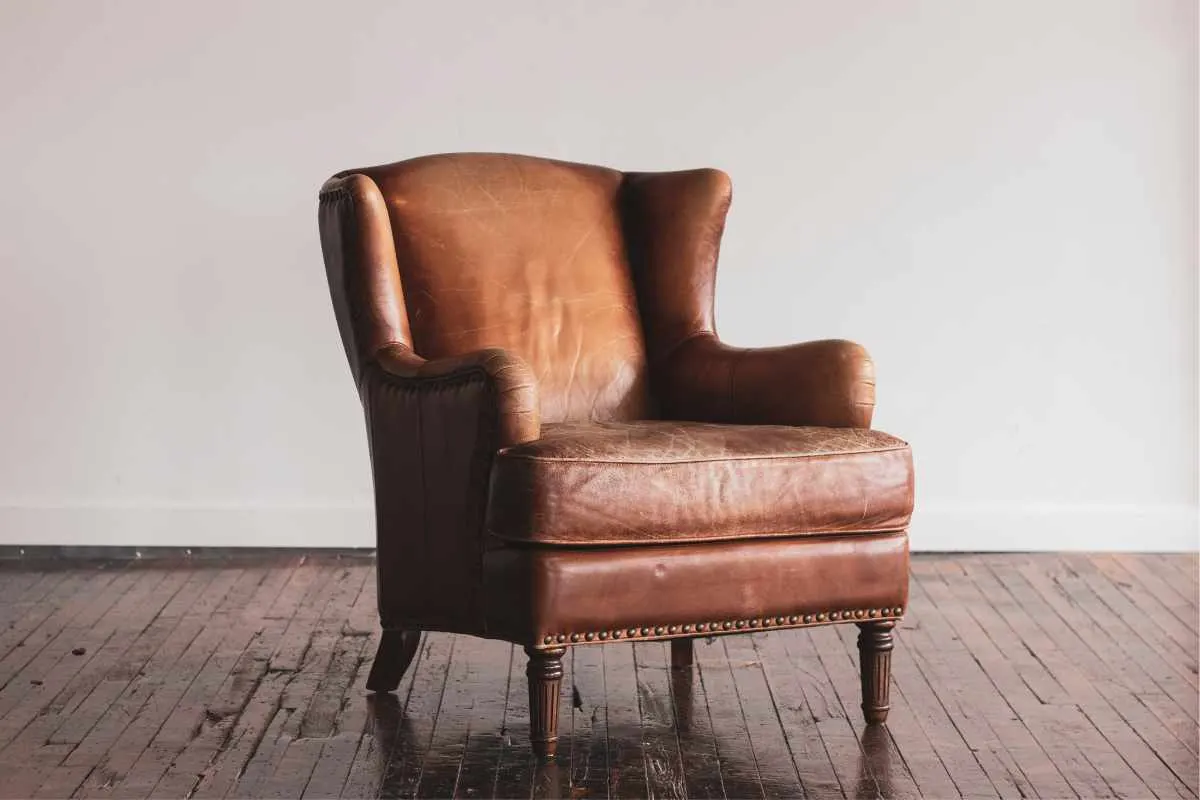
Arm tops and arm fronts, which take hands, luggage handles and the weight of people rising from low seating.
The front edge of seat cushions, from sliding in and out with bags.
Seat backs at head height, which take hair products and skin oils and darken before they wear.
The outer sides and backs of pieces, which take rolling luggage — this is the damage most specific to hotels and it produces distinctive scuffs and punctures at a consistent height.
Piping and welting, which stands proud and abrades first.
Anything near a window, which fades on the exposed side while the rest of the piece does not.
And the seating closest to the entrance, which takes weather, grit and the highest traffic.
Doing the work without closing the lobby
A lobby cannot close, which sounds like a constraint and is mostly a scheduling exercise.
The space is worked in zones. One seating group is taken out of use, screened or simply moved aside, while the rest of the lobby operates.
Overnight is the natural window in most properties, since arrivals drop and the space is quiet enough to work in.
Pieces that are not fixed can be moved to a back-of-house area, which removes the work from guest view entirely and gives a better working environment.
The cure period before a piece takes weight is the real constraint, and overnight work puts it into the quietest hours.
For a larger program, working through the lobby over several nights keeps the space presentable throughout rather than having it half-finished during the day.
The one thing to plan around is ventilation, since refinishing products need airflow and a lobby is a guest-facing space where odor matters.
Recovering versus refinishing
Two different routes that both keep the frame, and they suit different conditions.
Refinishing keeps the existing covering. Damage is repaired, worn areas are rebuilt, and the piece is recolored and sealed. It is the cheaper route and it works where the material is sound and the issue is wear, staining or fading.
It also allows a color change without replacing anything, which matters when a property is rebranding.
Recovering replaces the covering on the existing frame. It is the answer where the material has stiffened, delaminated or been damaged beyond localized repair.
Recovering is the moment to upgrade the specification — a contract-grade leather or a heavy-duty coated fabric appropriate to public-area use, rather than whatever was originally fitted.
It also allows the foam and suspension to be dealt with at the same time, which is efficient since the piece is already apart.
Both preserve the frame, both cost substantially less than replacement, and the choice between them is made by the flex test rather than by budget.
Brand standards and what they require
For a flagged property this is a real constraint and it should be checked before any decision.
Many brands specify furniture standards, permitted materials, colors and sometimes approved suppliers for public areas.
Some specify replacement cycles rather than condition thresholds, which changes the calculation entirely — restoring a piece that is due for replacement under the standard may not be permitted.
Others are concerned with condition and appearance rather than age, which makes restoration straightforwardly acceptable.
Property improvement plans set out what has to happen and by when, and lobby furniture is frequently on them.
Where a PIP is scheduled within a year or two, interim restoration to keep the space presentable is often the sensible move rather than replacement that will be superseded.
It is worth having this conversation with the brand before commissioning either route, since the answer changes what is worth spending.
Making the lobby consistent
A specific issue in lobbies, because seating is usually seen as a set rather than as individual pieces.
Lobby groups are viewed together and compared directly, so restoring the worst piece and leaving the rest creates a visible mismatch — the same problem as a set of dining chairs, at a larger scale.
Pieces also age unevenly. The chairs nearest the entrance, the window and the check-in queue take far more than the ones in a quiet corner.
So the usual sensible scope is a whole seating group at a time rather than individual pieces.
Where the lobby has several groups, doing them in a planned sequence keeps the space consistent at every stage rather than patchy in the middle.
And where a color change is involved, everything visible from one standing position should change together.
Color matching on site against the actual pieces, under the lobby's own lighting, is what makes a restored group read as one set — hotel lighting is rarely neutral and a match made in daylight can be visibly wrong in the evening.
Keeping it presentable afterward
Lobby furniture responds well to a maintenance routine, and most properties do not have one for seating specifically.
A neutral upholstery cleaner kept separate from the general housekeeping chemicals, and clearly designated for seating.
Regular vacuuming of seams and cushion channels, since grit ground into a finish accounts for a large share of lobby wear.
Wiping the high-contact areas — arm tops, seat backs at head height — on a schedule rather than in response to visible marks.
Conditioning leather pieces several times a year, which in this climate matters more than most published guidance suggests.
Repositioning pieces periodically so the same chairs are not always nearest the entrance or the window.
Addressing luggage damage points with a side table, a planter or a layout change that keeps rolling bags away from upholstered sides.
And a monthly walk with someone actually looking at the furniture, because damage in a lobby is noticed by guests long before it is reported internally.
What to send for an assessment
Photograph each seating group as a whole, then each piece individually, in the lobby's normal lighting.
Photograph the damage close up and at a raking angle.
Sit in every piece and report which creak, rack, dip or bottom out.
Do the thumb-flex test on each piece and report supple, board-like, or crazing.
Say what the pieces are, and supply the original specification if the records exist.
Say whether a PIP or a brand standard applies and what it requires.
Say what the access window is and whether pieces can be moved back of house.
And say whether a color change is in scope, since that determines whether refinishing or recovering is the right conversation.
Questions we get asked next
- Is it worth repairing hotel lobby furniture rather than replacing it?
- Usually, because contract furniture is built to a much higher standard than domestic furniture and the frame typically outlasts several coverings. A failed covering on a sound hardwood frame is a refinishing or recovering job at a fraction of replacement cost.
- Can the work be done without closing the lobby?
- Yes. The space is worked in zones, usually overnight when arrivals drop, and pieces that are not fixed can be moved back of house entirely. The main planning points are the cure period before a piece takes weight, and ventilation in a guest-facing space.
- Should we restore lobby furniture if a PIP is coming?
- Often yes, as an interim measure. Restoring to keep the space presentable for a year or two is usually better value than replacement that a property improvement plan will supersede. Check what the brand standard requires before committing either way.
- Can just the worst chair be done?
- It can, and lobby seating is viewed as a group, so a single restored piece among tired ones creates a visible mismatch. The usual sensible scope is a whole seating group at a time, with multiple groups done in a planned sequence.
- hotels
- lobby furniture
- repair or replace