When Is Leather Safe to Sit On After Cleaning, Dyeing or Repair?
A finished surface can look completely ready and still be hours away from taking weight. That gap is where most avoidable damage happens.
Quick answer
Not as soon as it looks dry. Cleaning needs the leather fully dry through, which takes hours and longer in humid weather. Recoloring and repairs need a cure period during which the material is still gaining strength and flexibility — touch-dry happens well before that. The specialist confirms the period at the end of the job, having seen how the materials behaved that day, and the safest approach is to wait longer rather than less.
At a glance
| Touch-dry | Not the same as cured — the surface sets before the body does |
|---|---|
| After cleaning | Wait until fully dry through, not just to the touch |
| After recoloring | Longer, and friction is the specific risk |
| Flex points | Need the most — do not fold or operate mechanisms |
| Humidity | Extends every one of these, sometimes substantially |
Why touch-dry is misleading
This is the core of the whole question and it explains why people damage work that was done properly.
Coatings and fillers set from the outside in. The surface loses its solvents and becomes touch-dry relatively quickly.
Underneath, the material is still setting. It continues to gain hardness, strength and its final flexibility over a considerably longer period.
So a repaired panel can feel completely dry and still deform, mark or crease under pressure.
It also means the risk is invisible. There is no visual difference between touch-dry and cured, which is why an instruction rather than an inspection is what protects the work.
And it is why the advice is always time-based rather than test-based for an owner. Pressing it to see whether it is ready is itself the thing that can mark it.
If in doubt, wait longer. Nothing is lost by waiting and a rework costs a second visit.
After cleaning
The shortest of the three and the one people most often rush.
Leather that has been cleaned is holding moisture, and it needs to dry through rather than only on the surface.
Sitting on damp leather can stretch it, since wet hide is more extensible, and it can leave impressions in the surface.
It can also produce water marks, because pressure and uneven drying together are exactly what creates a tide line.
Dry it at room temperature with normal airflow. Do not use a hairdryer, a heater or direct sun, all of which dry unevenly and stiffen the hide locally.
In humid weather this takes longer, sometimes considerably.
The practical guide is that leather should feel dry and normal in temperature rather than cool to the touch, and it should look uniform rather than patchy.
And conditioning afterward should wait until the leather is genuinely dry, since applying it to damp hide traps moisture.
After dyeing or recoloring
Longer, and friction rather than weight is the main risk here.
A new color layer plus topcoat needs time to reach full hardness and adhesion.
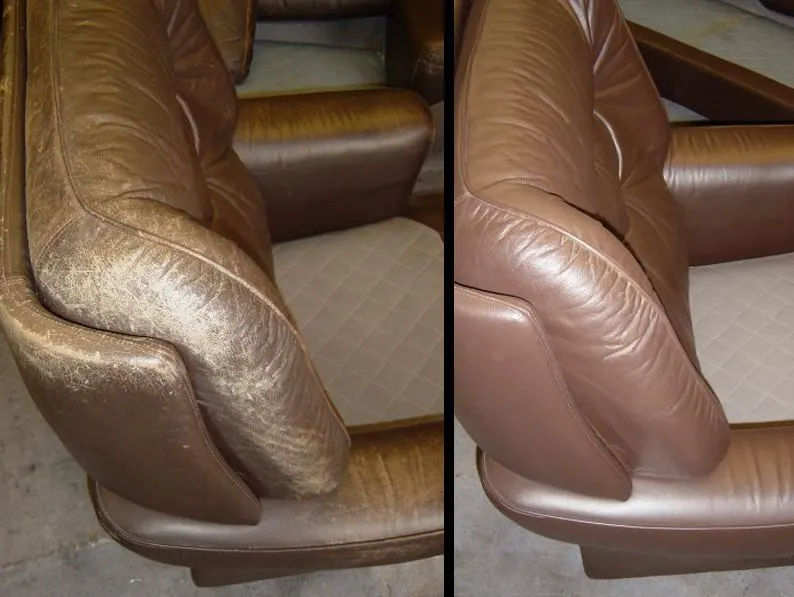
Before it does, sliding across the surface can burnish it, leaving a shiny patch that will not match the rest of the panel.
It can also transfer, which is why light clothing on a freshly recolored dark piece is a specific caution.
Anything placed on the surface can leave an impression or stick to it.
So the instruction after recoloring is usually to leave the piece alone entirely rather than to sit carefully.
That is why morning work on furniture is sensible, giving the piece the rest of the day and overnight.
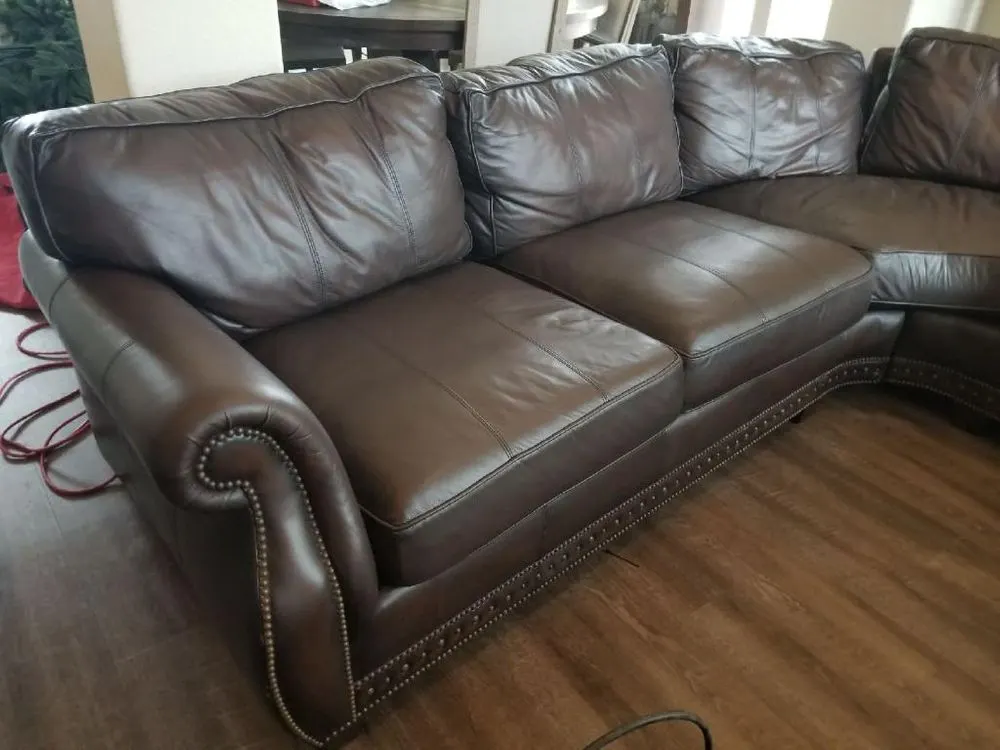
And on a large recoloring job — a whole sofa, a set of chairs, a vehicle interior — the room or vehicle should be left rather than used lightly.
After repairs, and why flex points need most
The longest of the three, and the requirement varies by where the repair is.
A repair on a flat, static panel — an outside back, a side, the middle of a headboard — has the easiest requirement, since nothing bends it.
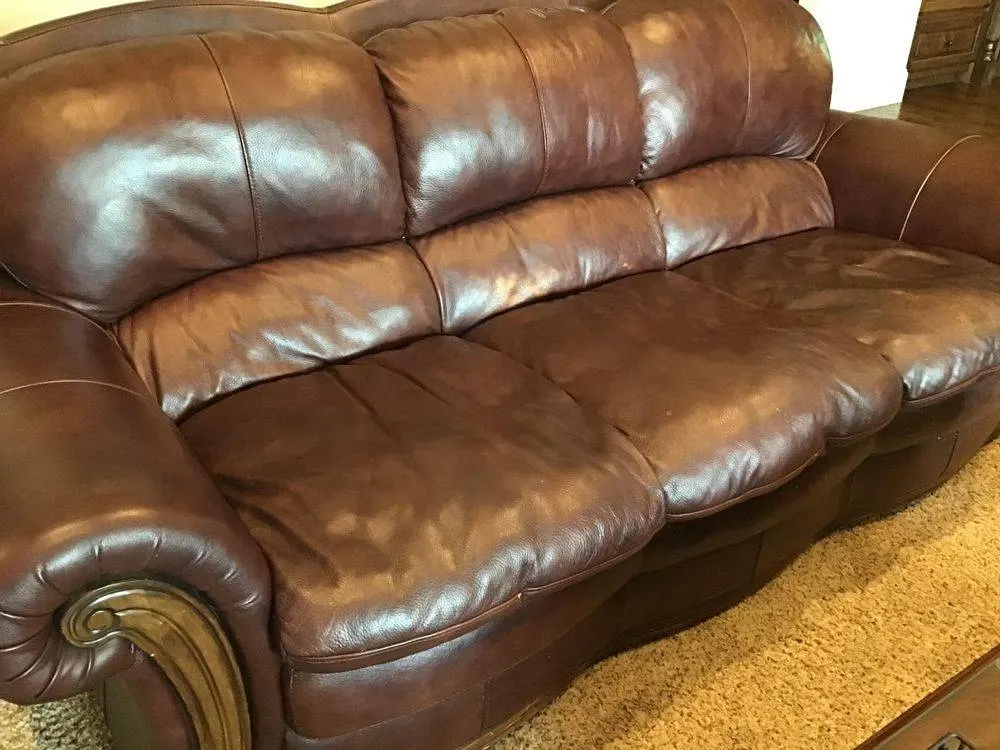
A repair on a seat surface takes weight, which compresses it before it has full strength.
A repair at a flex point takes the most demanding load of all. A cushion front edge, a bolster, a recliner footrest, a dinette seat front — all of these fold through an angle.
Folding a repair before it has reached full flexibility puts a crease in it, and that crease becomes the line the next crack follows.
That is why the instruction on a recliner is usually not to operate the mechanism at all until told, rather than to use it gently.
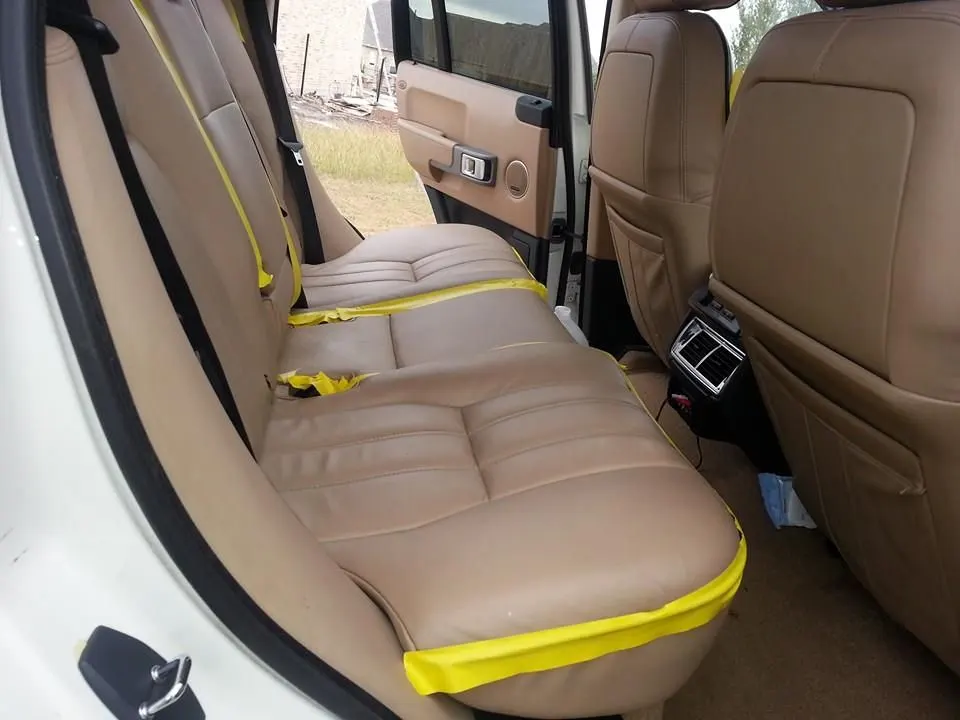
Vehicle bolsters are the same case: every entry and exit slides across exactly the repaired area.
So the specific instruction matters more than a general time, and it is worth asking what exactly to avoid rather than only how long.
Why humidity extends all of it
The local complication, and it is a real factor rather than a caveat.
These materials cure partly by solvent evaporation, and high humidity slows evaporation.
In North Texas summer humidity, a cure that would be comfortable in a few hours on a dry day can take substantially longer.
Temperature helps to a point, and excessive surface heat causes its own problems by making coatings flash off unevenly.
Air movement helps, which is why ventilation matters in an enclosed room.
Air conditioning helps both by lowering humidity and by keeping surface temperatures reasonable.
This is why an honest specialist gives you the cure period at the end of the job rather than when booking — they have seen how the materials behaved in that day's conditions.
A fixed number promised in advance regardless of the weather is quoting a product sheet.
The instructions worth asking for
A specific list beats a general time, and any specialist should be able to give you one.
How long before anyone sits on it.
How long before it takes friction — sliding across, getting in and out.
How long before a mechanism can be operated, if it has one.
How long before anything can be placed on it.
Whether light clothing is a risk in the first period.
When it can next be cleaned, and with what.
When it should first be conditioned.
And what to do if something contacts it too early.
Getting those in writing, or at least noting them, is worth the minute it takes — because the person who was there when the instruction was given is often not the person who sits down first.
Protecting the piece during the wait
Practical measures, because the risk is usually someone not knowing rather than someone ignoring.
Tell everyone in the household or the team, not just the person who arranged the work.
Physically block access rather than relying on a message — cushions removed, a chair turned, tape across a section, a note on the seat.
In a commercial setting, block the seats in the booking or seating system rather than putting up a sign.
Keep pets away, since a cat will find a freshly finished surface reliably.
Keep the area free of anything that could fall or be placed on it.
Maintain ventilation, which helps the cure as well as the room.
Do not cover it, since covering a curing surface traps solvents and can mark it.
And avoid extremes — do not park a freshly repaired vehicle in full sun, and do not run a heater onto a repaired sofa.
When normal care can resume
The other half of the question and it is worth having a clear answer.
Cleaning should generally wait longer than sitting does, since a cleaner on a not-fully-cured finish can soften or dull it.
Conditioning should wait longer still. A new finish does not need conditioning immediately, and applying it early can interfere with the final cure.
The specialist will give you a point at which normal maintenance can start, and it is usually measured in weeks rather than days for conditioning.
Protectants, where they are being used, follow the same principle.
After that point, the normal schedule applies — which in this climate means conditioning leather three or four times a year rather than annually.
And the aftercare matters, because whatever caused the original damage is usually still operating.
A repair that is looked after properly ages with the piece; one that goes back to the routine that caused the damage will be joined by new damage nearby.
Vehicles have their own timeline
Worth separating out, because a car interior is a different environment from a room and the instructions differ.
A vehicle can usually be driven before the repaired surface can be sat on heavily, since driving does not necessarily load the repaired panel — but a driver's bolster is slid across on every entry, which is exactly the friction to avoid.
So the practical instruction is often about how to get in and out rather than about whether to drive.
Heat is the second factor. A closed vehicle in Texas sun reaches surface temperatures high enough to affect a curing finish, so a freshly repaired interior should be parked in shade or with windows cracked where security allows.
Sun through glass onto a curing panel is a specific risk on a dashboard or a seat top.
Air conditioning helps, as it does anywhere, by lowering humidity and surface temperature.
And for a vehicle that earns, the cure period should be scheduled into hours it was not working rather than squeezed between shifts — which is the same principle as everywhere else, applied where it costs the most to get wrong.
If something contacts it too early
It happens, and the response matters more than the incident.
Do not try to fix it yourself. A curing surface that has been worked on is harder to rework than one that has simply been marked.
Do not apply anything to it — no cleaner, no conditioner, no attempt to buff it out.
Photograph it as it is.
Note what happened and when, relative to the work.
Contact the specialist promptly rather than waiting to see whether it settles, because some marks can be corrected while the material is still curing and are harder afterward.
Leave the area alone in the meantime.
Most early-contact marks are correctable, and the ones that become permanent are usually the ones someone tried to remove first.
Questions we get asked next
- It feels dry. Can I sit on it?
- Not necessarily. Coatings and fillers set from the outside in, so the surface is touch-dry well before the material beneath has reached full strength and flexibility. There is no visible difference between touch-dry and cured, which is why the instruction is time-based rather than a test.
- Why does my specialist not give a cure time when booking?
- Because it depends on what was done and on the day's temperature and humidity, and in North Texas summer humidity a cure can take substantially longer than on a dry day. A fixed number promised in advance regardless of conditions is quoting a product sheet rather than the actual job.
- Can I speed it up with a fan or a heater?
- Air movement helps and direct heat does not. A hairdryer, a heater or direct sun dry unevenly, stiffen the leather locally and can mark the finish. Ventilation and air conditioning both help, by moving air and lowering humidity respectively.
- Someone sat on it too early. What now?
- Photograph it, apply nothing, and contact the specialist promptly. Some early marks can be corrected while the material is still curing and are harder afterward — and the ones that become permanent are usually the ones somebody tried to remove first.
- cure time
- aftercare
- safe to use