Aniline, Semi-Aniline and Pigmented Leather: How Does the Finish Change the Repair?
This single distinction predicts more about cleaning and repair outcomes than any other property of a hide. And you can test it in ten seconds.
Quick answer
Put one drop of water on a hidden area. If it soaks in and darkens the leather within seconds, the finish is aniline or semi-aniline — beautiful, absorbent, easily stained, and difficult to repair invisibly. If it beads and sits there, the leather is pigmented, which means it is protected, cleanable and the most forgiving to repair. Almost all family furniture and vehicle seating is pigmented; aniline is a minority of high-end pieces.
At a glance
| Aniline | Dyed through, no pigment coat. Absorbs water instantly. Stains easily. Repairs visibly |
|---|---|
| Semi-aniline | Light pigment coat. Absorbs slowly. Some protection, some natural character |
| Pigmented | Opaque colored coat. Beads water. Cleanable, protected, repairs invisibly |
| The test | One drop of water on a hidden area, watched for ten seconds |
| Most furniture | Pigmented — which is why most repairs come out invisible |
What the three finishes are
These terms describe what sits on top of the hide, and that single fact drives almost everything about how the leather behaves in use.
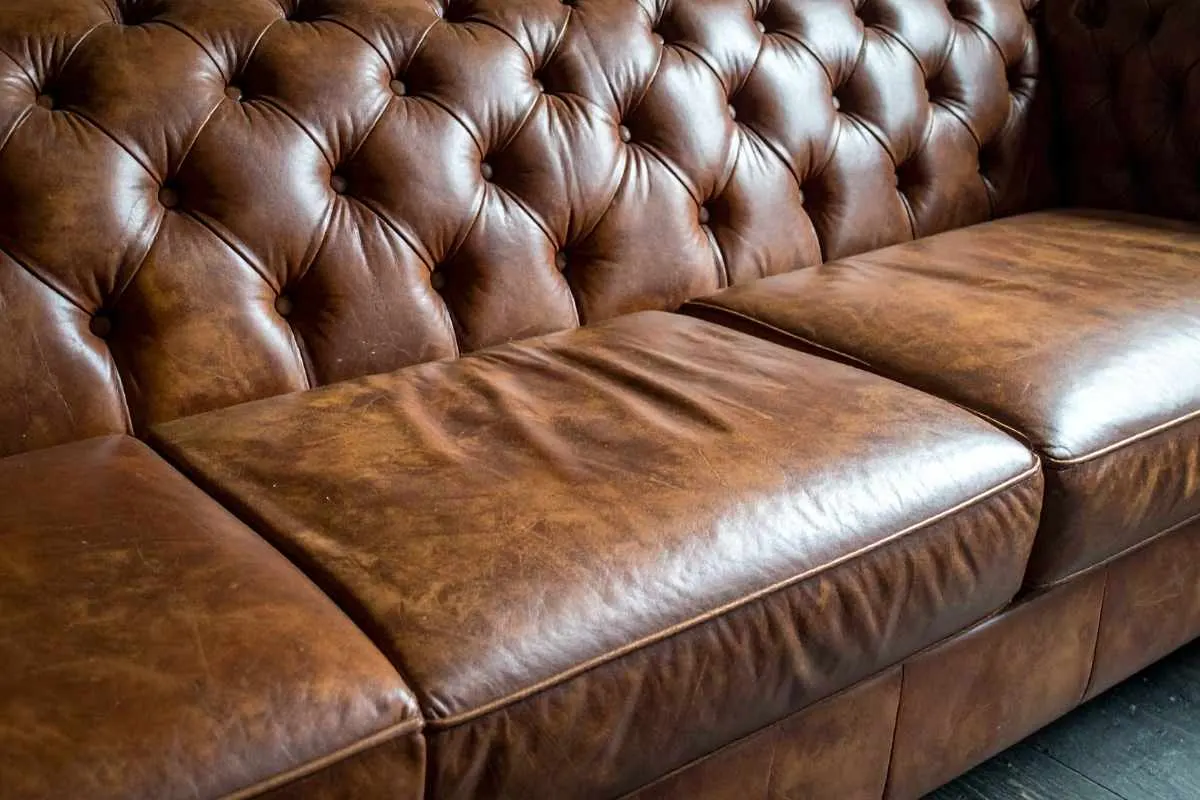
Aniline leather is dyed with soluble dyes that color the hide all the way through, with no pigment coating applied over it. Nothing obscures the natural surface, which is why the grain, the pores and the animal's natural marks are all visible. It is sometimes called 'naked' or 'pure aniline' leather.
Semi-aniline is dyed the same way, then given a light coat containing a small amount of pigment. That coat provides some protection while still allowing most of the natural character through.
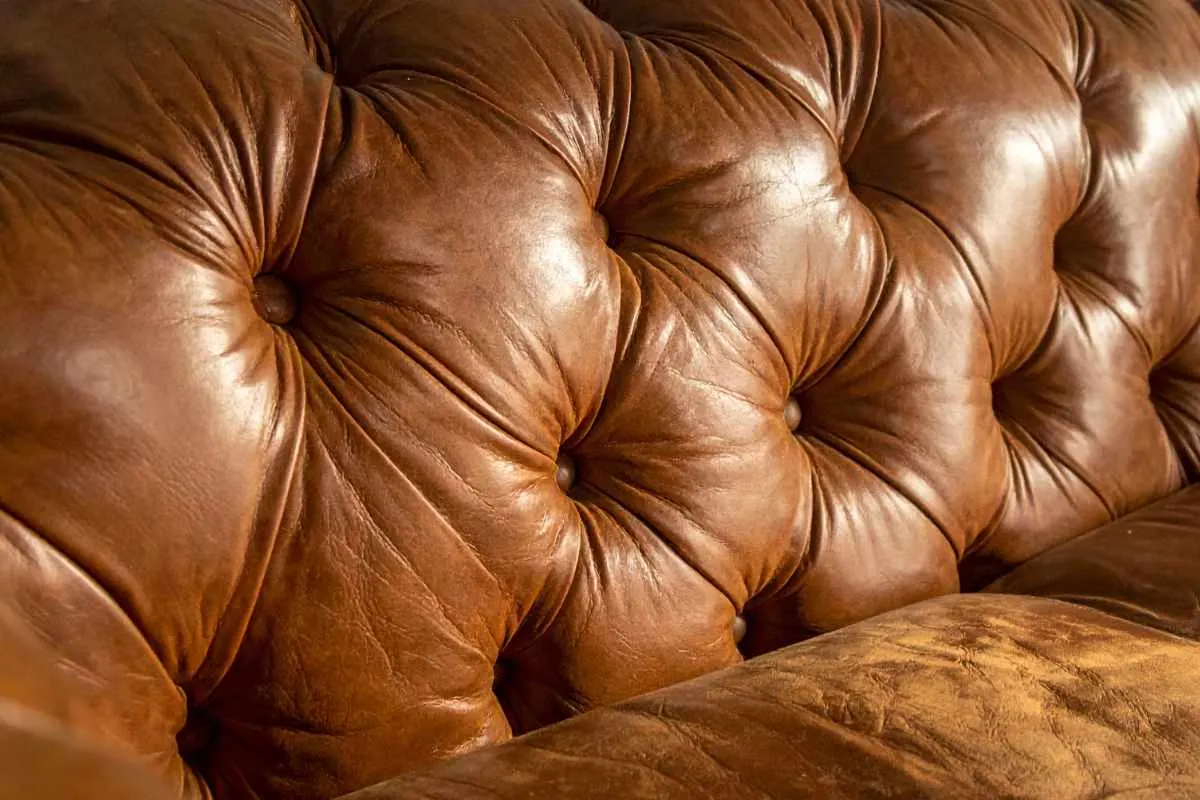
Pigmented leather — also called protected or finished leather — carries an opaque colored coating on the surface, often with an embossed texture and a clear topcoat over it. The color you see is that coating rather than the hide.
Roughly speaking: aniline prioritizes appearance, pigmented prioritizes durability, and semi-aniline splits the difference. The overwhelming majority of household and automotive leather is pigmented, which is good news for anyone facing a repair.
The water test, and how to read it
Find a hidden area — under a cushion, on the underside of a seat, behind a back panel — and place a single drop of water on it.
If the drop soaks in within a few seconds and leaves a visibly darker spot, the leather is aniline or lightly semi-aniline. The darker mark will usually fade as it dries, though on very absorbent hides it can leave a faint ring.
If the drop sits on the surface as a bead and can be wiped away with no mark at all, the leather is pigmented.
If it takes fifteen or twenty seconds to begin absorbing, you are probably looking at semi-aniline.
Do this somewhere genuinely hidden, because on a true aniline hide the test itself can leave a mark. That risk is also the point: if a drop of water can mark it, so can everything else.
A supporting check is temperature and feel. Aniline warms quickly under a palm and feels soft and slightly waxy. Pigmented leather feels more uniform and slightly cooler, with a surface that is clearly a coating.
Why aniline is difficult to repair invisibly
Everything that makes aniline beautiful works against a repair.
There is no pigment layer to blend into. On pigmented leather, a repair is finished by spraying an opaque color that covers both the repair and a feathered area around it, so no boundary exists. On aniline, applying an opaque color would produce exactly the flat, painted look that aniline buyers were avoiding.
The surface is absorbent and variable. Different parts of the same hide take color differently, which is part of the visual appeal and a serious problem for matching.
And the grain is natural rather than embossed, so pressing a texture into filler produces a regular pattern inside an irregular one.
What a repair on aniline can achieve is real and worth having: a tear closed and made structurally sound, a hole filled so it does not grow, color brought much closer so the damage stops drawing the eye. What it usually cannot achieve is complete invisibility under close inspection.
The right conversation happens before the work. A customer told this in advance is pleased with a good result; one promised invisibility is not.
Why pigmented leather is the forgiving one
Pigmented finishes are engineered for exactly the conditions that defeat aniline.
The coating is opaque, so a rebuilt area is fully covered rather than partially translucent. Color can be mixed to match the surrounding surface and sprayed with a feathered edge that leaves no boundary.
The texture is usually embossed, and embossed patterns repeat, so a grain paper reproduces them convincingly.
The surface is sealed, which means the preparation stages — cleaning, degreasing, light keying — happen on the coating rather than on the hide itself.
The practical outcome is that most repairs on pigmented furniture and vehicle seats are genuinely invisible in normal light and normal use, and this is what most people actually own.
Cleaning: the difference is bigger than for repair
If you take one practical thing from this, take this section, because the wrong cleaning approach on aniline causes damage that then needs repair.
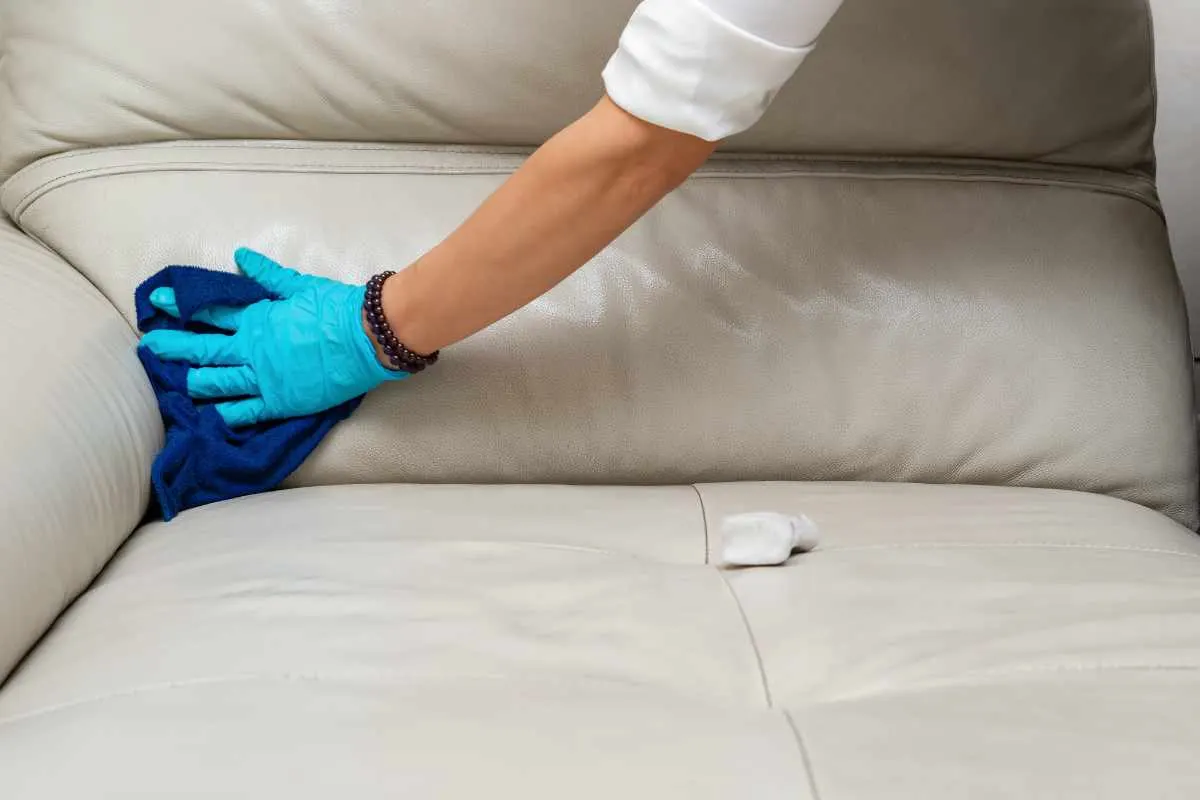
On pigmented leather, cleaning happens on the coating. A leather cleaner applied to a cloth, worked over a panel, then wiped and dried is straightforward and safe, and spills wiped promptly usually leave nothing.
On aniline, any liquid can penetrate. Water can leave a ring. A cleaner can lift dye. Rubbing at a spot can produce a lighter patch that is more obvious than the original mark. Even hand cream transferred from skin can darken an area permanently.
The correct approach on aniline is to blot rather than rub, to use as little liquid as possible, and to work outward from the edge of a mark toward its center rather than the reverse. And when a mark is anything other than dry dust, the safe answer is often to leave it to a specialist rather than to attempt it.
This is also why aniline is a poor choice for a household with young children or pets, however good it looks in a showroom.
How each one ages in North Texas
The climate here treats these finishes differently, and it matters for what you buy as well as how you look after what you have.
Aniline fades faster under UV, because there is no pigment layer shielding the dye. A sun-facing aniline panel can shift noticeably within a couple of years, and the fading is not correctable in the way pigmented fading is — recoloring an aniline hide means converting it to a pigmented finish, which changes its character permanently.
Pigmented leather also fades, but the pigment layer absorbs much of the UV first, and when it does fade the correction is straightforward: clean, stabilize, recolor, seal.
Both stiffen in dry conditioned air. Aniline shows it sooner in feel, because there is no coating masking the change in the hide.
The practical guidance: if you own aniline in this climate, keep it out of direct sun and condition it on schedule, because your options after damage are narrower than a pigmented owner's.
What to do if you have aniline and something has gone wrong
Stop before trying to clean it, which is the single most useful instruction in this article.
Most aniline damage that reaches a specialist has been made worse by a well-intentioned attempt. A water ring becomes a larger pale patch. An ink mark becomes a spread gray area. A grease spot becomes a lifted color patch surrounded by a darker halo.
Blot fresh liquid with a dry cloth, no pressure, no rubbing. Leave it to dry naturally away from heat. Then photograph it and ask.
There are genuine options: specialist cleaning that works with the absorbency rather than against it, careful color restoration on localized areas, and in bad cases a conversion to a semi-aniline or pigmented finish, which trades some of the natural character for a fully repairable, protected surface. That conversion is a real decision rather than a repair, and it should be discussed properly.
Where each finish belongs
Since these decisions are usually made in a showroom under flattering light, it is worth being blunt about which finish suits which room.
Pigmented leather belongs anywhere real life happens: family living rooms, houses with children or pets, anything near a kitchen, and every vehicle. It tolerates spills, wipes clean, resists UV better and repairs invisibly. Nearly all of the furniture that ages well over a decade in a busy household is pigmented.
Semi-aniline suits a room with adult use and moderate light — a formal sitting room, a study, a bedroom chair. It keeps much of the natural character while offering enough protection that an accident is recoverable.
Full aniline belongs in low-traffic, low-light spaces where the piece is admired more than used, and where the owner genuinely wants a hide that develops patina and marks over time. Some people love exactly that; others are dismayed the first time a glass leaves a ring.
Commercial settings should be pigmented or vinyl without exception, because cleaning chemistry there is harsh and frequent, and an absorbent surface in a restaurant or clinic is both a maintenance and a hygiene problem.
Working out what to ask for
When you request an assessment, saying which finish you have — or describing the water test result — changes the quality of the answer you get.
Photograph an undamaged area close up in raking light, so the surface character is visible. Add a photograph of the water drop test in progress if you did it, which is unusually informative.
Then the standard set: wide shot of the piece, the damage square-on, the damage at a raking angle, and the label if there is one.
And say plainly what matters most to you. On aniline in particular, some owners want structural soundness and will accept a visible repair to keep the hide's character; others would rather convert to a protected finish and have a piece that cleans easily and repairs invisibly from now on. Both are reasonable, and they lead to completely different recommendations.
It is also worth mentioning anything that has already been applied to the leather, however long ago. Consumer conditioners, protector sprays and silicone dressings all change how a surface accepts new finish, and on an absorbent aniline hide they can penetrate rather than sit on top. Knowing what is in there beforehand is the difference between a smooth job and an unpleasant discovery halfway through.
Questions we get asked next
- Is aniline leather better quality than pigmented?
- It is usually made from better hides, because only hides with few natural blemishes can be used without a covering pigment. That is not the same as being better for a given household — pigmented leather is more durable, more cleanable and more repairable, which for most families matters more than showing natural grain.
- Can aniline leather be converted to pigmented?
- Yes, and it is sometimes the right answer for a badly stained or faded piece. The hide is cleaned, stabilized and given a pigmented finish, after which it cleans and repairs like ordinary protected leather. What it loses is the visible natural grain and the way aniline changes with light, so it is a considered decision rather than a routine repair.
- How can I protect aniline leather?
- Keep it out of direct sunlight, condition it on a regular schedule, deal with spills by blotting rather than rubbing, and consider a specialist protective treatment applied by someone who works with aniline. Ordinary consumer protectors can change the surface appearance, so test anything on a hidden area first.
- My sofa beads water in some places and absorbs in others. What does that mean?
- Usually that the finish has worn through in the absorbent areas — commonly seat fronts, armrests and headrests. That is a pigmented hide with a failing coating rather than a mixed material, and it is a clear sign the piece is due for refinishing before the exposed areas start staining.
- aniline
- pigmented leather
- finishes