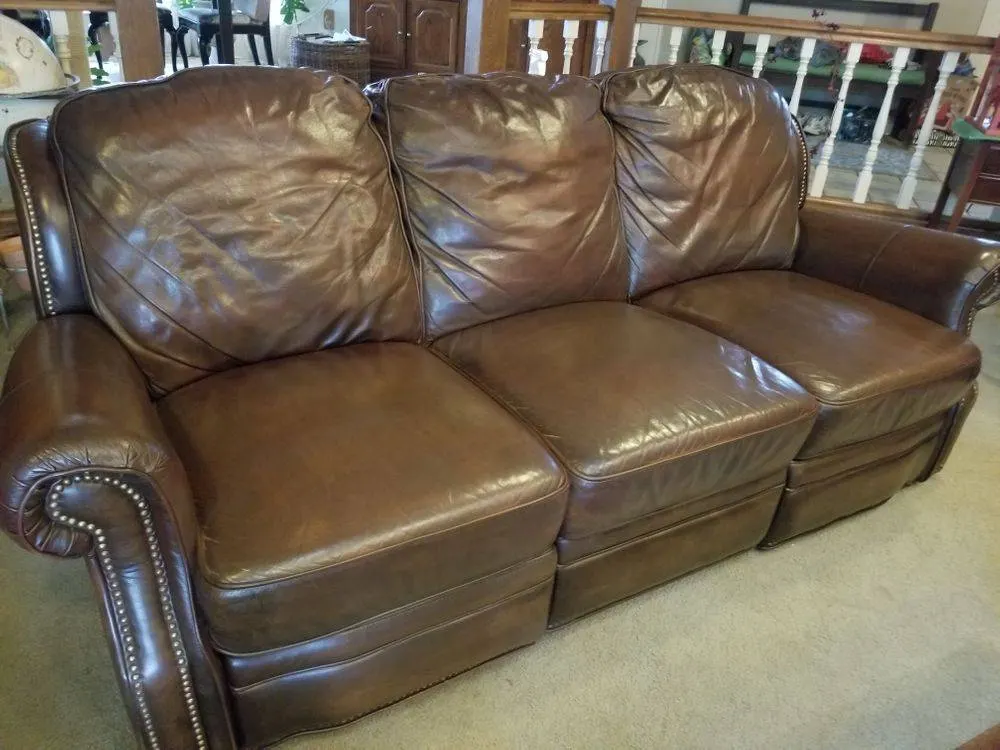
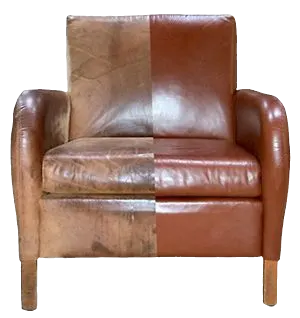
Why Is One Panel of My Couch Peeling While the Others Look Fine?
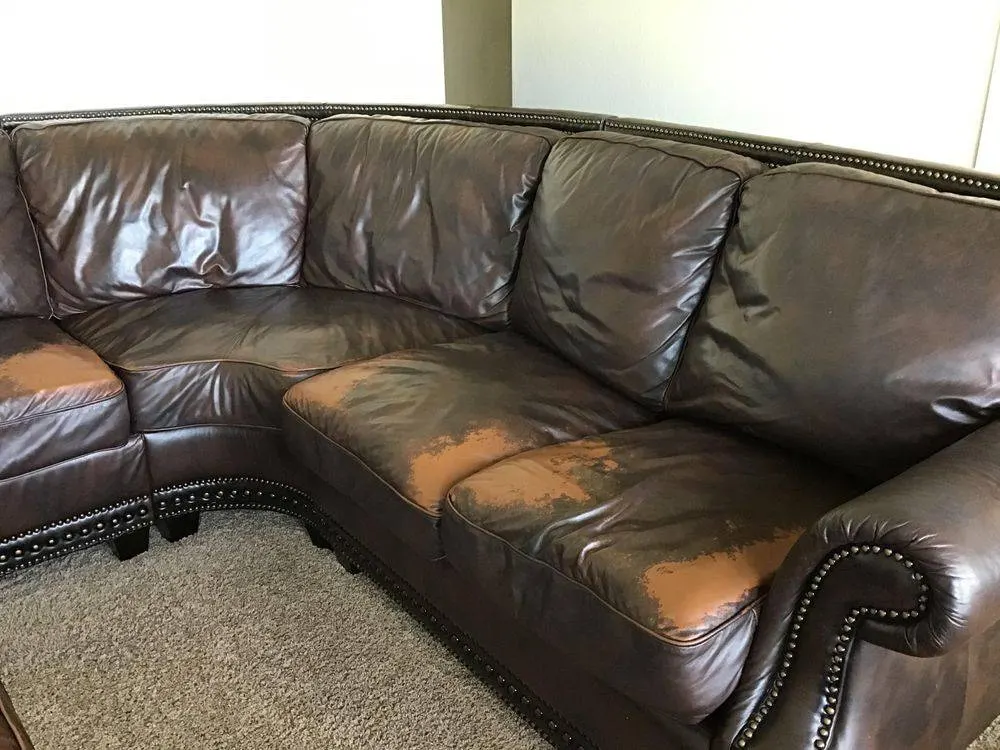
A single peeling panel is rarely bad luck. It usually means that panel got more of something — sun, contact, body oil or a different material.
Quick answer
Four causes explain nearly all of it. The panel is a different material from the rest, which is common in leather-match construction. It gets more sun than the others. It takes more body contact and body oil. Or a cleaning product was used there that was not used elsewhere. The first cause means the rest of the sofa is safe; the other three mean the neighboring panels are on the same path, just behind it.
At a glance
| Different material | Leather-match construction — hide on seats, synthetic on sides and back |
|---|---|
| More sun | The panel nearest a window fades first and then cracks first |
| More contact | Headrests, arms and the favorite seat take oil and friction others do not |
| Different chemistry | One panel wiped with a product that was not used on the rest |
| What it predicts | Only the first cause means the rest of the piece is not following |
Start by asking whether it is even the same material
This is the first thing to rule out, because it changes the outlook completely and it is more common than most owners realize.
A great deal of upholstered furniture is built as 'leather match': genuine hide on the surfaces people sit and lean on, and a coordinated synthetic on the outside arms, the back and sometimes the sides. It is not deception — it is a legitimate way to keep cost down where the material is not touched — but it means a single sofa can contain two materials that age at completely different rates.
When the synthetic sections fail while the hide sections look fine, that is exactly the pattern you would expect. The bonded or PU panel has reached the end of its life; the leather has not.
Check the label under the seat deck, and look at a cut edge on both a peeling panel and a healthy one. If one shows a coating separating from a woven backing and the other shows a continuous fibrous hide, you have your answer, and the good news is that the healthy panels are not following.
Cause two: that panel gets the sun
If the peeling panel is the one nearest a window, sunlight is the likeliest explanation, and in North Texas it is the single most common one.
Ultraviolet light breaks down both the pigment in a finish and the binder holding that finish together. The pigment loss shows up first as fading, which is why a sun-facing panel is usually noticeably lighter before it starts to fail. The binder loss is what actually causes the failure: a finish that has lost its flexibility cracks under normal movement and then lifts.
West and south-facing windows do the most damage here because of the angle and duration of afternoon sun, and the season is long. A sofa positioned with one end in that light and the other in shade will show a clear gradient within a few years.
The important implication: the panels beside it are on the same path, just behind. Sun damage does not stay in one place, it works outward along the exposure gradient. Addressing the failed panel without addressing the light means doing it again.
Cause three: that panel gets more of you
Furniture wears where people touch it, and people do not touch furniture evenly.
Headrests take the worst chemistry of anywhere on a sofa. Hair products, sunscreen and scalp oils accumulate, and a number of those products contain solvents and silicones that soften a finish over time. A headrest panel that has gone dark, slightly tacky and then started to lift is a chemical failure, not a wear failure.
Armrests take friction. Forearms, sleeves, watches and bag straps abrade the finish, and on the arm nearest the door or the television that abrasion is concentrated.
The favorite seat is the obvious one. In most households there is a seat that gets used four times as much as the others, and it fails four times faster.
The tell is location: if the failing panel is a headrest, an arm cap or the seat someone always uses, contact is the cause. Again, the neighbors are behind on the same curve rather than safe.
Cause four: something was used on that panel
This one is easy to miss because it happened months or years before the symptom.
A single spill cleaned up with an all-purpose spray, a headrest wiped weekly with disinfectant wipes, a stain treated with alcohol or nail polish remover, a panel dressed with a silicone product — any of these can strip or contaminate a finish in one area while the rest of the sofa was never touched.
The pattern is distinctive: the damage has an edge to it. Sun and contact damage fade gradually into the surrounding leather, while chemical damage often has a boundary you can see, corresponding to where someone wiped.
It is worth thinking back honestly here, because it changes the repair. A contaminated panel — particularly one treated with silicone — has to be prepared differently before any new finish will bond, and telling the specialist what was used saves them discovering it the hard way.
The one you hope it is not: the whole piece is starting
Sometimes a single peeling panel is simply the first symptom of a finish that is failing everywhere, and the others are a few months behind.
The test takes ten seconds. Press a thumb firmly on an apparently healthy panel and hold for a second, then look closely. If fine cracks appear, if the surface feels papery, or if anything powders onto your thumb, that panel is not healthy — it is pre-failure.
Do this on three or four different areas: a seat, a back, an arm, and somewhere that gets no use at all. If everything but the unused area shows it, the finish has aged out across the piece.
That is not a disaster on genuine leather. It means the correct scope is a full restoration rather than a panel repair — cleaning, stabilizing, filling worn areas and recoloring the whole piece — which produces an even result and costs less than chasing panels one at a time over three years.
Why repairing just the one panel often looks wrong
Even when a single panel is genuinely the only problem, repairing it in isolation frequently disappoints, and it is worth understanding why before choosing the cheapest quote.
The rest of the sofa has aged. Color has shifted slightly, sheen has dulled, and the surface has taken on a patina. A newly refinished panel matched perfectly to the original factory color will not match its neighbors, because its neighbors are no longer the original factory color.
The professional answer is to match to the current surrounding leather rather than to the original, and then blend outward into the adjoining panels so there is no boundary. On a piece with pronounced fading, that blending may extend across most of the visible surface.
This is why quotes for 'one panel' sometimes come back covering more area than expected. It is not scope creep; it is the difference between a repair that disappears and one that is visible from the doorway.
What to do about the cause, not just the symptom
Whatever the repair scope, the cause is worth addressing or it repeats.
For sun: move the piece if you can, or break the light. Sheer blinds during the strongest part of the afternoon make a measurable difference, and a UV-aware topcoat applied during refinishing slows the process without stopping it. Rotating cushions occasionally spreads the exposure rather than concentrating it.
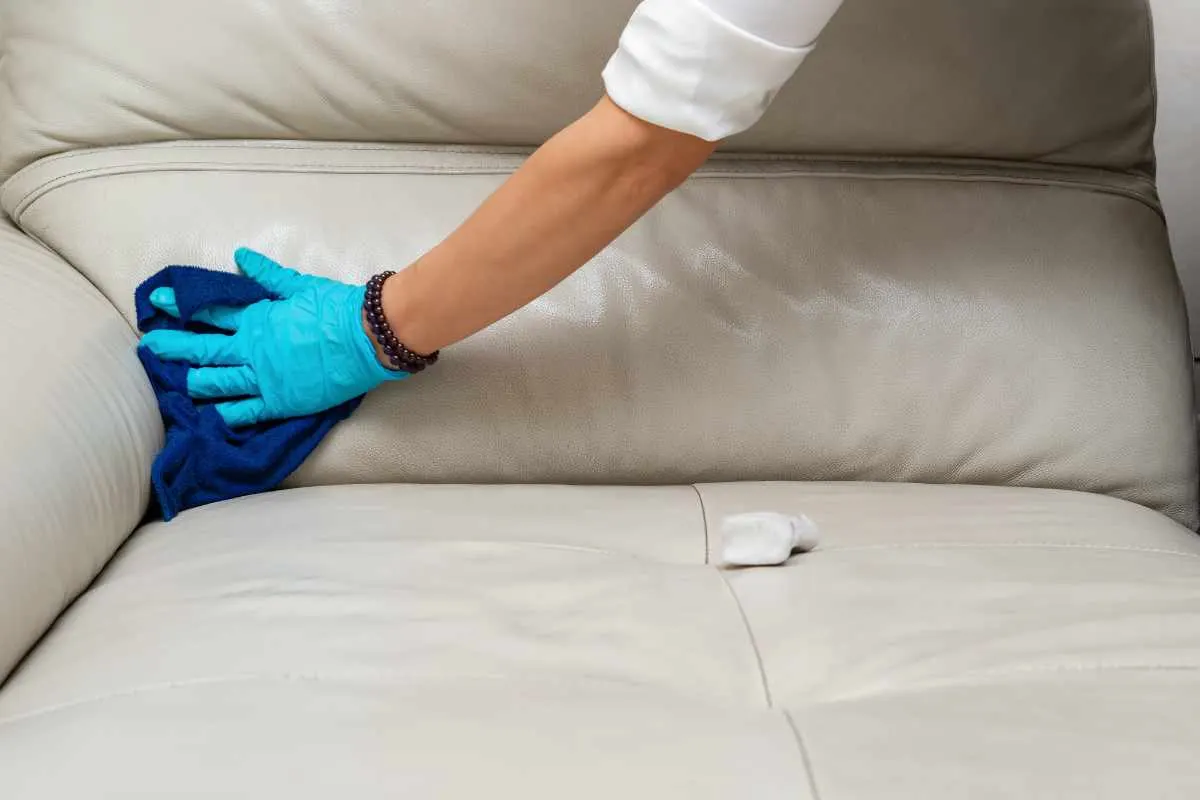
For contact: nothing is going to stop a family using the sofa, but wiping headrests with a barely damp cloth weekly removes oil before it migrates into the finish, and conditioning two or three times a year keeps the surface flexible enough to resist abrasion.
For chemistry: replace whatever was used with a cleaner intended for finished leather, and keep disinfectant wipes and all-purpose sprays away from the furniture entirely.
For a piece where everything is starting at once: accept the full-restoration scope and get a durable, even result rather than paying three times for three panels.
Reading the position of the damage
Where the failure sits on the piece is diagnostic on its own, and it usually narrows the cause to one before any testing.
Failure along the front edge of a seat cushion is mechanical. That is the sharpest fold on the piece and it flexes every time someone sits down, so it is where a stiffening finish fails first. This points at age and dryness rather than at anything specific to that panel.
Failure on the crown of an armrest is friction combined with body oil, and it tends to appear on the arm nearest the door, the television or the side table.
Failure on the outside back or the outer arm — the surfaces nobody touches — is almost always material rather than use. Nothing rubs there, so if it is peeling and the seats are not, you are looking at leather-match construction or at sun on that side of the piece.
Failure in a broad soft-edged patch with no relation to a fold or a contact point is sunlight, and if you stand where the panel is and look up, you will usually find the window responsible.
Failure with a hard visible boundary is chemical. Something was applied to exactly that area and stopped where the cloth stopped.
Getting it assessed
Photographs answer this well, provided they include the healthy areas as well as the failing one.
Take a wide shot of the whole piece in ordinary daylight, so the relationship between panels and any light source is visible. Take a close-up of the peeling panel square-on and again at a low raking angle. Take a close-up of an apparently healthy panel for comparison, and a shot of the label under the seat deck.
Say where the piece sits in the room relative to windows, which seat gets used most, and what has been used to clean it. Those three answers usually identify the cause before anyone looks at the leather.
Include the age of the piece too. Uneven failure on a three-year-old sofa points strongly at a material problem, while the same pattern on a twelve-year-old sofa is far more likely to be accumulated exposure. The recommendation is different in each case, and age is one of the cheapest clues to supply.
Questions we get asked next
- If one panel is peeling, will the rest follow?
- It depends entirely on the cause. If the failing panel is a different material from the others, the rest is safe. If it is failing because of sun, contact or chemistry, the neighboring panels are on the same path and simply further behind.
- Can a single panel be replaced rather than refinished?
- On some furniture yes, particularly where panels are separate sewn sections. The catch is color: new material will not match aged material, so the replacement usually has to be recolored and blended into its neighbors anyway.
- How can I tell sun damage from ordinary wear?
- Sun damage fades before it fails, and it follows the light rather than the use. A panel that is both noticeably lighter than its neighbors and starting to crack is sun; a panel that is the same color as the others but abraded is wear.
- Is it worth doing anything if the piece is bonded leather?
- If only one area is lifting and the piece is otherwise sound, sealing and recoating that area is a reasonable way to get another year or two. Once it is flaking in several places, the material has finished and refinishing is not a good use of money.
- peeling
- diagnosis
- uneven wear