Should You Repair Worn Leather Car Seats or Just Put Seat Covers On?
In Dallas, repair a leather car seat when the damage is a crack, a worn bolster, a small tear or faded color on leather that is still sound, and use a seat cover only to protect a seat that is already in good shape. A cover hides damage but does not stop it, and on seats with side airbags, heating or ventilation it can cost you features you paid for.
Quick answer
Repair the seat when the damage is a crack, a worn bolster, a small tear or faded color on otherwise sound leather: the repair stops the damage spreading, keeps heated, ventilated and perforated seats working, and leaves the interior looking original when you sell. A seat cover only hides the damage, which usually keeps growing underneath, and on seats with a side airbag it must be a cover the vehicle maker allows. Covers make sense on top of a repaired seat for dogs, work tools or kids, not instead of the repair.
At a glance
| Repair wins when | Cracks, bolster wear, small tears or fading on sound leather |
|---|---|
| A cover fits when | Protecting a repaired seat from dogs, tools or car seats |
| Check first | Side airbags in the seat, heated or ventilated seats |
| Under a cover | Cracks keep growing; grit and heat stay trapped |
| Where the repair happens | In your driveway or office lot, usable the same day |
Why seat covers look like the easy answer
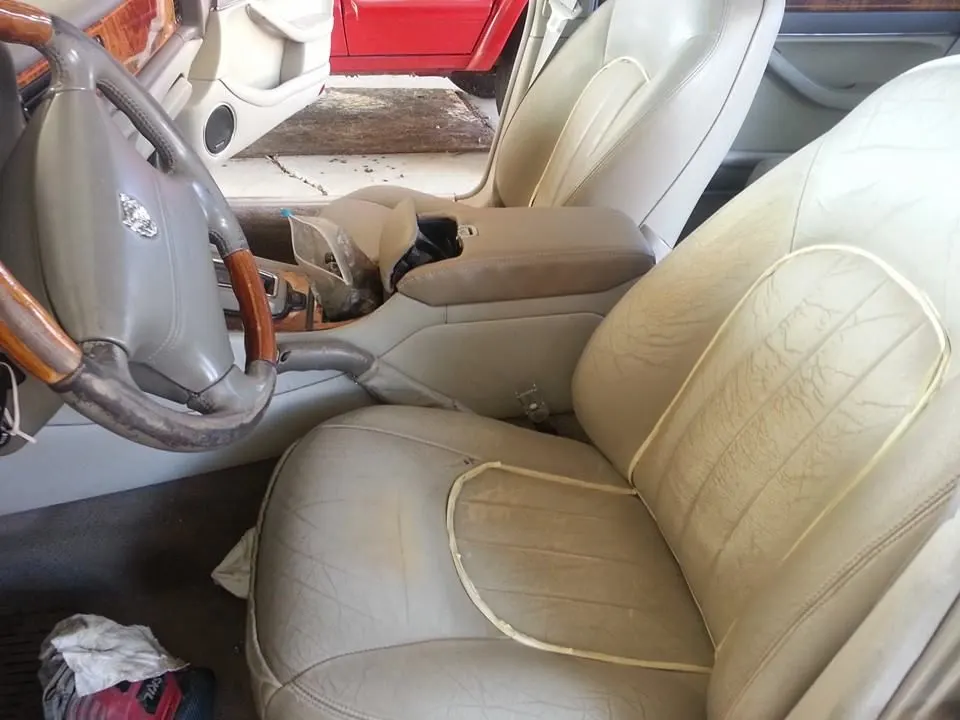
The driver's seat is almost always the first thing in a car interior to look tired. The outer bolster takes your full weight twice a trip, every trip, and in a North Texas summer the cabin bakes the leather while the sun comes through the glass. Long before the rest of the interior shows its age, that one bolster is pale, creased and starting to crack.
A seat cover fixes how it looks in ten minutes, for very little money. That is a real advantage, and for some people and some vehicles it is the right call.
The problem is what a cover does not do. It does not stop the leather drying out, it does not hold a crack together, and it does not keep a split seam from opening further. It changes what you see, not what is happening to the seat.
So the honest comparison is not cover versus repair. It is a cover now, plus whatever the seat needs when the cover comes off, against a repair now that stops the damage where it is.
For most owners that question has a clear answer once you know three things: what the damage actually is, what is built into the seat, and how long you plan to keep the car.
The rest of this guide walks through each of those, so you can decide before you spend money on either option.
What keeps happening under a cover
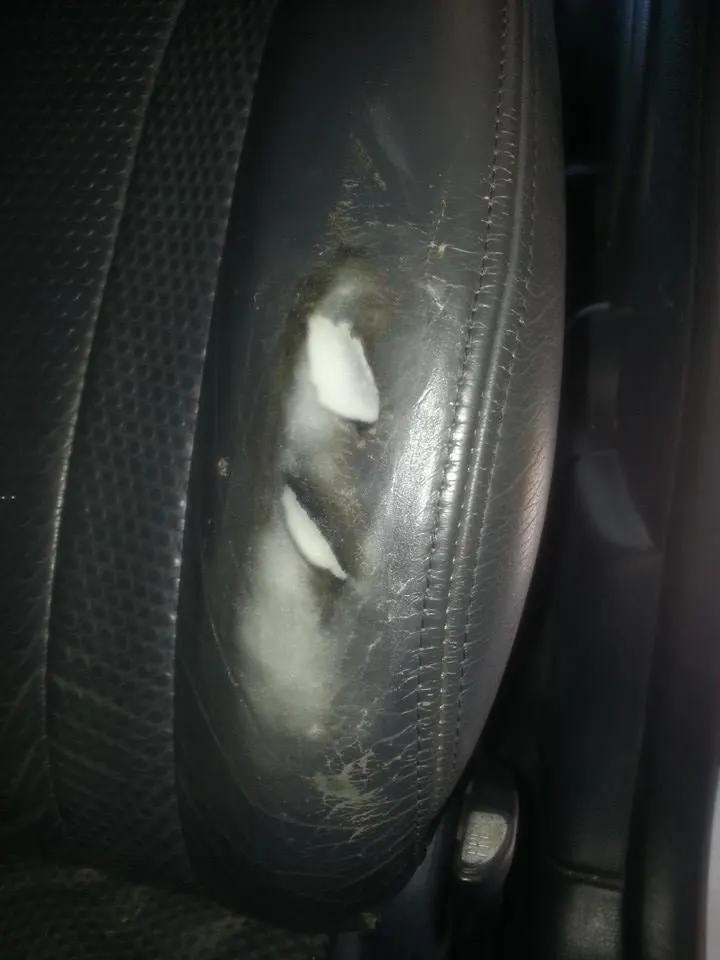
Leather damage on a car seat is progressive. A crack on a bolster starts in the finish, then reaches the leather, then splits as the seat flexes every time you sit down. A cover sits on top of that process; it does not interrupt it.
Universal covers also move. They slide a little on every entry and exit, right over the bolster that is already worn, and grit gets between the cover and the seat. That trapped grit acts like fine sandpaper on a finish that is already thin.
Heat gets trapped too. In a parked car in July, a cover holds warmth against the leather instead of letting the surface cool, and dry, hot leather is exactly the condition that makes cracks grow.
Spills are the other surprise. Most covers are not waterproof at the seams, so a coffee or a sports drink soaks through to the leather and stays there, out of sight, until the cover comes off months later.
None of this is a reason never to use a cover. It is a reason not to put one over damage you intend to keep. The small crack that would have been a straightforward repair this month can be a tear or a panel replacement by the time anyone looks again.
If the cover is going on because the seat is damaged, repair the damage first. If it is going on to protect a good seat, it can do that job well. Our guide to car seat bolster wear shows how quickly each stage moves on to the next.
Seats with airbags, heating or ventilation
Many modern seats are not just upholstery. Plenty of vehicles have a side airbag built into the seat back, designed to deploy through a seam on the outer side of the seat. A cover that does not leave that seam free can delay or block it.
That is why vehicle makers spell out seat cover rules in the owner's manual. Before buying any cover for a seat with a side airbag, check the manual and use only a cover that the manufacturer says is compatible with that seat. A universal cover from a store shelf is often not.
Repair is different here. Restoring the leather surface does not add a layer over the airbag seam. Damage on or right next to an airbag seam is the one case where we send the owner to a trim shop that works to the manufacturer's specification, and we say so at the estimate.
Heated seats warm through the leather; a thick cover slows that down and makes the heater feel weak. Ventilated seats push air through the perforations, and a cover over them blocks the airflow you paid for.
Perforated and ventilated leather is routine for us to repair (more in our guide to heated and ventilated seat repair). The holes are kept open through the fill and the finish, so the seat breathes and heats the way it did when it left the factory.
If your car has any of these features, a repair keeps all of them working. A cover asks you to give up some of them, or to buy a model-specific cover that often costs more than people expect.
When repair is the better money
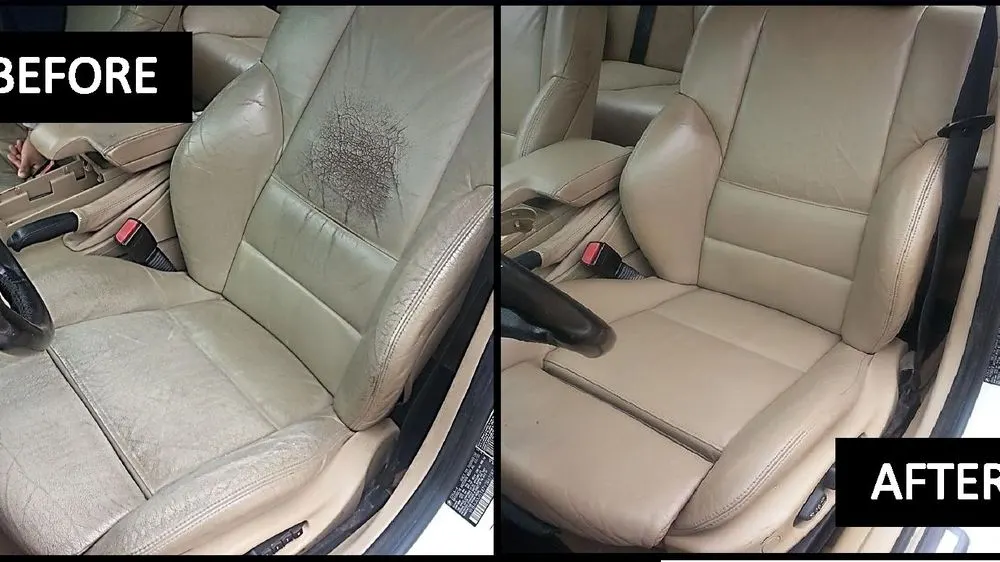
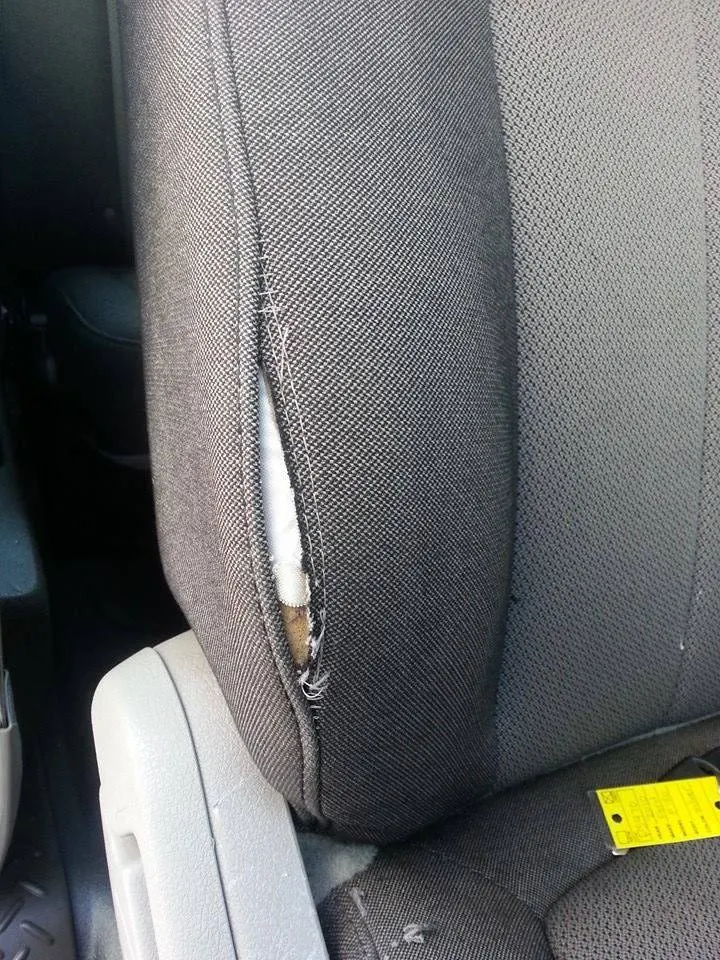
Repair is the better choice whenever the damage is on the surface of leather that is still sound: a cracked or pale bolster, a worn seat edge, faded color, a small tear on a flat panel, a burn, or a seam that has started to split.
Those are the repairs we do most. A bolster is rebuilt in stages: reinforcement where it is needed, flexible fill in the cracks, the grain texture put back, then color layered to the factory shade and sealed with an abrasion-resistant topcoat. The finish is built for the exact stress that wore it out.
The repair is done where the car is parked, at your home or your office. Nothing has to come out of the vehicle in almost every case, and you drive it the same evening after a short light-touch window the technician gives you at the visit.
A repair also keeps the original factory leather, which a new cover kit or a re-trimmed seat does not.
Repair also matters when you sell. A buyer or an appraiser forms an opinion of an interior in the first minute, and the driver's bolster is one of the first things they touch. A cover does not help there: people lift it, and a hidden crack looks like something being hidden. See interior repair before a trade-in for what is worth fixing first.
If you are not sure which side of the line your seat is on, send photos. Call or text (972) 522-9763 with a picture of the whole seat and a close-up of the damage, and the estimate comes back before anyone drives out.
When a seat cover is the right tool
Covers are good at one job: protecting a seat that is in good shape from a specific, repeated kind of wear.
Dogs are the classic case. Claws on a back seat cause scratches faster than any person does, and a fitted cover or a hammock on the rear bench is a sensible way to keep a repaired or healthy seat looking right.
Work trucks and fleet vehicles are another. Tool belts, wet work clothes and constant in-and-out wear a seat quickly, and a durable cover on top of a sound or repaired seat buys years.
Child car seats press hard into leather and leave dents and marks. A thin protector under the child seat, of the kind the child-seat maker allows, keeps those marks off the leather.
Older vehicles that are near the end of their road are the last case. If the car will be sold for parts or scrapped within the year, a cover is a reasonable way to stay comfortable until then.
In every one of these cases the cover is protection, not repair. The best results come from fixing the damage first and then covering the seat, so the leather under the cover stays the way you left it.
How to decide for your car
Start with the damage. Surface cracks, pale bolsters, fading, small tears and burns on sound leather point to repair. Leather that is brittle across the whole seat, splitting in several places, or bonded material that is peeling everywhere points to recovering the seat, and a repair estimate will tell you that plainly.
Then check what is in the seat. If there is a side airbag, read the owner's manual before any cover goes on. If the seat is heated, cooled or perforated, remember that a cover reduces what those features do.
Then think about how long you will keep the car. Keeping it for years, or selling it soon, both favor repair: one protects the seat, the other protects the price. Only a car near the end of its life really favors a cover alone.
Finally, decide whether you need protection on top. If dogs, kids or work gear are part of the car's life, a fitted cover over a repaired seat gives you both the look and the protection.
The quickest way to an answer is photos. A picture of the whole seat, a close-up of the damage and the make, model and year are usually enough for a clear recommendation: repair, recover, or leave it and cover it.
Text them to (972) 522-9763 or use the free photo estimate form, and we will tell you which option makes sense for your seat, including when the honest answer is that it does not need us. The repair itself is done at your home or office anywhere in Dallas–Fort Worth; our leather car seat repair page shows the service. In McKinney, see truck driver’s seat bolster repair in McKinney.
| Your situation | Better choice | Why |
|---|---|---|
| Cracked or pale bolster on sound leather | Repair | Stops the crack where it is; a cover lets it keep growing |
| Small tear, burn or split seam | Repair | Openings only get bigger with every entry and exit |
| Seat with a side airbag | Repair, or only a cover the vehicle maker allows | A cover can block the airbag seam |
| Heated, ventilated or perforated seat | Repair | A cover slows the heat and blocks the airflow |
| Sound or repaired seat, dogs or work gear | Cover on top | Protection against repeated wear, not a fix |
| Leather brittle and splitting all over | Recover the seat | Too little sound leather left to repair |
How to read this table: find the row that matches your seat. If it lands on repair, a cover can still go on afterward for protection. If two rows apply, such as a cracked bolster on a heated seat, repair covers both.
Questions we get asked next
- Will a seat cover stop a cracked leather seat from getting worse?
- No. The cover hides the crack but the leather underneath keeps drying and flexing, and grit and heat trapped under the cover can speed the wear up. Repairing the crack first, then covering the seat if you want protection, stops the damage where it is.
- Can I put a seat cover on a seat with a side airbag?
- Only one the vehicle maker says is compatible with that seat. A side airbag deploys through a seam on the seat, and a cover that blocks the seam can delay or stop it. Your owner's manual lists the rules for your car.
- Do you repair heated and ventilated leather seats?
- Yes. Perforations are kept open through the fill and the finish, so heating and cooling keep working after the repair.
- Do you repair leather car seats at my home or office in Dallas?
- Yes. The service is mobile across Dallas–Fort Worth, so the repair is done where the car is parked, in your driveway or office lot, and the car is usable the same day.
- Can you repair the seat without taking it out of the car?
- Almost always. The repair is done in place, in your driveway or office lot. If access genuinely requires removing the seat, removal and reinstallation happen in the same visit.
- car seats
- seat covers
- auto leather repair
- dallas