Why Does the Driver-Side Seat Bolster Wear First, and Can It Be Repaired?
Every trip you make loads one specific patch of leather with your entire body weight in motion. That is the bolster, and it is why it fails before anything else.
Quick answer
The outer bolster is where you slide across on every entry and exit, under full body weight, over a curve rather than a flat surface. That combination of abrasion and flex makes it the highest-wear panel in the vehicle. It repairs well while it is worn but intact — cleaned, filled, textured, recolored and sealed. Once it has split or worn through to the backing, panel replacement usually gives a better result than filling.
At a glance
| Why it wears | Full body weight sliding across a curved surface, twice per trip |
|---|---|
| Stage 1 | Finish dulls and color fades. Easiest and cheapest to fix |
| Stage 2 | Color worn through, surface roughening. Refinish the bolster |
| Stage 3 | Split or worn through the material. Panel replacement often better |
| Biggest prevention | Sit down first, then swing your legs in |
Why it is always the same panel
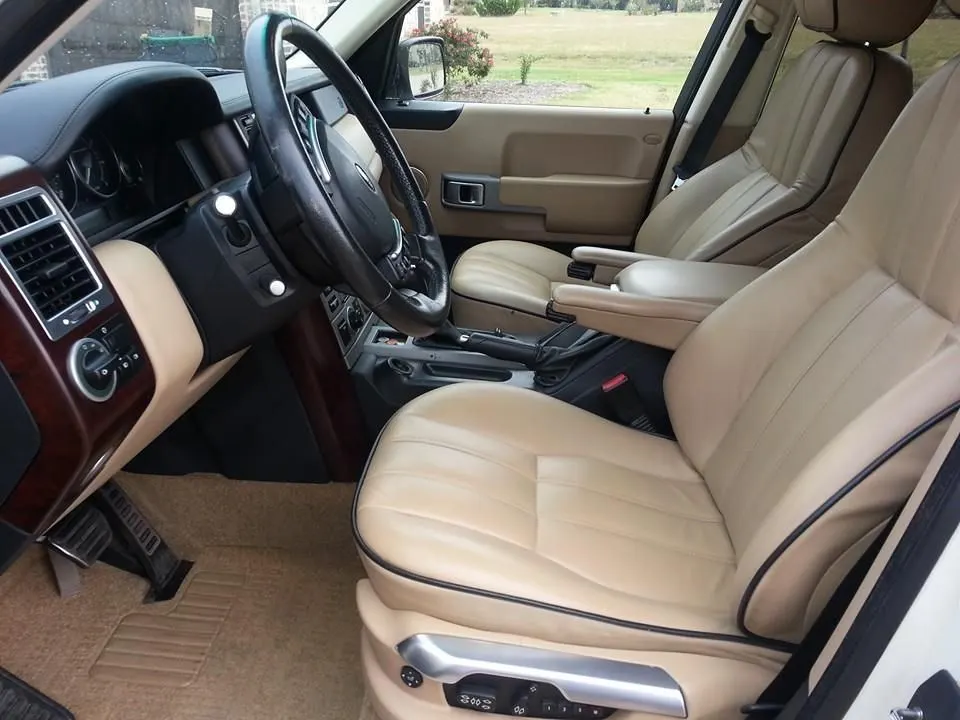
Look at any high-mileage vehicle and the wear pattern is identical regardless of make: the outer bolster of the driver's seat is worn while the rest of the interior looks reasonable.
It is not a design flaw. It is the consequence of how people get in and out of cars.
Most drivers sit down onto the outer edge of the seat, then swing their legs in and slide across into position. On exit, the reverse. So the bolster takes the driver's full body weight in a sliding motion, twice per trip, several thousand times a year.
The bolster is also a curved surface rather than a flat one, which concentrates the load on a narrow band along its crown rather than spreading it.
And it sits where clothing hardware makes contact: belt buckles, back-pocket phones, keys and rivets on jeans all drag across the same strip.
The three stages of bolster wear
Bolster failure runs a predictable course, and knowing which stage you are at determines the work and the cost.
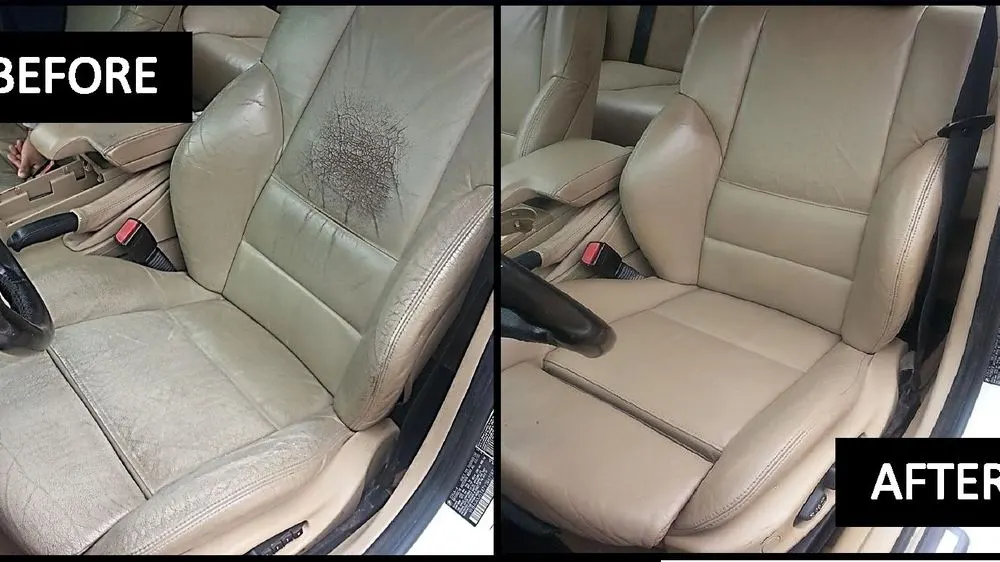
Stage one is finish wear. The topcoat dulls and thins along the crown of the bolster. The color may look slightly flatter than the surrounding leather. Nothing has broken and nothing feels different. This is the cheapest stage to address and almost nobody addresses it, because it does not look like a problem.
Stage two is color loss. The topcoat has gone, so the pigment layer is exposed and starts coming away — on clothing, on hands, on a cleaning cloth. The area looks visibly paler and the surface feels slightly rougher. This is where most people first notice, and it is a straightforward refinish.
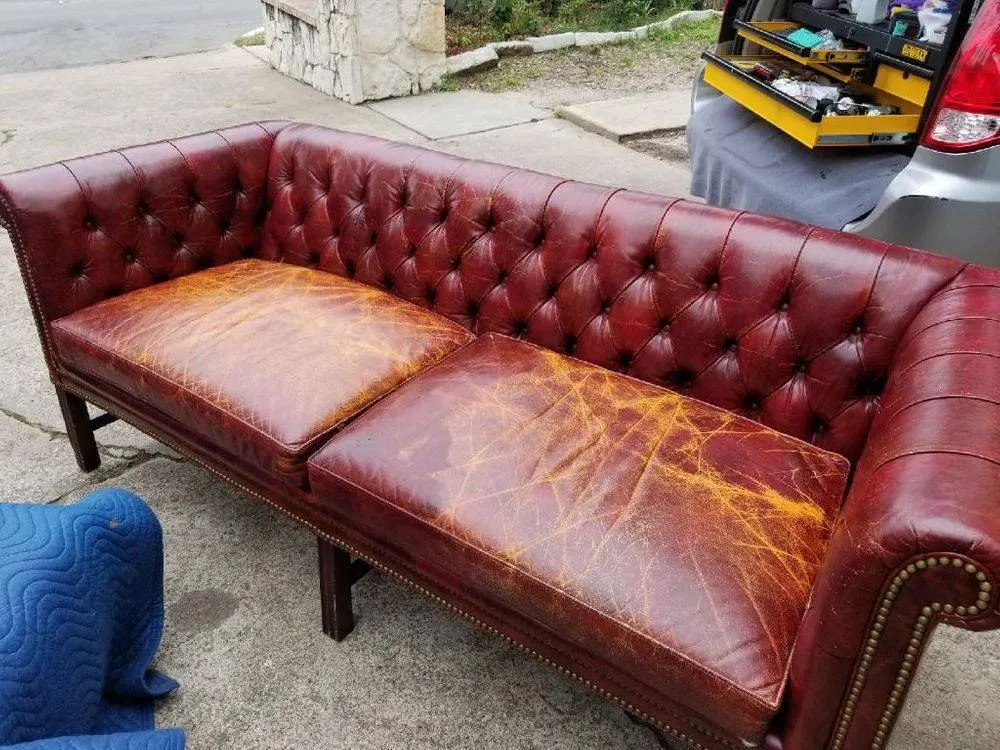
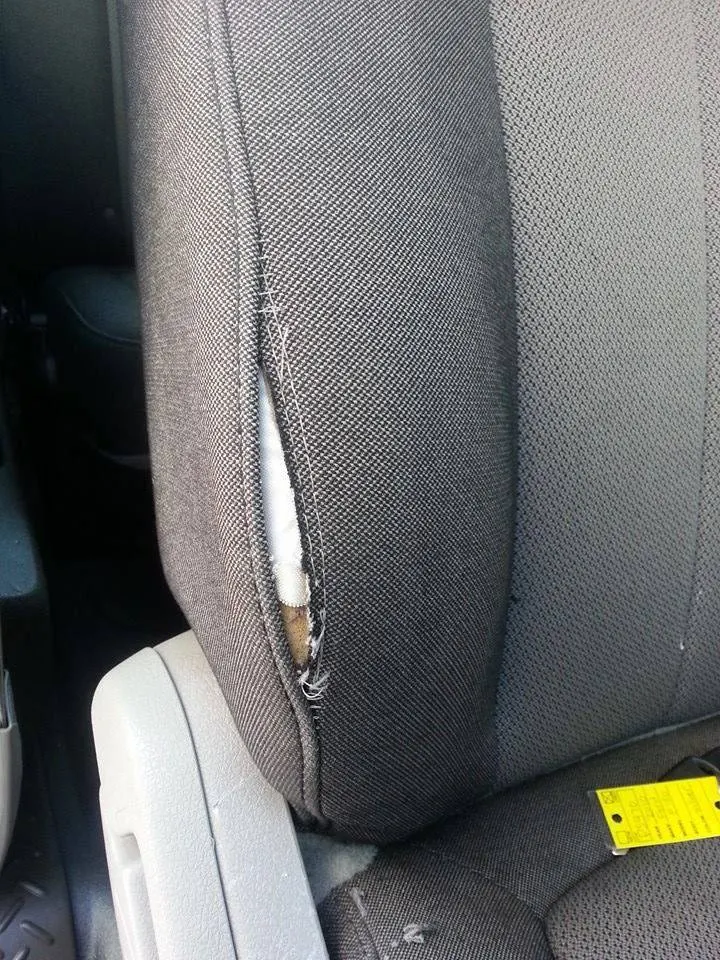
Stage three is material failure. With no coating left, the exposed hide abrades directly, dries and stiffens, and eventually splits. This is the torn bolster everyone recognizes, and by this point the options are more limited.
Between stage two and stage three there is often less time than owners expect, because a bolster with exposed hide has lost the layer that was protecting it from both abrasion and the cabin heat.
How a worn bolster is repaired
At stages one and two, the work is a refinish of the panel and it produces an excellent result.
The bolster is cleaned and degreased thoroughly. Car interiors accumulate sunscreen, hand lotion, hand sanitizer and protectant sprays, and none of those allow a finish to bond.
The worn area is leveled where abrasion has thinned it, using flexible filler in thin layers.
Grain is pressed into the final layer to match the surrounding texture. On automotive leather this matches well, because the texture is embossed and repeats.
Color is mixed against the actual leather, tested, then sprayed in thin coats and feathered well beyond the worn area — usually across the whole bolster, because a matched patch on a slightly faded bolster is still visible.
An automotive-grade topcoat seals it. This matters more than on furniture: vehicle finishes have to handle far higher surface temperatures, constant UV through glass and much heavier abrasion.
Done properly, the bolster looks and feels like the rest of the seat, and it wears at the same rate as the leather around it.
When the bolster has split or worn through
Stage three changes the conversation, and it is worth being honest about the options.
A single split in an otherwise sound bolster can be repaired — backed, filled and refinished — and it holds well if the surrounding material still has integrity.
But a bolster that has worn through is usually thin and abraded across a wide area, not damaged at one point. There is little sound material to blend into, and filler over a large high-flex curved surface is working against the geometry.
In that situation, replacing the bolster panel gives a better and longer-lasting result. Seat covers are assembled from separate sewn panels, so a single panel can be removed and replaced without touching the rest of the seat.
The practical catch is color: new leather does not match hide that has aged in a Texas car for eight years, so the new panel is normally recolored, and often the adjoining panels blended, so the seat reads as one piece.
Sourcing matters too. Matching material is easier on common vehicles and harder on older or low-volume models, which sometimes pushes the decision back toward repair.
Why Texas vehicles reach stage three faster
This region compresses the timeline considerably, and the mechanism is worth understanding.
Cabin temperatures in a car parked outside through a Dallas summer run far above ambient, and that heat drives plasticizers out of both the finish and the hide. Leather that has lost plasticizer is stiff, and stiff leather abrades rather than flexing under friction.
UV through the side glass degrades the binder in the finish on the same panel, so the bolster is simultaneously drying, stiffening and losing its protective coating.
Then the driver slides across it in that state, twice a trip, every day.
The result is that a bolster which might take eight or ten years to reach stage three in a mild climate frequently gets there in five or six here.
It also explains why conditioning a vehicle interior is not optional maintenance in this region. A supple bolster resists abrasion; a stiffened one does not.
The habits that actually change the outcome
Small changes to how you get in and out make a measurable difference, because the damage is mechanical.
Sit down onto the seat first, then swing both legs in. This removes most of the sliding motion across the bolster and it is the single most effective change available.
Move keys and phones out of back pockets. A phone in a back pocket is dragged across the bolster crown on every entry, and hard cases and metal edges cut rather than abrade.
Be aware of belt buckles on the driver's side, which contact exactly the worn band.
Get in and out on the shaded side where you have a choice in a parking lot, so the material is cooler and more flexible when it takes the load.
None of these require any product and all of them extend the panel's life.
Maintenance that helps specifically here
Bolsters benefit from attention more than any other part of an interior.
Clean the bolster every four to six weeks with a cleaner made for automotive interiors, applied to a cloth rather than sprayed. Soil is abrasive, and the bolster collects the most of it.
Condition three to four times a year in this climate, concentrating on the bolster and the seat front. A flexible surface abrades far more slowly than a stiff one.
Keep hand sanitizer away from it. Sanitizer transferred from hands dissolves the topcoat, and the driver's seat side gets more of it than anywhere else in the car.
Avoid silicone-heavy dressings. They look impressive briefly, they make a bolster slippery in a way you notice while driving, and they contaminate the surface so any later repair needs extra preparation.
Park in shade wherever possible. Nothing else you do has a comparable effect on how long the panel lasts.
Seat covers: helpful and imperfect
Owners often ask whether a cover solves this, and the honest answer is partly.
A well-fitted cover does prevent direct abrasion on the bolster, and on a vehicle that has already been repaired it protects the investment.
A poorly fitted one can make things worse. Covers that shift under use rub the leather beneath, and a cover pulled tight over a bolster adds tension across a curved surface that is already stressed.
Covers also trap heat and moisture against the leather, which in a Texas summer is not a neutral effect — the material underneath runs hotter and dries out faster.
The reasonable position: a good cover on a work vehicle or a vehicle used for rideshare is sensible protection. On a car you enjoy sitting in, changing how you get in is a better trade.
Getting it assessed
Photograph the bolster with the door open, in daylight, no flash. Car interiors are dim and flash flattens exactly the texture that needs reading.
Take one shot square-on from about a foot away, and one from a low raking angle along the length of the bolster, which shows how far the wear extends and whether the surface has broken.
Photograph the passenger-side bolster too. It is usually far less worn and it serves as the reference for what the driver's side should look like.
Rub an inconspicuous part of the worn area gently with a white cloth. Color on the cloth means the topcoat has gone and you are at stage two.
Say what the vehicle is and roughly its age, whether the seat is heated or ventilated, and whether there is an airbag tag on the outboard edge of the seat back — because damage on or beside that seam belongs to a trim shop working to the manufacturer's specification rather than to a cosmetic repair.
Worth doing before a sale or trade-in
This is one of the few upholstery decisions with a fairly predictable payback.
Interior condition weighs heavily in appraisal and in a private buyer's impression, because seats are the first thing anyone touches. A worn or split driver's bolster is the most visible interior defect in most vehicles, and it is exactly where a buyer looks.
Because it is a single panel, addressing it is one of the cheapest cosmetic improvements available, and it changes how the whole interior reads.
It is also mobile work, so it happens on the driveway or in a dealership lot without the vehicle going anywhere.
If you are selling, doing the bolster and the steering wheel together covers the two surfaces that most influence a first impression, usually in one visit.
Questions we get asked next
- Only the driver's seat is worn. Will a repair match the passenger seat?
- That is the goal, and it is achievable — the color is mixed against your actual leather and the passenger seat is the reference for what the finish should look like. On a vehicle where both seats have aged, the repaired bolster is matched to its own seat rather than to a factory sample.
- How long does a bolster repair last?
- On sound leather with an automotive-grade topcoat, it wears at the same rate as the surrounding panel — years of normal use. What shortens it is the same thing that caused the original wear: sliding across it on every entry, and parking in full sun.
- My bolster is split and the foam shows. Is it too late?
- Not too late, but the options narrow. A single split with sound material around it can be backed, filled and refinished. A bolster that is thin and abraded across a wide area is usually better served by replacing that panel and recoloring it to match.
- Can this be done at my house or workplace?
- Yes. Bolster work is mobile — it happens where the vehicle is parked, and the car does not need to be left anywhere. There is a short cure period afterward before the panel should take friction, confirmed on the day rather than promised in advance.
Sources
- Federal Motor Vehicle Safety Standard No. 208, Occupant Crash Protection — U.S. National Highway Traffic Safety Administration, checked 2026-08-21
- bolster
- car seats
- wear