Can a Repaired Area Match the Original Leather Color and Grain?
Repairs become visible for three reasons, and only one of them is the color being wrong.
Quick answer
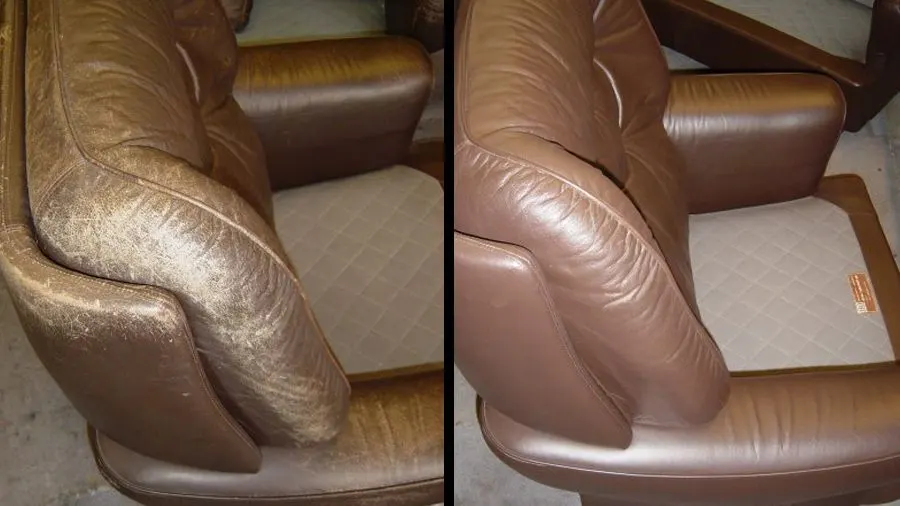
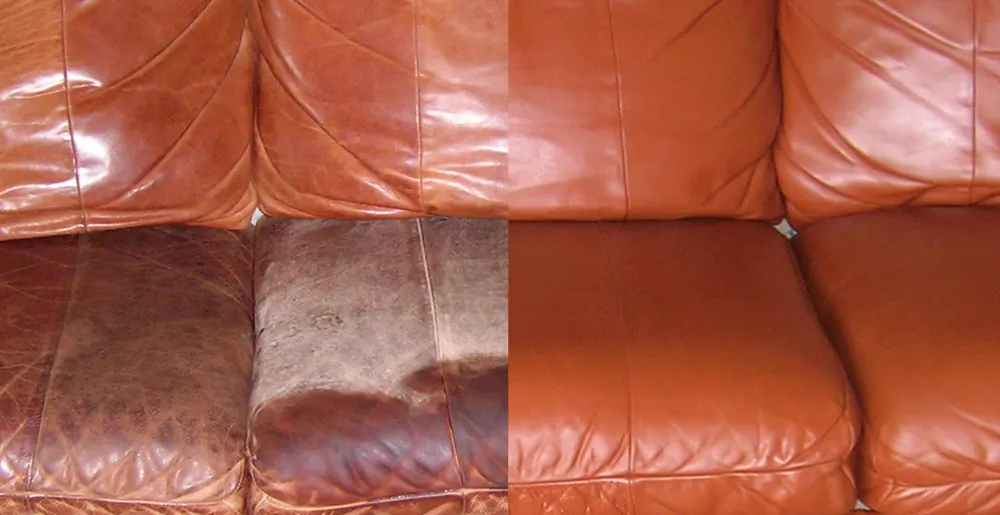
Yes, and three things have to be right rather than one. Color has to be mixed on site against the material as it is now, not to a factory reference, because the item has aged away from its original color. Texture has to be matched to the surrounding grain so the area does not read as a smooth patch. And sheen has to match, which is the one people overlook — a gloss mismatch is more visible than a color mismatch.
At a glance
| Match to now | Mixed on site against aged material, not to a factory code |
|---|---|
| Three variables | Color, texture and sheen — all three have to be right |
| Most overlooked | Sheen. A gloss mismatch shows more than a color one |
| Scope helps | Working to seam lines gives the eye a natural break |
| Hardest cases | Aniline, two-tone finishes and very light colors |
Why a factory color code produces a bad match
This is the most common misunderstanding about matching and it is worth clearing up first.
Owners often expect a specialist to look up the original color and use it, and that would produce a visibly wrong result.
Leather ages. Light degrades the pigment, use polishes and darkens contact areas, oils absorb, and the whole surface shifts over years.
So the item is no longer the color it left the factory as, and it is usually not a lighter version of it either — different pigments break down at different rates, so the hue shifts as well as the depth.
A repair colored to the original specification is technically correct and visually wrong, because nothing else on the item is that color any more.
The correct approach is to mix against the actual material immediately adjacent to the repair, in the light of the room where the item lives.
That is a hand process rather than a lookup, and it is a large part of what a repair costs.
How the color is actually matched
Worth describing, because it explains both the time and the accuracy.
Base colors are mixed to build a match, in the way a paint mixer works but by eye and by hand.
The mix is tested on a sample area or a card and compared against the material directly, side by side.
It is checked in daylight and again under the room's own lighting, because a match made under one can be visibly off under the other. Warm domestic lighting and neutral daylight are genuinely different tests.
It is adjusted and retested until it disappears against the adjacent material.
On a piece with variation across it, the match is made to the area immediately next to the work rather than to an average.
And it is confirmed before the full application rather than discovered afterward.
That process is why on-site mixing produces better results than anything prepared in advance from a photograph or a code.
Texture, and why grain matters
The second variable, and it is what makes a repair invisible rather than merely the right color.
Leather and vinyl have a surface texture. A filled repair is smooth, and a smooth area in a grained surface catches light differently from every angle.
So the grain has to be reproduced across the repaired area.
On manufactured materials — vinyl, coated synthetics — this is straightforward, because the grain is embossed and repeats exactly, so a matching texture can be applied precisely.
On genuine leather it is harder, because natural grain is irregular and never repeats. The texture is matched to the character of the surrounding grain rather than reproduced exactly.
That is why vinyl repairs frequently disappear completely while leather repairs are excellent rather than undetectable on close inspection.
Heavily grained leather is more forgiving than smooth leather, because the irregularity gives more room for a match to blend.
And smooth or patent-style finishes are the hardest of all, since there is no texture to hide anything.
Sheen, which is the one people miss
The most overlooked variable and frequently the reason a technically good repair looks wrong.
Every finish has a sheen level — matte, satin, semi-gloss — and it changes as an item ages. Used surfaces polish; sun-exposed surfaces flatten.
A repair finished glossier than its surroundings reads as a patch even when the color is perfect, because the eye interprets a difference in reflectance as a difference in material rather than in tone.
It shows from every angle in a room rather than only from one.
It is matched by testing the topcoat on a hidden area and adjusting, rather than by using whatever finish came with the color.
This is a fair question to ask a specialist directly: how will the sheen be matched. The answer tells you a great deal.
On a whole-panel or whole-piece job it becomes easier, since the sheen is chosen once and applied consistently — which is another argument for scope.
Why scope makes matching easier
The fourth factor, and it is a decision rather than a skill.
A repair blended into the middle of a panel has to be perfect from every angle, because there is no visual break for the eye to accept a transition at.
A repair worked to the seam lines of a panel has a break the eye already expects — a shadow line, a change in plane — so a small difference is absorbed rather than noticed.
That is why work runs to seams rather than being confined to the damage, and why quotes cover more area than the damage suggests.
It also ages better. A blend that looks acceptable on the day drifts apart as the surrounding material continues to fade, while a panel treated to its seams stays consistent within itself.
On matching items the same logic extends further, since a set is compared directly.
So the answer to whether a repair will match depends partly on how much of the item is included, and it is worth asking for both scopes.
The harder cases
Some situations genuinely are more difficult, and it is better to know in advance.
Aniline leather, which has no pigment coating. Any applied color changes the character of that area, effectively making it semi-aniline there, so matching is a compromise the owner should agree to rather than discover.
Two-tone and antiqued finishes, where a darker tone sits in the recesses and a lighter one on the raised areas. Reproducing that effect in a repair is genuinely skilled work.
Pull-up and wax finishes, which lighten when stretched and darken when relaxed. They behave unlike anything else and need a specialist familiar with them.
Very light colors, where any difference in tone is more visible than on a mid-tone.
Metallic and pearlescent finishes, which have a directional appearance.
Distressed finishes, which are helpfully forgiving for hiding a repair and hard to reproduce consistently.
And badly faded pieces with strong variation across a single panel, where there is no single correct color to match to.
What a good match looks like
Worth setting realistic expectations, because perfect is the wrong word.
A good repair is one you have to be shown rather than one you notice.
It should be invisible at normal viewing distance under normal room lighting, which is how the item is actually experienced.
Under close inspection in strong directional light, a leather repair may be detectable to someone who knows exactly where to look. That is a good outcome rather than a failure.
On vinyl and manufactured materials, repairs frequently are undetectable even close up, because the grain repeats and the material is uniform.
What is not acceptable is a repair visible from across the room, a shiny or dull patch, a smooth area in a grained surface, or a hard edge where the work stops.
Those are the things to raise if you see them, and they are workmanship rather than the limits of the process.
How the match ages
A question worth asking that owners rarely think of, and it matters more than the match on the day.
A repair colored to the material as it is now will age alongside it, because the same light and use act on both.
That is another argument against matching to a factory code — a match to the original color starts wrong and stays wrong.
Where a repair is on a piece with strong exposure differences, the repaired area and the surrounding material may drift apart over years if they get different amounts of light.
That is a reason to address the exposure as well as the damage, particularly with window light.
A properly sealed repair holds its color as well as an original finish, so it is not more vulnerable to fading than what is around it.
And a repair that is looked after the same way as the rest of the piece will remain matched, which makes aftercare part of the matching question rather than separate from it.
Why lighting matters when you judge the result
A practical note for the moment the work is finished, because this causes unnecessary worry.
Judge a match in the light the item actually lives in, at the times of day you actually use the room.
Domestic lighting is usually warm and directional; daylight is cooler and more even. A match that is correct in one can look slightly off in the other, which is why a specialist checks in both.
Looking at a repair under a bright directional lamp held close to it is not a fair test — that is a condition the item will essentially never be seen in.
Nor is looking at it from six inches away, since the relevant question is whether it is visible at normal viewing distance.
Walk into the room normally and see whether your eye goes to it. That is the real test and it is the one that matters.
If it does stand out under ordinary conditions, say so promptly rather than living with it — a fresh finish is far easier to adjust than one that has cured for weeks.
What to send to get an accurate assessment
Photograph the damage close up and at a raking angle, which shows the grain.
Photograph a hidden area of the same material for the original color.
Photograph the whole panel showing the seams, since scope affects matching.
Photograph the item in the room's normal lighting as well as in daylight, so the lighting conditions are understood.
Say whether the finish is a single color or has a darker tone in the recesses.
Do a water-drop test on a hidden area and say whether it beads or soaks in, since aniline changes the whole matching conversation.
Say whether the item has faded unevenly, and where the light comes from.
And say whether other pieces need to match it, since that usually determines the scope more than the damage does.
Questions we get asked next
- Can you match the original factory color?
- It can be found and it would produce a visibly wrong result, because the item has aged away from it — and not simply gotten lighter, since different pigments break down at different rates. The correct approach is mixing on site against the material as it is now.
- Will the repair be completely invisible?
- On vinyl and manufactured materials, frequently yes, because the grain repeats and the material is uniform. On genuine leather, a good repair is invisible at normal viewing distance and may be detectable under close inspection in strong directional light. That is a good outcome.
- Why does the sheen matter so much?
- Because the eye reads a difference in reflectance as a difference in material rather than in tone, so a gloss mismatch is more noticeable than a color mismatch — and it shows from every angle in a room. It is matched by testing the topcoat, not by using whatever came with the color.
- Is aniline leather harder to match?
- Yes. It has no pigment coating, so any applied color changes the character of that area — effectively making it semi-aniline there. That is a compromise the owner should agree to in advance rather than discover, and on a valuable aniline piece it is worth discussing before any work.
- color matching
- grain
- repair quality