How Does Mobile Car-Interior Repair Work at Your Home or Workplace?
Interior repair is one of the few automotive jobs that does not require the car to go anywhere. Here is what the visit actually involves.
Quick answer
The work comes to the vehicle. You send photos, get an assessment and a price, then book a slot at your home, your workplace or wherever the car is parked. What is needed on the day is access to the vehicle, a parking space with room to open the doors, ideally some shade, and a couple of hours. Most single-panel repairs are finished in one visit, with a short cure period afterward before the surface takes friction.
At a glance
| Where | Your driveway, workplace parking lot, dealership lot or storage facility |
|---|---|
| What you provide | Keys or access, a space with room to open doors, ideally shade |
| Typical duration | A couple of hours for a single panel; longer for multiple areas |
| You do not need to | Wait with the vehicle, or leave it anywhere |
| Afterward | A short cure period before the surface takes friction, confirmed on the day |
Why interior work suits a mobile model
Most automotive repair needs a workshop because it needs a lift, extraction, or equipment that does not travel. Interior cosmetic repair needs none of those.
The work is done inside the cabin with the doors open. The tools are portable, the materials are compact, and the power requirement is small.
That means the constraint is access rather than facilities, and access is something you already have wherever the vehicle normally sits.
For an owner, the practical effect is that a repair costs you no driving, no waiting room, and no arranging alternative transport. The car is available before the visit and after it.
For a business with vehicles, it means the fleet stays where it works rather than being cycled through a shop.
The assessment comes first, without a visit
The process starts with photographs rather than an appointment, and that is deliberate.
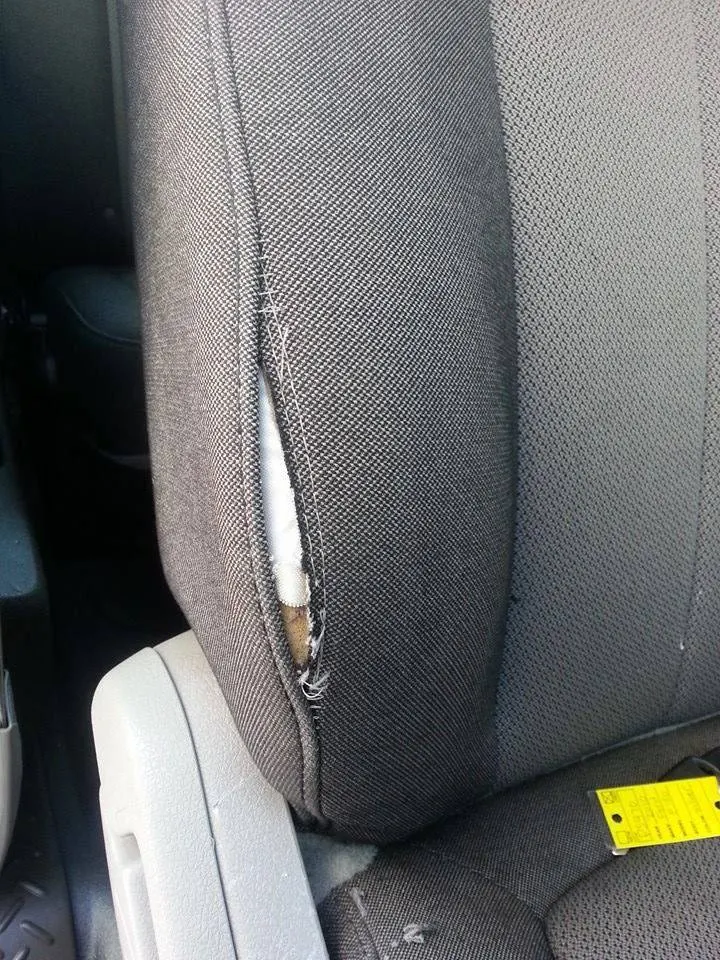
Interior damage is overwhelmingly visual: what the material is, whether the surrounding surface is sound, how far the damage extends, what color and grain need matching. All of that reads from good images.
So an assessment and a price can be given honestly without anyone driving out, which means you find out whether the work is worth doing before spending anything.
It also means the awkward answers arrive early. If a photograph shows damage on a seat back's airbag deployment seam, the correct response is that this belongs to a trim shop rather than a cosmetic repair — and that answer costs nothing to receive.
The photographs that work: the whole seat or panel with the door open, the damage square-on from about a foot away, the damage again from a low raking angle, and an undamaged area of the same material for color reference. Daylight, no flash.
What is needed on the day
The requirements are modest and worth knowing so nothing holds the job up.
Access to the vehicle. Keys, or someone available to unlock it. For workplace visits, that often means leaving keys with reception or with a colleague.
A parking space with room to open the doors fully and stand beside them. A tight space between two other cars is workable but slower.
Shade if at all possible. Working on a surface that is already at high temperature is harder, cure times change, and color matching in glare is worse. A carport, a garage, a covered lot or the shaded side of a building all help.
A power outlet within reach is useful for lighting and heat tools, though most mobile setups carry their own power.
The vehicle reasonably clear of belongings in the work area — a footwell full of items or a seat covered in bags costs time that would otherwise go into the repair.
What actually happens during the visit
The sequence is consistent and it is worth knowing so you can recognize whether corners are being cut.
Setup takes a few minutes: the working area is lit properly, surrounding trim and glass are masked, and materials are laid out.
The damaged area is cleaned and degreased. On a vehicle this stage matters more than owners expect — interiors accumulate sunscreen, hand lotion, hand sanitizer and protectant sprays, and nothing bonds through them.
The color match is mixed against the actual panel, not from a chart, and tested somewhere hidden before anything visible is touched. Wet color reads darker than dry, so the test is judged once it has dried.
The repair itself: lifted edges stabilized, a backing bonded behind any void, flexible filler built in thin layers, grain pressed to match the surrounding texture, color sprayed in light coats and feathered well past the repair, then an automotive-grade topcoat.
Finally the area is checked in daylight and at an angle, the masking comes off, and the aftercare and cure time are explained before anyone leaves.
How long it takes
Most single-panel repairs — a bolster, a seat cushion, a console lid, a steering wheel — are a couple of hours.
Several areas in one visit take longer but not proportionally, because setup, masking and color mixing are shared. A bolster plus a wheel plus a console is a comfortable single visit and costs far less than three separate ones.
A full interior refresh across seats, panels and trim runs to most of a day, and occasionally a second visit.
What lengthens a job is layers rather than area. A deep rebuild needs several cure stages and each one has to be allowed to happen properly. Rushing a cure is the most reliable way to produce a repair that fails in three months.
Weather matters. High humidity slows curing and extreme heat brings its own problems, so a hot afternoon in August is a slower working environment than a morning in shade.
You do not need to be there
This is the part that makes workplace visits work.
Someone needs to provide access at the start and be reachable if anything unexpected turns up. Most people also want to be present for the color match, which takes a few minutes and is genuinely interesting to watch.
The hours in between do not require supervision.
At the end, someone should be available to look at the result and hear the aftercare and cure time. That last conversation matters — which cleaner is safe on the new finish, when the first cleaning should happen, and how long before the surface takes friction.
A specialist who finishes and leaves without saying any of that has skipped something, and it is reasonable to ask.
Where mobile repair happens in practice
Across Dallas–Fort Worth the settings are varied and the constraints differ.
Home driveways are the most common and the easiest.
Workplace parking lots work well, especially for people who cannot spare a Saturday. Shade and permission from building management are the two things worth checking in advance.
Apartment complexes need a space where the vehicle can stay put for a few hours, which is worth confirming with management on a busy lot.
Dealership lots, for vehicles being prepared for sale, where several cars are often handled in one visit.
Storage facilities and marinas, for classic vehicles, RVs and boats.
The consistent factor is that the vehicle stays where it is, which for a work truck, a fleet vehicle or a car someone depends on daily is the whole point.
What mobile work cannot do
Being clear about the boundaries, because the model works by not overreaching.
Full seat reupholstery. Stripping a seat to its frame and fitting a new cover is trim shop work.
Panel replacement requiring the seat cover to be removed, which disturbs the airbag assembly and its wiring.
Anything on or beside a seat-mounted airbag deployment seam, or a door or dash airbag area. That belongs to a trim shop working to the manufacturer's specification.
Carpet replacement, which means removing seats, console and trim.
Structural or mechanical work of any kind.
A good specialist declines these and refers you rather than improvising, and says which category your job is in before booking. Being told plainly that a job is not theirs is a better sign than being told everything is possible.
The Texas scheduling factor
Local conditions shape when the work happens more than in most regions.
Summer afternoons in direct sun are the worst working environment: surfaces are too hot for reliable finishing, cure behavior changes, and color matching in glare is unreliable.
So summer jobs are usually scheduled for mornings, or in shade, or under cover. A garage or carport transforms what is possible on a hot day.
The metroplex is spread out, which means travel time is real and a specialist covering the whole area should be straightforward about scheduling rather than vague.
It also makes combining work worthwhile. Booking several items on one vehicle, or several vehicles at one site, is considerably more efficient than separate visits.
Storm season occasionally moves outdoor jobs, since finishing needs a dry, still working environment. A garage or covered space removes that risk entirely, which is worth mentioning when booking if you have one available.
Booking it well
A few things make the visit go smoothly.
Send the full photo set up front, including anything else you are considering. It is far cheaper to add the console to a bolster repair at the booking stage than to discover it on the day.
Say where the vehicle will be and whether there is shade, because that shapes the time slot.
Say whether the seats are heated, ventilated or perforated, and whether there is an SRS or AIRBAG tag on the seat back edge.
Mention anything already applied to the interior — dressings, protectants, previous repair attempts — since those change the preparation.
And plan the cure period into your day. If you need the car at four, do not book work that finishes at half past three.
If several vehicles at the same address need work — a household with two cars, a small fleet, a dealership lot — book them together. Travel and setup are the fixed costs in mobile work, and spreading them across several vehicles at one site is where the real savings are.
For a business, it is worth nominating one person as the contact for access and sign-off. Mobile visits go wrong far more often through nobody being able to find the keys than through anything to do with the repair itself.
Questions we get asked next
- Does the repair work as well outdoors as in a workshop?
- For interior cosmetic work, yes — the cabin is the working environment either way, and the products are formulated for on-site application. What matters is shade, a dry still setting and adequate light. A hot sunlit lot in August is a genuinely worse environment than a shaded driveway.
- Can it be done at my office while I am working?
- That is one of the most common arrangements. It needs keys or access, a space where the vehicle can stay for a couple of hours, and usually a quick check with building management. Most people leave keys at reception and collect the car at the end of the day.
- What if it rains on the day?
- Interior work needs a dry, still working environment, so an outdoor job in rain gets moved. Under cover — a garage, carport or covered lot — it proceeds normally, which is one reason it is worth mentioning available shelter when booking.
- How soon can I drive after the work?
- There is a short cure period before the repaired surface should take friction, and it is confirmed on the day rather than promised in advance because temperature and humidity affect it. Driving itself is usually fine sooner than sliding across a repaired bolster is.
- mobile service
- process
- automotive