How Should Offices Maintain and Repair a Fleet of Leather and Vinyl Furniture?
Most offices have more upholstered furniture than they think and no maintenance plan for any of it.
Quick answer
Inventory it, supply one correct cleaner, and schedule a periodic visit instead of reacting to complaints. Offices typically have far more upholstered furniture than anyone has counted — task chairs, executive chairs, reception seating, meeting rooms, breakout areas — and no single person owns it. A simple inventory, a designated cleaner kept separate from general cleaning chemicals, and a visit at an agreed interval handles almost all of it at a fraction of reactive cost.
At a glance
| Step one | Count it — most offices have more than they think |
|---|---|
| Biggest single risk | General cleaning chemicals used on upholstery |
| Dry indoor air | Offices run air conditioning most of the year here |
| Scheduled beats reactive | One visit clearing many items costs far less |
| Assign an owner | Without one, nothing gets noticed until it is bad |
Count what you actually have
The first step is an inventory, and it usually produces a larger number than anyone expects.
Task and executive chairs at desks, which is the biggest count in most offices.
Reception seating, which is the most visible and usually the most neglected.
Meeting and boardroom chairs, often high-specification and often the oldest furniture in the building.
Breakout and lounge seating, which takes heavy informal use.
Bench and banquette seating in kitchens and collaboration spaces.
Training room stacking chairs, which are moved constantly and damaged in the process.
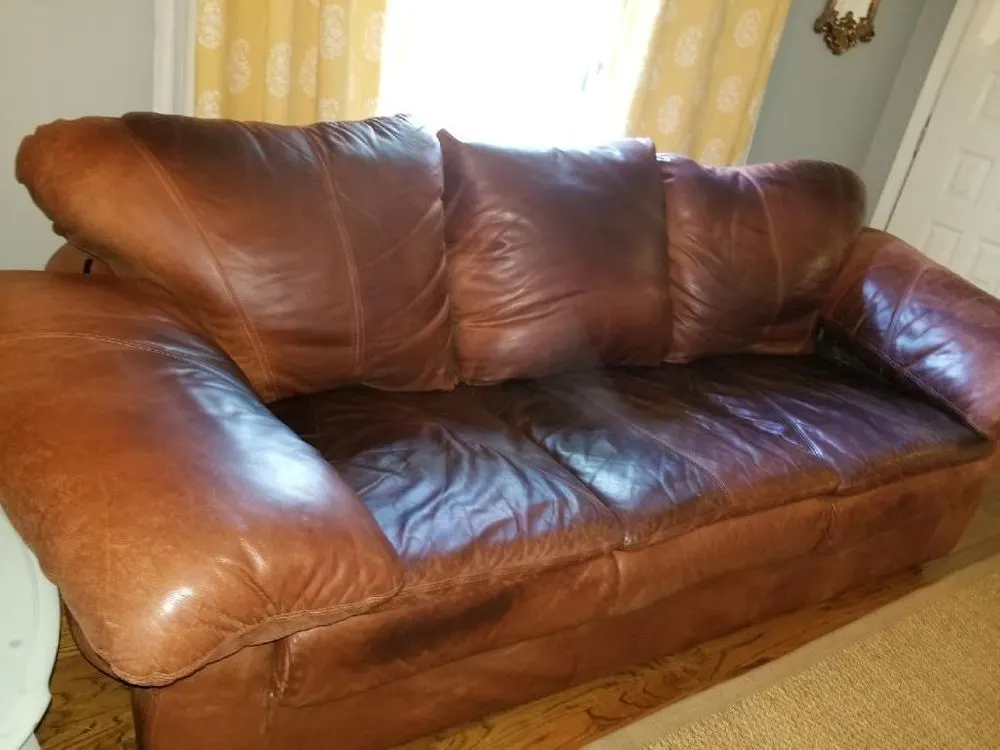
And executive office furniture — sofas, armchairs and ottomans in senior offices, which are low-use and high-visibility.
Record model, material, color, location and rough age. That single document is what turns a series of complaints into a manageable program.
Why office furniture ages the way it does
Two forces dominate, and neither is what facilities teams usually blame.
The first is dry indoor air. Offices in this region run air conditioning for most of the year, and cooling removes moisture from air as a side effect of how it works. Leather exchanges moisture with the air around it continuously, so it gives some up, year after year.
That is why office leather stiffens faster than domestic leather, and why a chair sitting in the path of a supply vent ages visibly faster than the one beside it.
The second is cleaning chemistry. General-purpose cleaners and disinfectants used on upholstery strip finishes and, on vinyl, leach out the plasticizers that keep it flexible.
Since the pandemic many offices increased disinfection frequency across all surfaces without checking material compatibility, and upholstery took the same treatment as desks.
Actual use is the third factor and it is usually the smallest of the three.
Which is encouraging, because the first two are both fixable at almost no cost.
The cleaning specification
This is the highest-return change available and it costs the price of one product.
A pH-neutral cleaner formulated for upholstery, kept separate from the general cleaning chemicals and clearly designated for seating.
Applied to a cloth rather than sprayed heavily onto the surface.
A soft brush for the seam channels and the grain, where soil accumulates and a cloth never reaches.
For disinfection, a product compatible with the upholstery at the correct dilution and dwell time, checked against the furniture manufacturer's published guidance.
No general-purpose wipes, no alcohol-based sanitizer applied directly to seating, no abrasive pads, and no melamine sponges.
The reason this fails in practice is supply rather than knowledge: the cleaning contractor uses what is on the cart, and upholstery was never specified as a separate surface.
So the change that works is a conversation with the contractor and a labeled bottle, not an instruction.
Conditioning on a schedule
Rarely done in offices and it does more for the fleet than any repair.
Leather that stays supple does not crack. Leather that stiffens cracks at the flex points, and once it has cracked the cost is an order of magnitude higher.
Conditioning three or four times a year on leather items is a reasonable rhythm in this climate — more often than published guidance written for milder places.
It applies to the low-use items too. A boardroom chair used twice a month is drying at the same rate as a task chair used daily, and boardroom furniture is frequently the stiffest in a building for exactly that reason.
It is light work: a small amount, worked in, buffed off. Excess sits on the surface and attracts soil.
It can be done in-house with training or included in a scheduled specialist visit.
And it should be recorded, so it survives a change of facilities staff.
Scheduled visits versus reacting
This is where the money is, and the arithmetic is the same as for any fleet.
Travel, setup and color mixing are per visit rather than per item.
An office with twenty identical chairs is one color match and one setup.
So a visit that clears fifteen accumulated items costs far less than fifteen call-outs, and considerably less than the same work spread over three years.
Reactive work also means items reach a worse stage before anything happens, since a complaint is generated by visible damage rather than by early wear.
The practical arrangement is an agreed interval — quarterly, twice a year, annually depending on size — with a list maintained between visits and anything urgent handled separately.
That also converts an unpredictable expense into a budgetable one, which for a facilities manager is often the more valuable outcome.
Triage: what to fix, what to leave
Not everything needs doing, and being selective is part of managing a fleet.
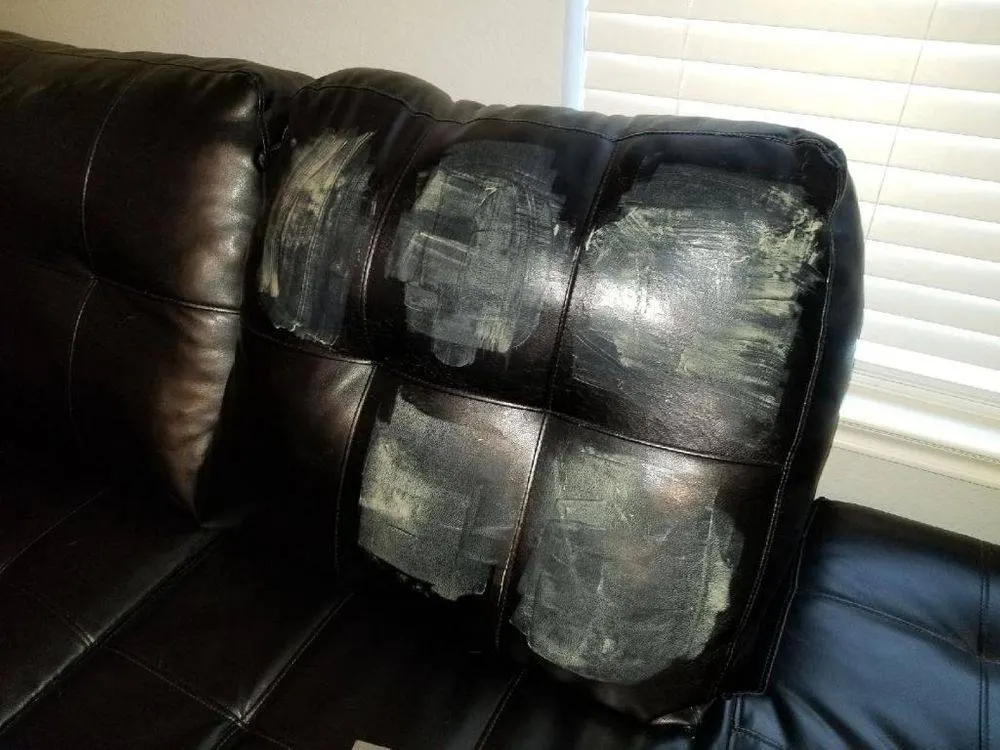
Fix anything that will get worse: tears, splits, seams that have opened, and anything where the covering has broken through.
Fix what visitors see and touch — reception seating, boardroom chairs, the furniture in client-facing spaces. Those carry disproportionate weight.
Fix contact-point wear on chairs that are staying in service, since arm tops and seat fronts are cheap to address early.
Accept cosmetic wear that is stable and out of sight.
Separate out items that are near the end of their planned life, since spending on furniture due for replacement rarely returns.
And separate out anything with peeling bonded material, which cannot be durably repaired and needs a replacement decision rather than a repair quote.
That sort takes a few minutes per item and it prevents budget being spread evenly across items that need very different things.
Reception and boardrooms are different
Two areas that justify a higher standard than the general fleet.
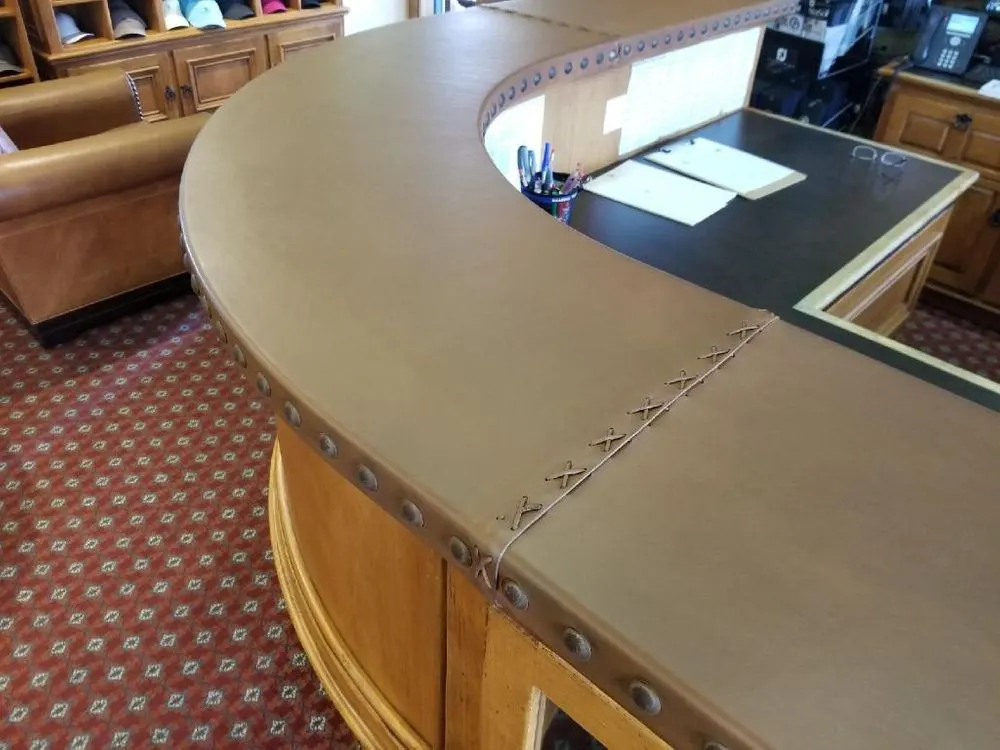
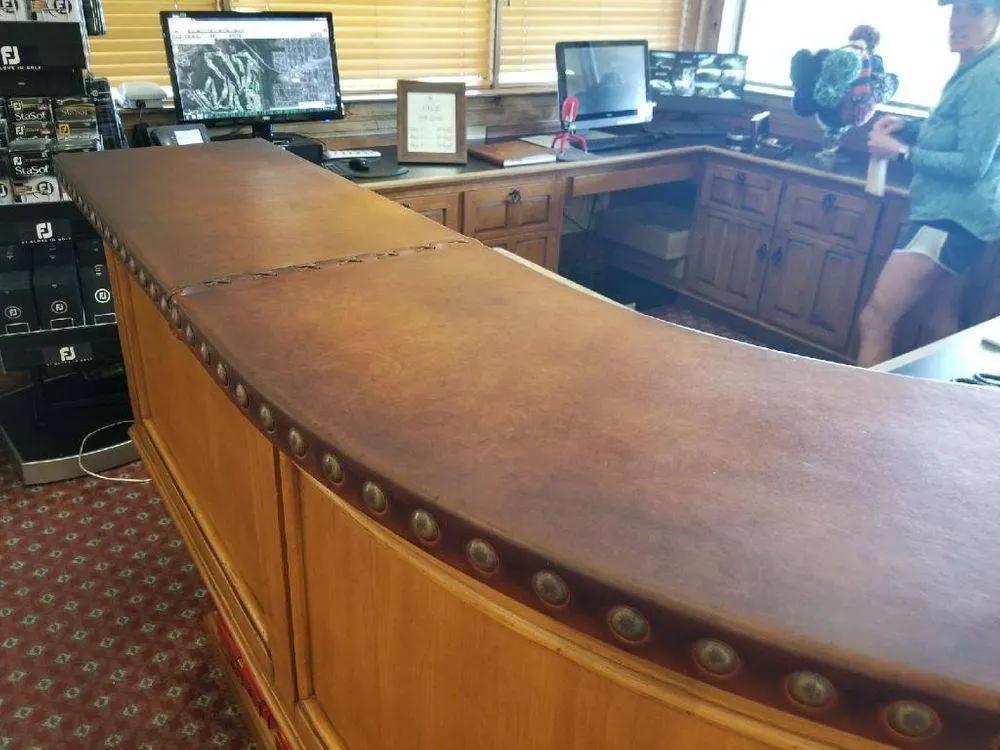
Reception is the first thing a visitor sees, and it sets an impression of the organization in the same way a hotel lobby does. Worn reception seating is read as a signal about the business rather than about the furniture.
It is also usually the oldest furniture in the building, because it is nobody's chair and generates no complaints.
Boardrooms are where the highest-value conversations happen, in front of the people whose impression matters most.
Boardroom chairs are typically high-specification and worth restoring rather than replacing, and they are often stiff from years of low use in dry conditioned air rather than worn from heavy use.
Both areas benefit from being on a shorter maintenance interval than the general fleet.
And in both, doing the set together matters, since seating in those rooms is seen as a group and a single restored chair among tired ones stands out.
Assigning an owner
The organizational point that determines whether any of this happens.
Office furniture typically belongs to nobody. Nobody is responsible for noticing that reception seating has aged, so it ages until somebody complains.
Assigning it — even nominally, to facilities or to office management — means somebody walks the space periodically and maintains the list.
It also means somebody notices when the wrong cleaning product appears, which is the failure that costs the most.
A quarterly walk with the inventory in hand takes half an hour in most offices.
Housekeeping and cleaning staff are the earliest warning available, since they touch every item regularly, and giving them a route to report damage is worth more than any inspection schedule.
And keeping records of what was done and when makes the capital planning conversation straightforward rather than speculative.
Working around an occupied office
Practical scheduling, which is usually easier than in other commercial settings.
Offices are empty for predictable blocks — evenings, weekends, holiday periods — which suits both the work and the cure period.
Task chairs can be worked on in groups so nobody is without a chair during working hours, or rotated through if spares exist.
Reception and boardroom work is best done outside hours, since those spaces are in use during the day and the work is visible.
Ventilation matters in a sealed office building, so windows where they open, the building system running, and airing time before people return.
The cure period before furniture takes weight is confirmed at the end rather than promised, and an overnight or weekend window covers it comfortably.
For a large program, working floor by floor over several visits keeps disruption contained.
Building the business case internally
Facilities managers frequently know what should be done and need to justify it, so it is worth framing the case in terms finance recognizes.
Deferred maintenance on upholstery converts into capital replacement. A chair whose arm wear is addressed early stays in service; the same chair left three years becomes a replacement.
The multiple is large. Refinishing the contact points on a specified chair is a small fraction of what an equivalent new chair costs, and the mechanism underneath was the expensive part in the first place.
Scheduled work is also budgetable, where reactive work is not — and a predictable line is easier to defend than an unpredictable one.
The cleaning change costs essentially nothing and prevents the failure mode that ends the most furniture, which makes it the easiest item on any list to approve.
And client-facing spaces have a value that is real even if it is hard to quantify: reception seating is read as a signal about the organization.
Presenting the inventory with a condition rating against each item turns all of this from an opinion into a document, which is usually what the conversation needs.
What to send for an assessment
Send the inventory if you have one, or a count by item type and location if you do not.
Photograph a representative example of each item type, plus close-ups of the typical damage.
Photograph reception and boardroom seating specifically, since those usually set the standard.
Say what the furniture is cleaned with and how often, including any disinfection protocol.
Do the thumb-flex test on a few leather and vinyl items and report the results.
Say which items are near the end of their planned life.
Say what the access windows are — evenings, weekends, holiday periods — and whether spare chairs exist.
And say whether you want a one-off program or a scheduled arrangement, since that changes both the pricing and the approach.
Questions we get asked next
- Why does our office furniture stiffen faster than furniture at home?
- Because offices run air conditioning for most of the year here, and cooling removes moisture from indoor air as a side effect. Leather gives moisture up to that dry air continuously. Chairs in the path of a supply vent age visibly faster than the ones beside them.
- What is the single most valuable change we can make?
- Supply one pH-neutral upholstery cleaner, kept separate from the general cleaning chemicals and clearly designated for seating. General-purpose cleaners and disinfectants strip finishes and, on vinyl, leach out the plasticizers that keep it flexible.
- Is a scheduled visit really cheaper than calling when something breaks?
- Substantially. Travel, setup and color matching are per visit rather than per item, and an office usually has many identical chairs. A visit clearing fifteen accumulated items costs far less than fifteen call-outs, and it converts an unpredictable cost into a budgetable one.
- Why is our boardroom furniture stiff when nobody uses it?
- Low use does not protect leather — the dry conditioned air does the damage regardless. Boardroom seating is frequently the stiffest furniture in a building for exactly that reason, and it benefits from being on the same conditioning schedule as everything else.
- offices
- maintenance
- fleet