Why Is My RV Sofa Peeling, and Is It Bonded Leather or Vinyl?
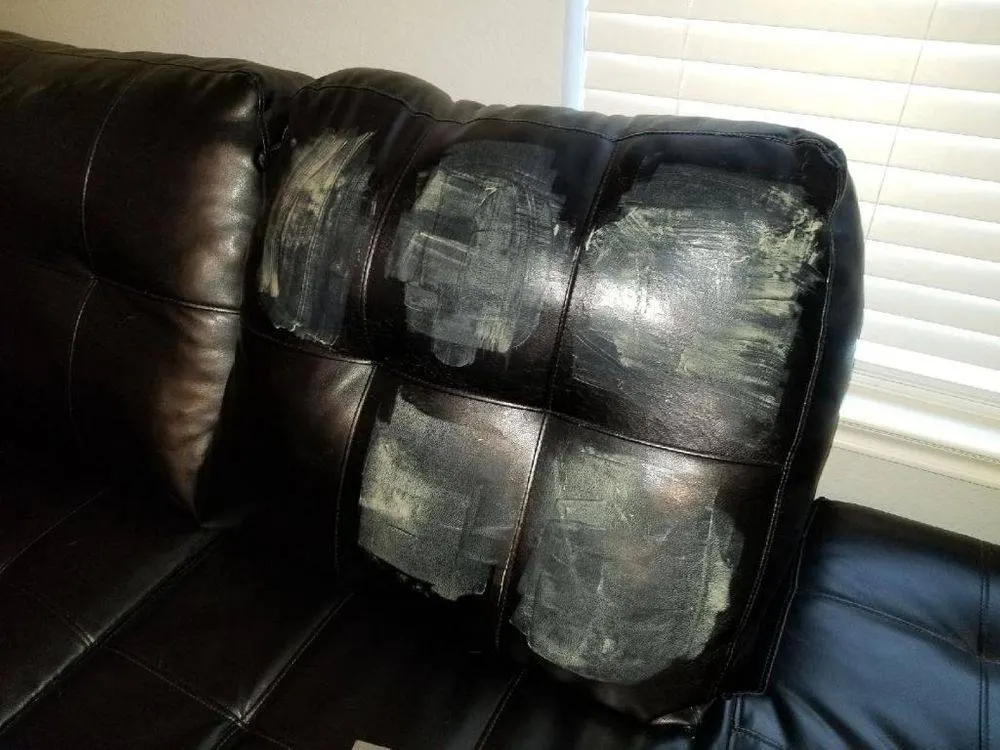
An RV sofa that is shedding flakes is almost never leather failing. It is a coating separating from its backing, and that changes the options entirely.
Quick answer
Peeling and flaking almost always means bonded leather or a coated synthetic rather than real leather — most RV furniture is one of those, whatever it was called at the dealership. In bonded material, a polyurethane surface is glued to a backing, and heat, UV and age break that bond so the surface lifts and sheds. Real leather does not peel; it cracks or wears. Identifying which you have decides everything, because bonded material cannot be durably repaired once it is delaminating widely.
At a glance
| Peeling in flakes | Bonded leather or coated synthetic — a surface layer separating |
|---|---|
| Cracking, not flaking | Usually genuine leather, and usually repairable |
| Why RVs are worse | Cabin heat when parked, sun through large windows, long storage |
| Small isolated area | Can be stabilized and refinished as a holding measure |
| Widespread peeling | Recover or replace — refinishing over failing material will not last |
What RV furniture is usually made of
This is the part that surprises owners, and it explains most of what follows.
The great majority of RV sofas, recliners and dinette seating are covered in a coated synthetic or in bonded leather rather than in hide.
There are good reasons. The material is light, which matters enormously in a vehicle with a weight rating. It is cheaper, it comes in consistent rolls rather than variable hides, and it cleans easily.
Manufacturers describe it in various ways, and terms like bonded leather, leather-look and premium seating all point at the same category.
Some higher-end coaches do use genuine leather, often on the captain's chairs and sometimes on the main furniture, and it behaves completely differently.
So the first job on any peeling RV sofa is establishing which you have, because the answer determines whether repair is a sensible spend or money into a losing position.
How to tell in two minutes
You do not need equipment, just a close look in good light.
Look at the damage itself. Peeling that lifts in sheets or flakes, revealing a fabric-looking layer underneath, is bonded or coated synthetic. Leather does not do this — it cracks, wears thin and abrades, but it does not shed a surface layer.
Look for a fabric backing at any cut edge, under a cushion or behind a panel. A woven or knit backing behind a thin coating means synthetic.
Check the grain pattern across a large panel. A pattern that repeats exactly is embossed onto a manufactured material. Real leather has irregular grain that never repeats.
Look for hide edges. Leather panels are cut from hides and have a suede-like reverse; synthetics come off a roll.
Smell it, in a warm coach. Leather has a distinctive smell that synthetics do not reproduce well.
And check the weight and feel — leather is heavier, warmer to the touch and softens with use, while synthetics stay uniform until they fail.
Why bonded material peels
The failure is structural rather than cosmetic, and it is worth understanding before spending anything.
Bonded leather is built as layers: a fabric backing, an adhesive layer holding leather fibers or filler, then a polyurethane surface with the grain embossed into it.
The polyurethane and the adhesive both degrade with heat, UV and time. Hydrolysis — reaction with atmospheric moisture — breaks down the polyurethane regardless of use.
When the bond between the surface and the backing fails, the surface lifts. It starts at high-contact areas and edges, then spreads.
Nothing stops that progression, because the material is degrading throughout rather than only where it shows.
This is why a repair to one peeling patch is followed by another patch nearby a few months later. You are not fixing damage; you are chasing a material that is reaching the end of its life.
Why RVs are harder on it than houses
The same sofa in a living room would last considerably longer, and the reasons are specific to the vehicle.
A parked RV in a Texas summer reaches interior temperatures far above ambient. That heat is exactly what drives polyurethane degradation and adhesive failure.
RVs have large windows relative to their floor area, and much of the seating sits in direct sunlight for hours.
Coaches spend long periods in storage, often closed up, which combines heat with trapped humidity — the two things hydrolysis needs.
Slide-out furniture takes mechanical stress every time the slide operates, working the material at exactly the points where the bond is weakest.
And travel adds constant low-level vibration and flexing that domestic furniture never sees.
The practical consequence: bonded material that might last eight or ten years in a house can start failing in three or four in a coach that lives outside here.
What can honestly be done with peeling bonded material
Being straight about this saves money, and it is the part most owners want a clear answer on.
A small, isolated peeling area on furniture that is otherwise sound can be stabilized: the loose material is removed back to a sound edge, the area is filled level, textured and recolored. Done well it looks good and it buys time.
What it does not do is stop the rest of the material from failing, because the degradation is throughout.
Where peeling has spread across a seat, a back, or multiple pieces, refinishing the whole thing is a poor spend. A new coating over a failing substrate keeps lifting with the substrate under it.
There is one honest exception worth mentioning: an owner who needs the coach presentable for a specific trip or a sale, understands the limitation, and wants a cosmetic result for a defined period. That is a legitimate reason to do the work, provided everyone is clear it is temporary.
What is not legitimate is selling it as a permanent repair, and any specialist who quotes widespread bonded peeling as a lasting fix is worth questioning.
The options when refinishing is not the answer
Three routes, and the right one depends on the coach and how long it is being kept.
Reupholstery in a durable material is the durable answer. On RV furniture this often means a marine-grade or contract-grade vinyl rather than leather, which is lighter, tolerates heat far better and is honest about what it is. It is the option that stops the problem returning.
Replacement furniture is worth pricing alongside reupholstery, because RV furniture is modular and aftermarket replacements exist for most common layouts. Depending on the piece, replacing can cost less than retrimming.
Covers and throws are a real option for an older coach where neither of the above makes financial sense — a fitted cover over failing bonded material contains the shedding and costs very little.
The decision usually comes down to how long the coach is being kept and whether it is being sold. A coach staying in the family for another decade justifies reupholstery; one being sold next season may not.
When it is genuine leather instead
If the identification came back as hide, the picture is much better.
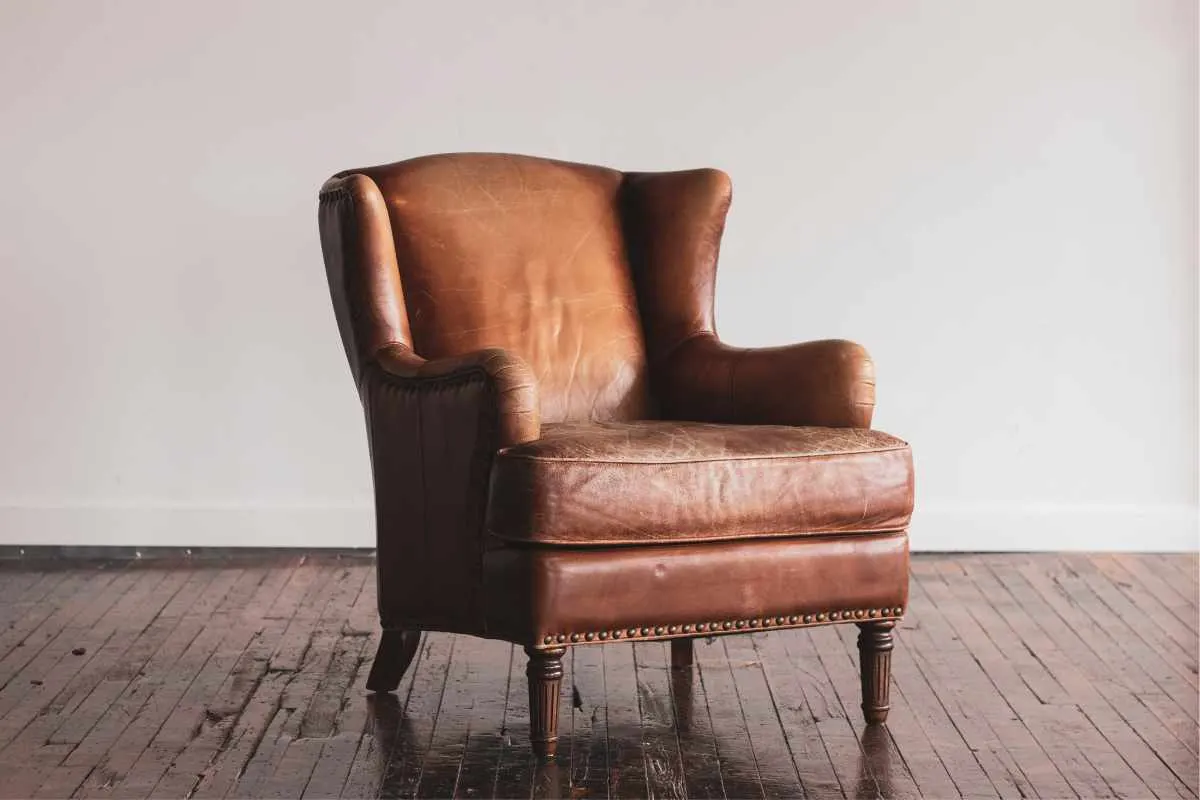
Genuine leather in an RV is usually on captain's chairs and sometimes on higher-end furniture, and its failure modes are cracking, color loss, worn contact points and stiffness — not peeling.
All of those repair well. Cracked and worn areas are cleaned, filled in thin flexible layers, texture-matched and recolored. Color loss recolors evenly.
Leather in a coach does need conditioning more often than in a house, because the heat cycling drives moisture out of the hide faster. Three or four times a year is reasonable here rather than once or twice.
The one leather problem specific to RVs is stiffness from prolonged heat and storage, which conditioning addresses if it is caught before the hide starts cracking.
So the same coach can have furniture that is not worth repairing and chairs that are very much worth repairing, which is why identification is done piece by piece rather than once.
Slowing it down on the furniture you still have
For an RV with bonded furniture that has not yet failed, these measures genuinely extend its life.
Manage heat. Reflective window covers, vents, or a covered storage space make the largest single difference, because heat is the primary driver.
Keep direct sun off the seating with blinds or shades when the coach is parked, especially on the sunny side.
Ventilate during storage. A sealed coach through a Texas summer is the worst case for both the furniture and everything else inside.
Clean with a neutral product and no solvents. Household wipes and all-purpose sprays attack the surface coating and bring forward the failure.
Use throws or covers on the seats that get the most use, which removes the abrasion that starts the delamination at contact points.
None of this makes bonded material permanent. It reliably adds years, which on an RV is worth the small effort.
The mess that peeling creates
Owners usually call about how it looks. What actually pushes them to act is what the shedding does to the rest of the coach.
Delaminating polyurethane comes off in flakes, and those flakes go everywhere — into the carpet, into the slide mechanisms, onto clothing, into food.
They stick to anything with static or moisture, so they transfer onto anyone who sits down and travel through the coach from there.
Vacuuming helps for a day. The material keeps shedding because the failure is ongoing.
Black and dark flakes on light carpet are the version people notice most, and there is no cleaning routine that keeps up with it.
This is a genuine reason to act rather than defer, particularly on a coach that gets used with children, pets or bedding.
It is also the argument for a fitted cover as an interim measure on a coach where reupholstery is not happening this season. A cover over failing bonded material contains the shedding, costs very little, and buys time without pretending to be a repair.
What to send for an assessment
Photograph the peeling area close up in daylight, with something for scale.
Photograph the edge of the peeling so what is underneath is visible — a fabric-looking backing is the decisive detail.
Photograph the whole piece, and then every other piece of furniture in the coach, because they often fail at different rates and the recommendation may differ per piece.
Say whether it flakes and sheds, or cracks without shedding.
Say the coach's age, whether it is stored inside or outside, and roughly how hot it gets when closed up.
Say what the plan for the coach is — keeping it, selling it, one trip coming up — because that changes which of the options is right far more than the condition does.
And say whether the captain's chairs are a different material from the sofa, since they very often are.
Questions we get asked next
- The dealer said it was leather. Why is it peeling?
- Because it is very likely bonded leather or a coated synthetic, both of which are commonly described as leather in RV sales material. Genuine leather does not peel — it cracks, wears and fades. Peeling in flakes with a fabric layer underneath is the definitive sign.
- Can a peeling RV sofa be refinished to look new?
- A small isolated area can be stabilized and refinished convincingly. Widespread peeling cannot be permanently fixed, because the whole material is degrading and a new coating lifts with the substrate beneath it. For a defined short-term need it can still be worth doing, if described honestly.
- Is reupholstery worth it on an older coach?
- It depends on how long you are keeping it. Reupholstering in a marine or contract-grade vinyl solves the problem for good and suits a coach staying in the family. For one being sold soon, replacement furniture or covers usually make better financial sense.
- Why does my RV furniture fail faster than my house furniture?
- Heat, sun and storage. A closed coach in a Texas summer runs far hotter than any room, the windows are large relative to the space, and long sealed storage combines heat with humidity. All three accelerate exactly the degradation that causes bonded material to delaminate.
- RV
- bonded leather
- peeling