Can a Peeling, Shiny or Worn Leather Steering Wheel Be Restored?
The wheel is the most-touched surface in any vehicle and the one owners notice last. It also restores more dramatically than anything else in the interior.
Quick answer
Yes, in most cases. A wheel that has gone shiny, sticky or worn through at the hand positions is cleaned and degreased, leveled where it has thinned, textured to match and recolored with an automotive-grade finish. The result is dramatic because the wheel is in your field of view constantly. The exception is the center pad, which houses the driver's airbag and is not a cosmetic repair area.
At a glance
| Typical wear | Shiny, darkened patches at ten-and-two and at the bottom |
|---|---|
| Cause | Constant hand contact, body oil, hand sanitizer, sunscreen, UV through the windshield |
| Restores well | Shine, discoloration, tackiness, worn finish, light cracking |
| Harder | Wheels worn through to the substrate, or with the rim's shape lost |
| Excluded | The center pad — the driver's airbag housing |
Why the wheel wears faster than anything else
No other surface in a vehicle gets the combination the steering wheel gets.
Constant contact under pressure. Hands grip it for every minute of every trip, and grip means friction rather than the light contact a seat back receives.
Body oil, continuously. Palms transfer oil directly into the finish, in the same places, thousands of times.
Hand sanitizer, which is the modern addition and a significant one. Alcohol dissolves leather finishes, and the wheel is touched with freshly treated hands more often than any other surface in the car.
Sunscreen and hand lotion, which contain compounds that soften a topcoat.
And UV straight through the windshield onto the upper rim.
That is five degradation mechanisms operating on one narrow band of material, which is why wheels look tired on vehicles whose seats still look fine.
The wear pattern, and what each stage means
Steering wheel wear is highly predictable, which makes it easy to assess.
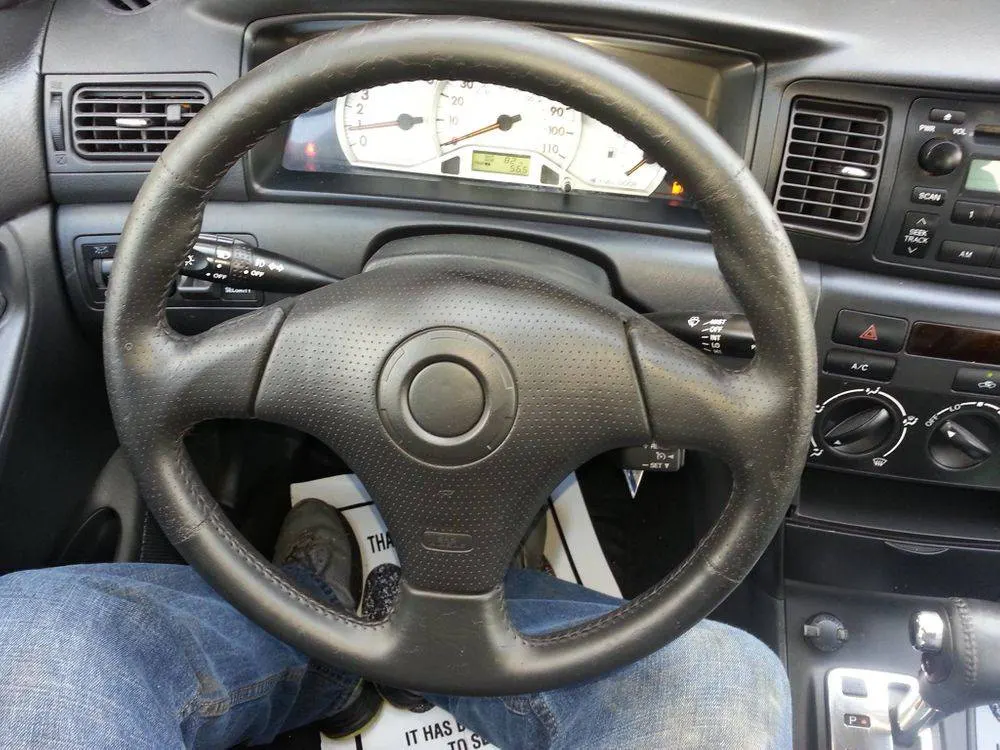
It concentrates at the standard hand positions: the upper sides, and the bottom of the rim where people rest a hand on longer drives.
Stage one is shine. The textured finish is polished smooth by friction, so it reflects light differently. The color is intact; the surface has just been burnished.
Stage two is darkening. Body oil has migrated into the finish, and the affected areas look darker and feel slightly slick.
Stage three is tackiness. The finish has begun breaking down, usually from a combination of oil and sanitizer, and the surface is soft and sticky.
Stage four is wear-through. The finish has gone and the material beneath is exposed — on a leather-wrapped wheel that is the hide, and on some wheels a foam or plastic substrate.
Stage five is loss of shape, where the material has thinned enough that the rim's profile is visibly changed. This is the point at which restoration becomes rewrapping.
How a wheel is restored
The work is a refinish, done in the vehicle, and the wheel does not come off for most jobs.
It is cleaned and degreased first, and on a steering wheel this stage is longer than people expect. Years of body oil have to come out or nothing will bond, and a wheel is the most oil-saturated surface in the car.
Any tacky or breaking-down finish is taken back to something sound.
Worn areas are leveled with flexible filler in thin layers where abrasion has thinned the surface.
Grain is pressed to match the surrounding texture. Most wheels are embossed, so the pattern repeats and matches convincingly. The burnished areas are the ones that need it most, since their texture has been polished away.
Color is mixed against the wheel itself and sprayed in thin coats.
An automotive-grade topcoat seals it, chosen for a surface that is gripped rather than sat on — it has to resist abrasion and hand oil without being slippery.
The visual result is usually the single most noticeable interior improvement available, because the wheel is in the driver's field of view for the whole journey.
The airbag exclusion
The center pad of the steering wheel houses the driver's airbag, and it is not a cosmetic repair area.
The module sits directly behind that pad and deploys through it, usually along molded tear lines designed to open in a controlled way.
Filler, adhesive or coatings applied to the pad can affect how it opens, in the same way that work on a seat's deployment seam can.
So a restoration covers the rim and, where applicable, the spokes — and stops at the center pad. A specialist should state that boundary rather than being asked.
Damage to the pad itself is a dealer or trim shop matter, and it is worth handling that way rather than looking for a cosmetic workaround.
Wheels that are not leather
It is worth establishing what you actually have, because the approach differs.
Leather-wrapped wheels are hide stretched over a frame and stitched, usually along the inner edge. These restore best.
Polyurethane and vinyl wheels are common on lower trims and on work vehicles. They restore well too — often more predictably than leather, since the material is uniform.
Wood and wood-composite sections on premium wheels are a different trade entirely, needing refinishing rather than leather work.
Alcantara and suede-effect wheels, common on performance models, cannot be refinished the way leather can. Their nap is the finish, and coating it destroys the character. Cleaning and nap restoration is possible; recoloring generally is not.
Heated wheels have elements just beneath the surface, which is a reason for care with heat tools rather than an obstacle.
Check the inner edge for stitching to confirm leather, and check whether a water drop absorbs or beads — a suede-effect wheel absorbs immediately.
When rewrapping is the better answer
Restoration has a limit and it is worth naming it.
If the material has worn through to a foam or plastic substrate over a wide area, there is not enough left to build on.
If the rim's profile has visibly changed — thinner at the hand positions than elsewhere — the shape has to be rebuilt rather than refinished.
If the stitching has failed along the inner edge and the wrap is lifting away from the frame, that is a sewing job.
If the wheel is Alcantara and worn, refinishing is not the route.
Rewrapping means new material cut, stretched and hand-stitched over the frame, which is trim shop work and considerably more expensive. It is also an opportunity — people often choose a different material or stitching color at that point.
Between the two, restoration handles the great majority of tired wheels, and rewrapping handles the ones that have genuinely finished.
Making it last afterward
The single most useful change is letting hand sanitizer dry completely before touching the wheel. It takes twenty seconds and it removes the most aggressive of the five mechanisms.
Wipe the wheel weekly with a barely damp microfiber cloth. It removes body oil before it can migrate into the finish, and it involves no chemistry at all.
Clean it monthly with a cleaner made for automotive interiors, applied to a cloth.
Condition it a few times a year, using a product that does not leave a slick surface. A slippery steering wheel is genuinely unpleasant and mildly hazardous, so avoid silicone-heavy dressings entirely here even if you use them elsewhere.
Use a windshield sunshade, which shields the upper rim from the UV that degrades the finish there.
And if you use hand lotion or sunscreen in the car, apply it after you arrive rather than before you drive.
The Texas angle
Steering wheels in this region get a harder time than most, for reasons beyond the obvious.
The wheel sits directly under the windshield, which is the largest glass area in the car and the one angled to catch the most sun. The upper rim takes a heavy UV dose every afternoon.
Cabin temperatures in a parked car here run far above ambient, and the wheel is one of the surfaces that gets hottest — hot enough to be uncomfortable to hold, which most drivers here will recognize.
Hot surfaces absorb the oils, lotions and sanitizers they contact more readily than cool ones.
And sunscreen use is high for obvious reasons, so the chemistry arriving on the wheel is more aggressive than it would be elsewhere.
The practical consequence is that wheels here reach the tacky and worn-through stages earlier, and that a sunshade earns its keep on the wheel as much as on the dash.
Worth doing before selling the vehicle
Along with the driver's bolster, the steering wheel is one of the two surfaces that most influences a buyer's first impression of an interior.
It is the first thing anyone touches when they sit in a car, and a shiny, sticky or worn wheel reads as high mileage regardless of what the odometer says.
Because it is a small area, restoring it is one of the least expensive cosmetic improvements available.
Done alongside the driver's bolster, the two together transform how the whole interior presents, usually in a single visit.
It is mobile work, so it happens on the driveway or in a dealership lot with the vehicle staying where it is. There is a short cure period afterward before the wheel should be gripped firmly, confirmed on the day.
Getting it assessed
Photograph the wheel with the door open in daylight, no flash — flash on a shiny wheel produces a hotspot that shows nothing.
Take one shot of the whole wheel, and close-ups of the worn hand positions square-on and from a low raking angle so the loss of texture is visible.
Photograph the inner edge where the stitching is, which confirms whether it is wrapped leather.
Run a fingertip over the worn area and describe what you feel: smooth and shiny, slightly rough, or tacky. Those three answers correspond to three different stages and three different amounts of work.
Say what the vehicle is, whether the wheel is heated, and whether any part of the material has worn through to something that is not leather. And confirm whether the damage is on the rim or on the center pad, since the pad is excluded.
Questions we get asked next
- My wheel is sticky. Will conditioner fix it?
- No, and it will make it worse. Tackiness means either product residue sitting on the surface or a finish that has begun breaking down, and conditioner adds to both. The correct response is thorough cleaning and degreasing, then refinishing if the tackiness returns.
- Can a worn wheel be restored without removing it from the car?
- Yes, for most jobs. Restoration is done in the vehicle with the area masked. The wheel only needs to come off for rewrapping, which is a different job done by a trim shop.
- Will the restored wheel feel slippery?
- It should not. The topcoat is chosen for a surface that is gripped rather than sat on, and grip is part of the specification. If a specialist proposes a high-gloss or silicone-based product on a steering wheel, that is worth questioning.
- How long does a restored wheel last?
- Years, wearing at a similar rate to the original finish, provided the causes are managed. The one habit that most affects it is letting hand sanitizer dry before gripping the wheel, since alcohol on a fresh finish undoes it faster than anything else.
Sources
- Air Bags — U.S. National Highway Traffic Safety Administration, checked 2026-08-21
- steering wheel
- restoration
- wear