Waiting Room Chair Repair for Dallas Medical and Dental Offices: Repair or Replace?
Leather Repair Dallas repairs waiting room and reception seating for medical and dental offices across Dallas–Fort Worth: vinyl, leather and fabric guest chairs, tandem seating, bariatric chairs and lobby sofas. The work is done in your waiting room around clinic hours, and every chair gets its own repair-or-replace verdict on one itemized quote, so you only replace the chairs that cannot be repaired.
Quick answer
Leather Repair Dallas repairs waiting room seating for medical and dental offices across Dallas–Fort Worth. Torn vinyl, split seams, cracked arms, flattened seat foam and faded or mismatched chairs are repaired in the waiting room, on nights, weekends or other low-traffic windows, and most pieces are back in use the same day. You send photos or book a walk-through and get one itemized quote with a repair-or-replace verdict for every chair. Broken frames, legs and mechanisms are a separate trade.
At a glance
| What we repair | Vinyl, leather and fabric guest chairs, tandem seating pads, bariatric chairs, lobby sofas |
|---|---|
| Where | In your waiting room, anywhere in Dallas–Fort Worth |
| When | Nights, weekends and low-traffic windows around patient hours |
| The quote | Itemized, with a repair-or-replace verdict per chair |
| Not our trade | Broken frames, legs, welds and mechanisms |
| Estimate | Free, from photos or a walk-through |
Who repairs waiting room chairs for medical and dental offices in Dallas–Fort Worth
If you manage a medical or dental office, the waiting room is the one part of the practice every patient sees and nobody owns. The exam rooms have a checklist. The reception chairs have a strip of tape over a split seam and a plan to deal with it after the next busy month.
That seating is work we do. Leather Repair Dallas is a mobile repair service run by technician Francisco Avila, who has worked in leather repair and restoration since 2005. We come to your office, repair the chairs where they stand and schedule the visit around patient hours. Clinics, dental practices, imaging centers and hospital departments across DFW use us for it.
Our medical and healthcare page covers the whole practice in short. This article is only about the front of the house: which waiting room damage is repairable, how each kind of chair is handled, how to decide chair by chair between repair and replacement, and what to send so the quote comes back fast. For the clinical side, see dental-chair upholstery repair and cracked exam-table vinyl.
What goes wrong with waiting room chairs
Waiting room damage is predictable. The same six or seven problems show up in almost every practice, and each one has a standard repair. The table below matches what you can see on the chair to what is done about it.
| What you see | What it usually is | The repair |
|---|---|---|
| A seam opening along the front edge or the side of the seat | Thread worn through or the cover pulling at the stitch line | The seam is restitched on its original line, with the edge reinforced where the material has started to tear |
| Fine cracks across a vinyl seat or back | Vinyl stiffened by repeated wipe-downs, cracking where it flexes | Cracks filled and re-textured, color matched, then sealed with a topcoat |
| A tear or cut with foam showing | A snag from a bag, a key ring, a mobility aid or a deliberate cut | Backed from behind, welded or filled closed, textured and color matched |
| Arm pads worn pale, sticky or gouged | Hands, forearms and the most frequent wiping on the chair | Upholstered arms are rebuilt and refinished; hard urethane arm caps are filled, shaped and recoated |
| Seats that sit low or tilt you forward | Compressed seat foam | New high-density foam cut to the existing covers |
| Chairs in two or three shades of the same color | Chairs bought in different years, or faded near the windows | Refinished to one target color so the room matches again |
| A rip, snag or worn patch on a fabric chair | Abrasion at the arms and seat edge | Stitched closed or patched with fabric taken from a hidden part of the same chair |
How to read this table: find the row that matches the chair in front of you. Every row is a repair done in the waiting room, with nothing taken away. A wobbling leg, a bent frame or a broken weld is not in the table because it is not upholstery work, and we tell you that from the photos.
Why seams and arms fail first: disinfectant wipes
Waiting room chairs are cleaned far more often than furniture anywhere else, and in most practices they are cleaned with whatever is already on the front desk. That is usually a disinfectant wipe.
Cleaning chemistry is the main reason medical vinyl cracks. As our article on cracked exam-table vinyl explains, repeated disinfection draws the plasticizers out of the vinyl, so it stiffens long before it looks damaged, and then it cracks where the chair flexes. On a guest chair that means the front edge of the seat, the seams and the arm pads.
The clue is timing. Ordinary wear shows up first on the two or three chairs nearest the door. When a whole row cracks within a few months, the cause is the cleaning routine, not the patients. Restaurants see the same pattern from kitchen degreasers, which we cover in why degreasers crack commercial vinyl.
Leather lobby chairs react differently. Wipes and sprays soften and strip the protective topcoat, so the arms and headrests turn dull, tacky or pale. Are household wipes safe for leather and vinyl? explains what to use instead.
None of this means you should clean less. It means two things. Tell us which products your staff use, because the topcoat on a repair is chosen to tolerate them, including quat- and bleach-based disinfectants. And skip the tape: the edges of tape and stick-on patches trap dirt and lift under disinfection, which is the opposite of a surface you can wipe clean.
Guest chairs, tandem seating, bariatric chairs and lobby sofas
Most waiting rooms mix several kinds of seating, and each one is repaired a little differently.
Vinyl guest chairs. These are the bulk of most rooms. Tears are backed and welded closed, cracks are filled and re-textured to the embossed grain, and the color is matched to the surrounding material. Our vinyl repair page covers the method. If you are not sure whether a chair is vinyl or leather, send a close-up: identifying the material is part of the estimate.
Tandem and beam seating. These are the rows of seats fixed to one shared base. The chairs do not come apart easily, which is exactly why repairing them in place makes sense. We repair the seat pads, back pads and arm caps where they are. The beam, the legs and the fixings are metalwork, which is a different trade.
Bariatric chairs. Wider chairs take more load on the seat foam, the front edge and the side seams. The covers are repaired like any other chair, and tired foam is replaced with a high-density grade, a step firmer than the original if you want it, as our foam and cushion replacement page describes. One limit to be clear about: we repair the upholstery. A chair's weight rating comes from its frame, and we do not test or certify frames.
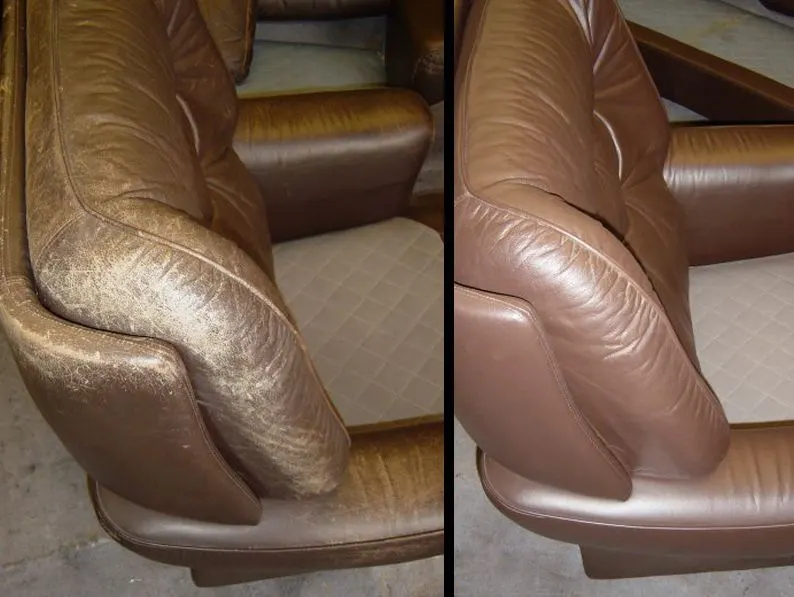
Leather lobby sofas and chairs. Worn arms, cracked seat fronts and faded panels are rebuilt, re-grained and recolored on-site, with pigment mixed against an undamaged part of the same piece. See leather repair for how that works.
Fabric chairs. Tears are closed with hidden stitching or a backed patch, and worn panels can be replaced with matching fabric from an unseen part of the chair. Our fabric upholstery repair page explains when fabric is past local repair.
Split seams deserve a note of their own, because they are the cheapest problem in the room if they are caught early. A seam run spreads with every patient who sits down, and a quick restitch turns into panel work. Stitching and seam repair covers it.
Repair or replace? A verdict for every chair
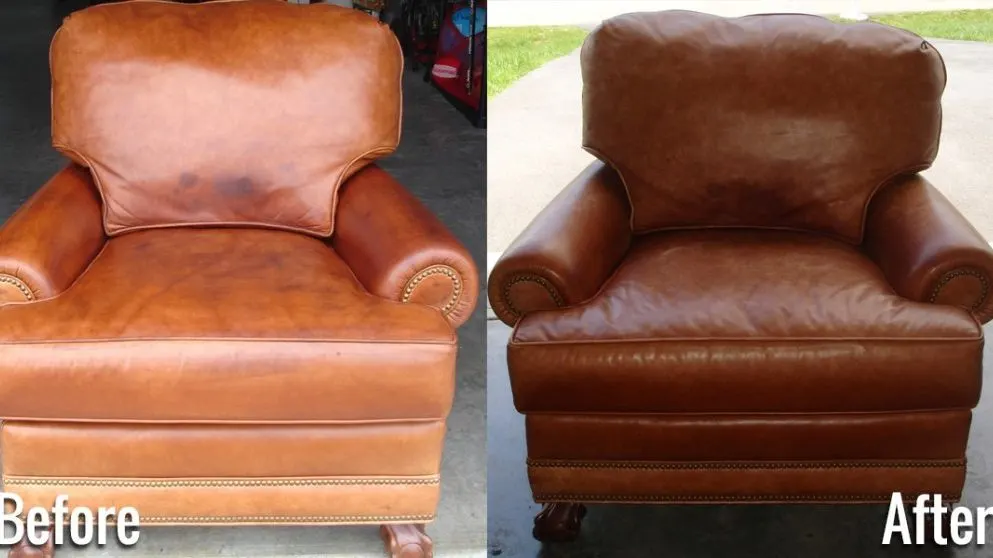
A waiting room is rarely all good or all bad. A typical room has a few chairs that need nothing, a larger group with one fixable fault each, and two or three that are finished. Replacing the whole room because of those two or three is the expensive answer. Repairing the ones that are past saving is the other expensive answer.
So the quote is itemized. Each chair is listed with its own recommendation, including an honest replace verdict where a repair is not economical. The table shows how those verdicts usually come out.
| What we find on the chair | Usual verdict | Why |
|---|---|---|
| One split seam, one tear or a worn arm, and the rest of the cover is flexible | Repair | The damage is local and the material around it is still sound |
| Light surface cracking on vinyl that still flexes under your thumb | Repair and seal | Caught early, cracks are filled and the surface is sealed again |
| A sound cover on a flat, low seat | Replace the foam, keep the chair | The inside has worn out, not the outside |
| Sound chairs that no longer match each other | Recolor | The group is refinished to one shade without buying anything |
| Vinyl that crazes or powders when pressed, across the whole chair | Replace or re-cover | A flexible repair set into brittle material cracks again at its edges |
| Bonded leather peeling in sheets | Usually replace | Heavily delaminating bonded leather can fail faster than a repair holds |
| A loose leg, a cracked frame or a broken weld | Not a repair we do | Frames and mechanisms are a separate trade from upholstery and surfaces |
How to read this table: the first four rows describe most chairs in most waiting rooms, and all four keep the chair. The thumb test is the quick sort for vinyl. Press firmly into a part of the seat nobody sits on. If it flexes and returns, the chair is a repair candidate. If it crazes or powders, it has aged out, and no repair will change that.
Scheduling repairs around clinic hours
Nobody wants a technician working in a full waiting room, and you do not need one. Nights, weekends and low-traffic windows are standard for commercial work. Work areas are contained and odor-managed, and most items return to service the same day.
A practice usually has more usable windows than it thinks: the lunch break, the afternoon the doctor is in surgery, the Friday the office closes early, the Saturday nobody is booked. Tell us your hours and closed days when you send photos, and the visit is planned around them.
Larger rooms are done in rotation. A few chairs are pulled to a spare room or a quiet corner, repaired and put back, and the next group follows. The room keeps most of its seats the whole time.
If you have a survey or inspection coming, say so. Priority scheduling for inspection-driven repairs is available, and photos of the flagged chairs let us sort them straight away. For the bigger picture, how to phase a multi-item restoration project shows how to spread a long list across several visits and budgets.
Chairs that no longer match, and the reception desk
A room can be fully intact and still look tired. The usual reason is color. Chairs bought in different years drift apart, the row under the window fades, and a single replacement chair stands out more than the worn ones did.
Bringing mixed-age furniture back to one shade is a regular part of commercial work. On vinyl it is done with flexible coatings made to bond to vinyl, sealed with a wipe-clean topcoat. Our vinyl recoloring page covers what can and cannot be recolored. The short version is that vinyl has to be flexible still. Brittle vinyl is past it.
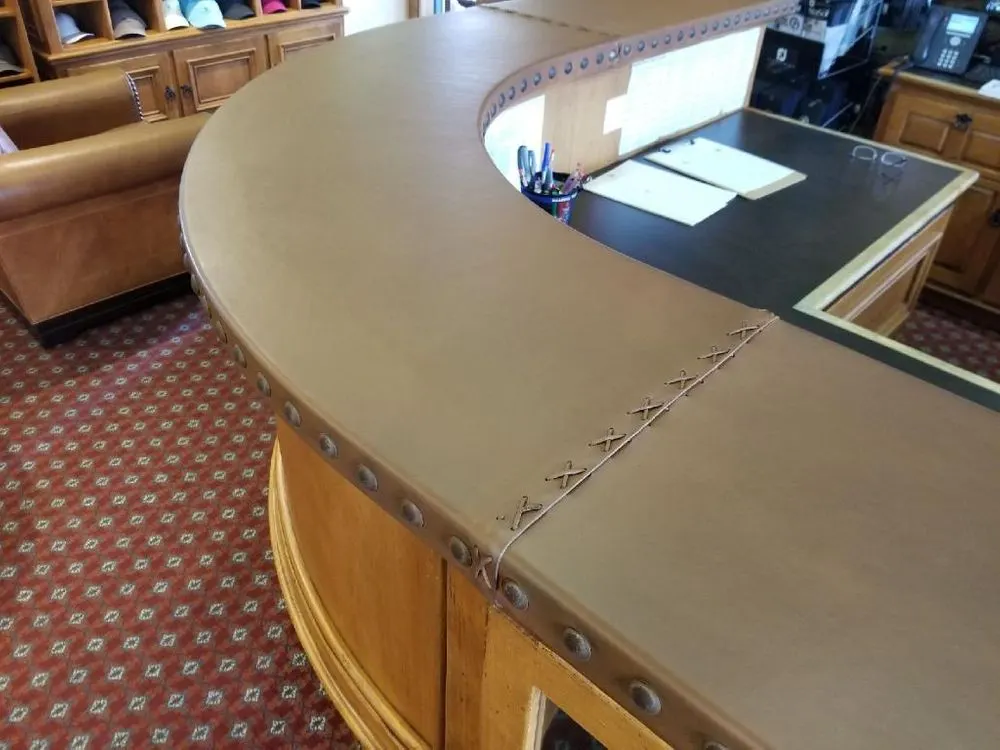
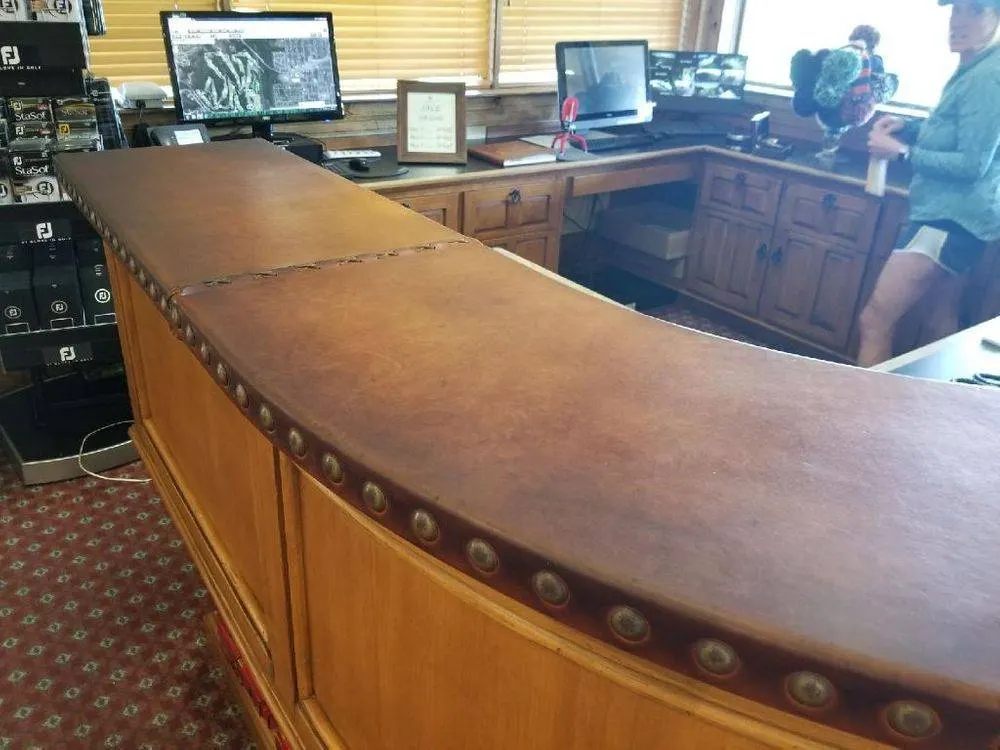
While the technician is there, look at the surfaces around the chairs. Padded or leather-covered reception desk fronts get the same hands, bags and cleaning products as the seating. Scuffed plastic chair arms, bases and glides are finishing work we also do, described on our plastic repair page. Adding them to the same quote costs less than a second visit.
Practices with several locations
Dental groups and multi-site medical practices have the same chairs in every office, cleaned the same way, wearing out at the same rate. That makes them easy to plan for.
We work across the metroplex, including Dallas, Fort Worth, Plano, Frisco, McKinney, Richardson, Irving and Arlington, and multi-site clients get consistent standards and consolidated invoicing across locations. Pricing is per item, which fits an operating budget better than a capital request for new furniture. If your building or your group needs a certificate of insurance or vendor onboarding paperwork, standard commercial documentation is available. Tell us what you need with the assessment request.
Once the backlog is cleared, the sensible next step is a schedule. Quarterly or semi-annual visits deal with wear before patients notice it. What a commercial seating maintenance plan should include lays out the inventory, the inspection routine and the cleaning specification, and our commercial seating repair page explains how the service is run.
What to send for a waiting room quote
You do not need a site visit to get a price. Photos are enough for most rooms, and the estimate is free. Send:
1. One wide photo of the waiting room, so we can see how many chairs there are and how they are arranged.
2. One photo of each damaged chair, plus a close-up of every tear, crack, split seam or worn arm. Number the chairs if there are more than a few.
3. A close-up of the material in good light, or a photo of the tag under the seat, so we can tell vinyl, leather and fabric apart.
4. The thumb-test result for vinyl chairs: does it flex, craze or powder?
5. The cleaning and disinfecting products your staff use on the chairs.
6. Your office hours, closed days and any date you are working toward, such as an inspection.
Text the photos to (972) 522-9763 or use the free photo estimate form. For a large room or several offices, ask for a walk-through instead. What photos to send for an accurate estimate goes into more detail on angles and lighting.
Why DFW practices call Leather Repair Dallas
Leather Repair Dallas, legally Dallas Leather Reconditioning Specialist, is owned by technician Francisco Avila, who has worked in leather repair and restoration since 2005. The service is fully mobile. There is no shop to haul chairs to, and nothing leaves your office.
One vendor covers leather, vinyl and fabric, so a mixed waiting room is one quote and one visit plan. The quote lists every chair with its own recommendation, and it includes a plain replace verdict where repair is not worth the money.
The same visit can cover the rest of the practice. We repair exam tables, treatment chairs and provider stools to the same sealed-surface standard, and we work with dental and veterinary practices too. If yours is a veterinary clinic, how vet clinics handle exam-table punctures is the companion to this article.
Office hours are Monday to Friday 9 to 5 and Saturday 10 to 4, and after-hours repair windows are arranged with the quote. Send photos of your waiting room through the free photo estimate form, or call or text (972) 522-9763.
Questions we get asked next
- Who repairs waiting room chairs for medical and dental offices in Dallas–Fort Worth?
- Leather Repair Dallas repairs waiting room and reception seating on-site for clinics, dental practices, imaging centers and hospital departments across DFW. Vinyl, leather and fabric chairs are repaired in the waiting room around patient hours, from one itemized quote.
- Can waiting room chairs be repaired without closing the office?
- Yes. Nights, weekends and low-traffic windows are standard, work areas are contained and odor-managed, and most items return to service the same day. Larger rooms are done in rotation so most seats stay available.
- Is it cheaper to repair waiting room chairs than to replace them?
- For chairs with local damage and sound material, per-item repair typically costs a small fraction of like-for-like replacement. Brittle vinyl, badly peeling bonded leather and broken frames are the usual replace cases, and the itemized quote says which chairs those are.
- What does waiting room chair repair cost?
- It depends on the damage, the material and the number of chairs. Small single-area repairs start around $75, and commercial work is quoted per item. Send photos for a free, itemized estimate.
- Will the repair hold up to disinfectant wipes?
- The topcoat on a repair is chosen for healthcare cleaning chemistry, including quat- and bleach-based products. Tell us which wipes and sprays your staff use and the finish is specified to tolerate them.
- Do you repair tandem or beam seating?
- We repair the upholstered parts in place: seat pads, back pads and arm caps. The beam, legs and fixings are metalwork, which is a separate trade, and we say so from the photos if that is where the fault is.
- Can you fix a wobbly or broken waiting room chair frame?
- No. Our work covers upholstery, padding and surfaces in leather, vinyl and fabric, plus plastic arms and trim. Frames, legs and mechanical parts are a different trade.
- We have an inspection coming. How fast can torn chairs be fixed?
- Priority scheduling for inspection-driven repairs is available. Send photos of the flagged chairs with the date and we tell you what can be done before it.
- waiting room chairs
- medical office
- dental office
- commercial repair
- dallas