What Should You Do Right After a Pet Scratches or Punctures Leather?
Fresh claw damage is the smallest it will ever be. Everything that happens in the next few days determines whether it stays that way.
Quick answer
Leave the raised fibers alone — they are what a repair seals back down, and trimming them turns a surface repair into a filled one. Do not clean the area, because cleaning pushes disturbed fiber deeper and can spread any staining. Check for punctures that went through into the foam. Then stop the animal returning to that spot immediately, because a scratching site gets re-used, and each session makes the eventual repair larger.
At a glance
| Do not | Trim the raised fibers, clean the area, or apply any product |
|---|---|
| Do | Check for punctures through to the foam, and cover the spot |
| Most urgent | Stopping the animal going back — a marked spot gets re-used |
| Cat damage | Lifted surface fiber. Repairs by sealing down, not filling |
| Dog damage | Punctures and tears through the material. Needs backing and filler |
Why the first hour matters
Fresh claw damage is the smallest and most repairable it is ever going to be. Everything that follows either keeps it that way or makes it bigger.
Two things enlarge it. The first is the animal returning to the same spot, which it will, because scent glands in the paws have marked it.
The second is well-meant intervention: trimming the frayed fibers, cleaning the area, or applying something to make it look better. Each of those removes material a repair would otherwise have used.
There is no urgency about repairing it. There is real urgency about not making it worse, and that is almost entirely about restraint.
Do not trim the raised fibers
This is the single most common mistake and it is entirely understandable — the fuzzy, lifted fiber looks untidy and cutting it away feels like tidying up.
Cat claws lift fiber from the surface rather than removing it. Every one of those raised fibers is still attached at one end and is still part of the panel.
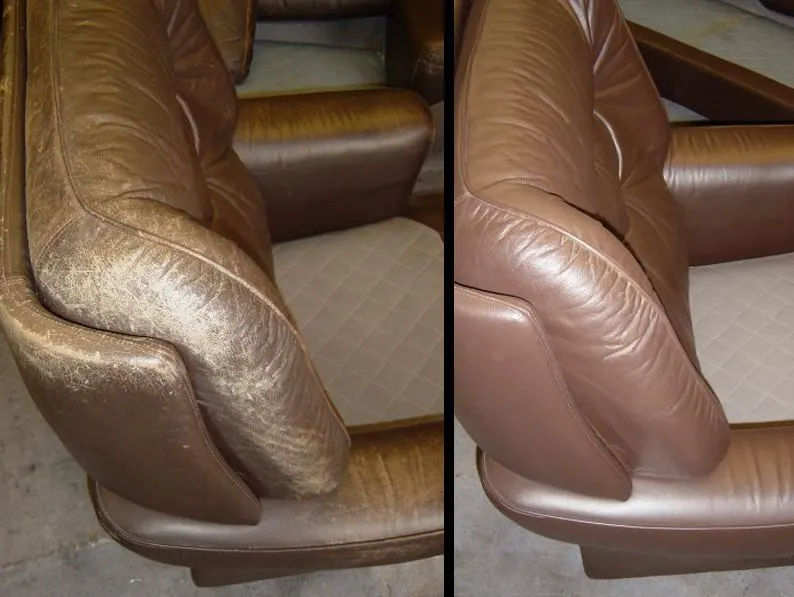
A repair works by consolidating that fiber: sealing it back down flat so the surface becomes continuous again, at its original level.
Cut the fibers away and you have created a shallow depression that now has to be filled, textured and colored. A repair that would have been a sealing job becomes a rebuilding job, over a wider area.
So leave it alone, however untidy it looks. A specialist will remove only what genuinely cannot be saved, and considerably less than most owners assume.
Do not clean it
The second instinct is to clean the area, particularly if the animal came in from outside or if there is any mark around the damage.
Cleaning disturbed fiber works soil deeper into it rather than lifting it out, because there is no longer a smooth sealed surface for a cloth to work across.
Liquid also penetrates through the damaged area into the hide and, on a deep scratch, into the foam.
If there is visible soil, blot it gently with a dry cloth. Nothing more.
The same applies to conditioner. Conditioner on disturbed fiber mats it together, which makes it harder to seal down cleanly, and it contaminates the surface so filler and color will not bond properly.
What to check for
There are a few things worth establishing while the damage is fresh, and they change the repair.
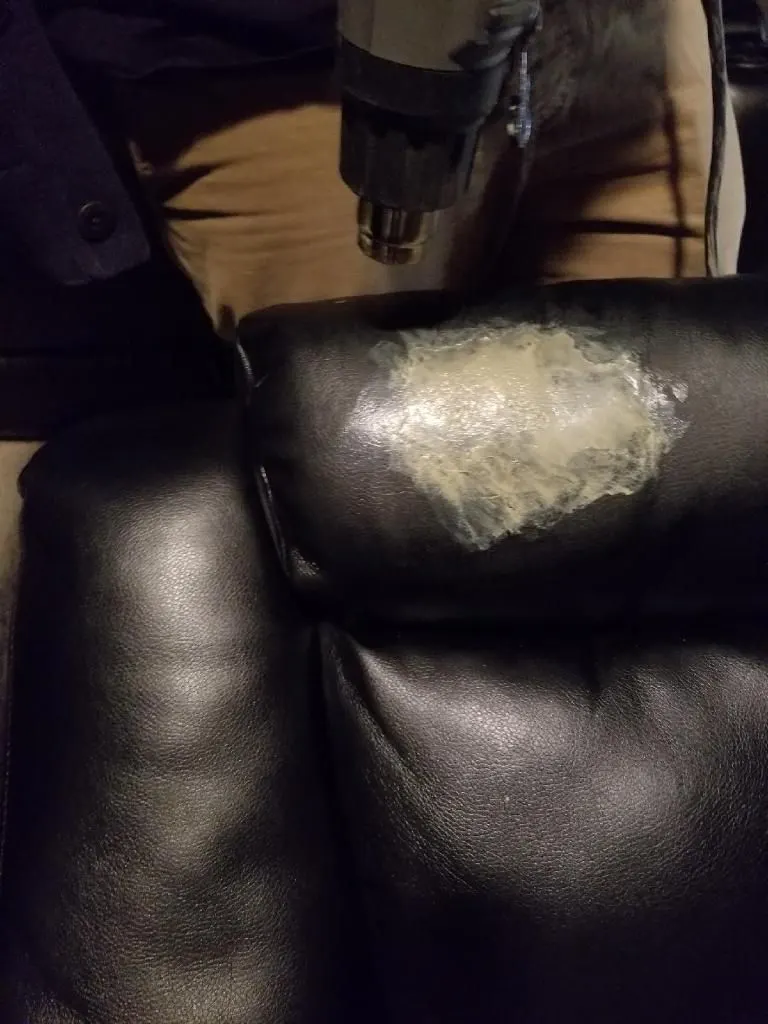
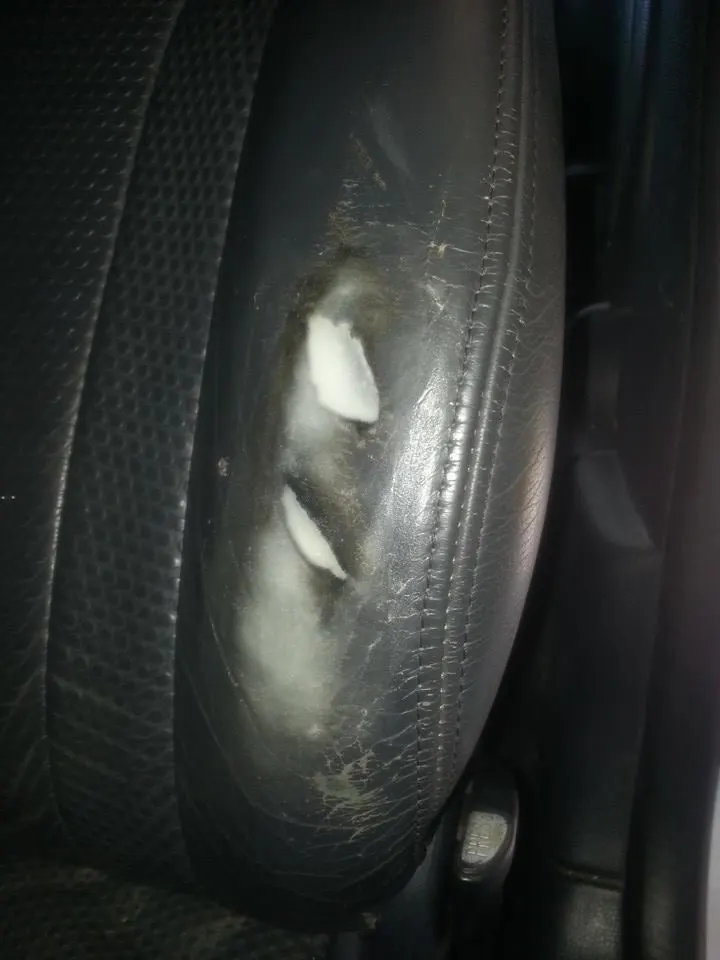
Whether anything went all the way through. Press gently beside the damage and look for a puncture rather than a scratch — a hole with foam visible behind it is a different job from surface fraying, and it should not be left open.
Whether the foam beneath is damaged. A dog's claw that punched through can compress or tear the cushion core, and a repair over damaged foam dents under pressure.
Whether there are other marks you have not noticed. Animals rarely damage one spot, and a quick check of the other arms, the corners and the back of the piece usually finds more.
Whether the surrounding leather is sound. Press a thumb firmly a few inches away — if fine cracks appear or the surface flakes, the panel was already close to failing and the recommendation changes from a spot repair to a panel refinish.
Cat damage and dog damage are different problems
Knowing which you have tells you what to expect and what to protect.
Cats produce fine parallel lines and fuzzy, pale patches, typically on vertical surfaces — corners, arm fronts, the side of a sofa. The mechanism is a claw dragged across the surface lifting fiber. It repairs by sealing, and it repairs very well.
Dogs produce punctures, chewing damage and long tears. Claws under body weight, teeth on a corner, a single dew claw dragged as the animal jumps up. These are voids in the material, so they need a backing bonded behind and filler built through.
Dogs also produce more collateral damage: saliva soaking into a cushion corner, and heavier soiling.
The practical rule: fine lines and fuzzy areas are cat damage and repair on the surface. Holes, missing corners and long deep splits are dog damage and repair through the material.
Stopping it happening again, starting today
This is the part that determines whether you pay for one repair or several, and it should happen before the repair rather than after.
A cat returns to a spot because it smells marked. Cover the area now — a throw, a piece of card, a temporary cover — so the site is unavailable while you set up an alternative.
Put a scratching post immediately beside that spot, not across the room. It has to be tall enough for a full stretch, rigid enough not to wobble, and covered in something coarse like sisal. A post that tips over teaches the cat that the sofa is the more reliable option.
Read the damage for what the animal wants. Vertical scratching high on a corner means stretching, so it needs a tall vertical post. Horizontal scratching on a seat means a flat scratcher on the floor beside the sofa.
Trim claws regularly, which reduces how much damage any single session does.
For dogs, the equivalent is usually access: a cover on the favorite spot, a bed positioned as the better option, and something to chew that is not the sofa corner.
Temporary protection while you wait
If the repair is not happening this week, a few measures keep the damage where it is.
Cover the area smoothly so nothing catches the raised edges. Clothing, bag straps and the animal's own claws all snag on disturbed fiber and each snag widens it.
Keep the cover loose rather than tight. A cover pulled taut over damage adds tension across it.
For a puncture or a tear, leather repair tape applied to the underside of the panel — reachable through a cushion zip on most sofas — stabilizes it without touching the visible surface. This is the one temporary fix that helps rather than complicating things.
Do not apply anything to the face of the leather. No glue, no tape, no filler, no colored wax. Every one of those has to be removed before a proper repair can start.
And take the piece out of the animal's routine if you can — moving a chair, closing a door, swapping cushions.
When to act quickly rather than schedule it
Most claw damage can wait for a convenient appointment. A few situations should not.
Any puncture where foam is exposed. Foam abrades, absorbs moisture and compresses unevenly, and once the core is damaged the job stops being a surface repair.
Any tear that is being loaded on a seat someone uses daily, because tears grow at their ends every time the panel flexes.
Any damage where the animal is still actively using the spot, since each session adds to it.
Any urine involved, because that soaks through seams into the cushion core and becomes a foam replacement question rather than a leather one. That is worth addressing quickly, and it is worth being honest about when you ask.
The health note worth including
A change in scratching or chewing behavior is worth mentioning to a vet, quite separately from the furniture.
Cats that suddenly begin scratching in new places, or dogs that start chewing furniture they previously ignored, are often responding to stress, pain, boredom or a change in the household.
No amount of leather work addresses that, and the furniture will keep taking damage until the underlying cause changes.
On the other side: veterinary guidance is consistent that declawing is an amputation of the last bone of each toe and is not recommended as a furniture solution. The American Veterinary Medical Association discourages it as an elective procedure and points owners toward environmental alternatives.
Soft nail caps fitted over trimmed claws are a legitimate bridge while a new scratching habit forms, for households that want one.
What to send for an assessment
Photograph the damage square-on from about a foot away in daylight, no flash.
Take a second shot from a low raking angle across the surface, which is what shows how much fiber is raised and whether anything has gone through.
Photograph an undamaged area of the same leather for color reference.
Photograph any other marks you found while checking the rest of the piece — having them all assessed together is more efficient than dealing with each as it becomes annoying.
Say what animal, whether the spot is still being used, and whether anything has been applied or trimmed. And say if urine was involved, because that changes the recommendation from a repair to a repair plus a cushion core.
It is also worth saying how long the damage has been there. Fresh claw damage where the fibers are still raised and clean seals down beautifully. The same spot after six months of continued use has flattened, collected soil and often lost fiber entirely, so the repair moves from sealing to filling — a larger job with a slightly more visible result.
And mention whether the piece is aniline or pigmented, using the water-drop test on a hidden area. On pigmented leather claw damage disappears; on aniline it can be made sound and much less noticeable but may stay faintly visible, and knowing that in advance is better than discovering it afterward.
Questions we get asked next
- The fibers look terrible. Are you sure I should not trim them?
- Yes. Those fibers are still attached and a repair seals them back down at the original surface level. Trimming them creates a depression that then has to be filled, textured and colored — a larger, more visible repair than the one you would have had.
- My cat scratched a spot and there is a small hole. Is that urgent?
- More urgent than surface scratching, yes. An open puncture exposes the foam beneath, which then absorbs moisture and abrades. Cover it, apply repair tape to the underside if you can reach it, and get it looked at rather than leaving it for months.
- Can I clean the area before the repair appointment?
- Better not to. Cleaning disturbed fiber works soil into it rather than out, and any liquid penetrates through the damage into the hide. The specialist cleans and degreases as the first stage of the repair anyway, with products intended for the job.
- Should I wait until the cat stops scratching before repairing it?
- Repair it when the setup has changed rather than when the behavior has stopped, since behavior follows the setup. A repair plus a post placed at that exact corner works. A repair with nothing else changed usually means paying twice.
Sources
- Declawing of Domestic Cats — American Veterinary Medical Association, checked 2026-08-21
- pet damage
- first aid
- claws