Will Leather Conditioner Fix Existing Cracks — or Only Help Prevent Them?
Conditioner is preventive, not corrective. Once a crack is visible the finish has already broken, and no product bridges a break.
Quick answer
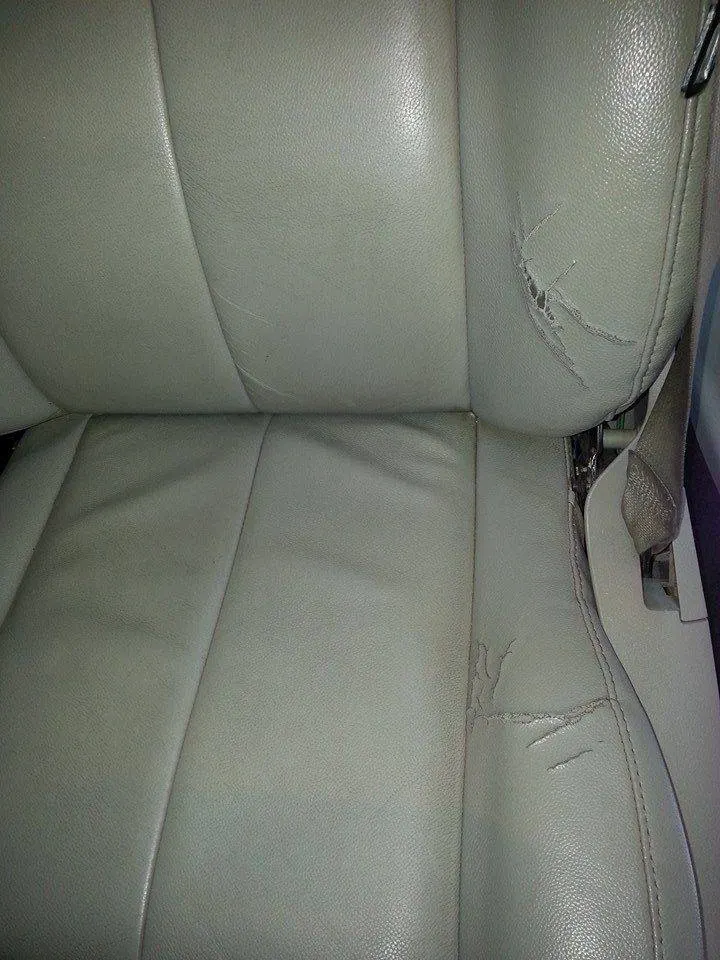
Prevention only. A crack is a physical break in the finish and sometimes in the hide, and conditioner is a flexibility treatment rather than a filler — it cannot bridge a gap. What it does do is keep sound leather supple so new cracks do not form, which is the difference between a sofa that needs refinishing at eight years and one that lasts fifteen. Existing cracks need filling, texturing and recoloring.
At a glance
| Conditioner does | Keeps sound finish and hide flexible, so new cracks do not start |
|---|---|
| Conditioner does not | Close, fill or hide an existing crack |
| Why it looks like it works | Wet product darkens the crack temporarily, then dries back |
| Existing cracks need | Cleaning, flexible filler, grain matching, color, seal |
| Best time to condition | Before anything looks wrong — 2–3 times a year in this climate |
What a crack actually is
On finished leather, what you are looking at when you see cracking is a break in the coating: the pigment layer and topcoat have lost flexibility, and normal movement has split them.
Early cracking stays within that coating. The hide underneath is intact, which is why it repairs so well at this stage — the surface is cleaned, the splits are filled with flexible material, grain is pressed to match, and color is rebuilt over the top.
Later cracking goes into the hide itself. The fiber structure at the fold line has dried and stiffened enough that it fractures rather than bending, and the edges of the split start to lift.
In both cases there is a physical gap. That is the crucial point for the conditioner question: there is a void where material used to be continuous, and nothing you wipe on afterward puts material back.
Why conditioner appears to help
The reason this question comes up so often is that conditioner produces a convincing short-term result.
When you apply it, liquid product runs into the cracks and darkens them. A crack is visible mainly because of the shadow line it creates, and a darkened, wet crack casts less contrast against the surrounding surface. It genuinely looks better.
The surface also darkens slightly overall, which reduces the difference between the crack and the leather around it.
Then it dries. The product that ran into the crack either absorbs into the exposed hide or evaporates, the shadow line returns, and the appearance goes back to where it started — sometimes slightly worse, because the crack now holds product residue that attracts dust.
This is a genuinely reasonable mistake to make. It just means judging conditioner by how a piece looks a week later rather than ten minutes later.
What conditioner is actually for
Dismissing conditioner would be the opposite error. It is one of the highest-value things an owner can do, provided the timing is right.
Its job is flexibility. Leather finishes and hides both contain plasticizers that let them bend without breaking, and those migrate out over time with heat, airflow and use. A conditioner replenishes that flexibility in material that is still sound.
That matters because cracking is a fatigue failure. Every time a seat front folds under someone sitting down, the coating flexes. Supple coating flexes and recovers. Stiff coating flexes and eventually splits.
So conditioning does not fix cracks — it removes the condition that causes them. On a piece that has been conditioned two or three times a year, the fold lines stay flexible and the fatigue failure simply does not arrive on schedule.
The practical framing: conditioner buys years at the front end and does nothing at the back end. Which is a strong argument for doing it before anything looks wrong.
Catching it at the right moment
There is a window where conditioning is still the right answer, and a test that tells you whether you are in it.
Press a thumb firmly into the leather at a fold line — the front edge of a seat cushion is the best place — hold for a second, and release. Then look closely at the surface under a raking light.
If the leather deforms with fine wrinkling and recovers smoothly, it is supple. Condition it and carry on.
If it feels board-like, or if the surface has a papery quality it did not used to have, it is drying but has not failed yet. This is exactly the moment conditioning pays for itself, and it is the stage most people miss because nothing looks wrong.
If fine cracks appear under the pressure and remain when you release, the coating has already started failing. Conditioning at this point slows further deterioration but the existing splits need work.
If anything flakes or powders onto your thumb, the finish is at the end of its life and the piece needs refinishing rather than maintenance.
Where cracking always starts
Cracking is not random, and knowing where to look means catching it early.
The front edge of a seat cushion is the sharpest fold on a sofa and it moves every time anyone sits or stands. It is the most common first site by a wide margin.
The crown of an armrest, where the material bends over a curve and takes forearm friction at the same time.
The crease behind a recliner headrest, which folds and unfolds through its full range whenever the chair is used.
The bolsters of a vehicle seat, especially the driver's outer bolster, which is both a fold and the highest-abrasion surface in the car.
And any panel that has faded, because UV degrades the binder along with the pigment — a sun-faded area is also an embrittled one, which is why fading and cracking so often arrive together.
How existing cracks are actually repaired
For completeness, since this is what conditioner cannot do.
The area is cleaned and degreased. Filler will not bond through body oil, furniture polish or any conditioner residue sitting in the cracks — which is one reason applying more product to a cracked area is counterproductive.
Loose or lifting edges are trimmed or sealed so the surface is continuous.
Flexible filler is worked into the splits and built in thin layers to level them with the surrounding surface. Thin layers matter: a thick fill in a fold line cracks at its own border the first time the panel bends.
Grain is pressed into the final layer to match the surrounding texture, which is what stops the repaired area reading as a smooth stripe.
Color is sprayed in light coats and feathered well past the repair, then sealed with a flexible topcoat.
On a panel where cracking is widespread rather than in a few lines, the same process is applied across the whole panel, which produces a far better result than treating individual cracks.
Why this is a bigger issue in North Texas
The two conditions that drive cracking are both persistent features of this region.
Year-round air conditioning keeps indoor air dry for most of the year. There is no dramatic event, just a slow loss of plasticizers from every leather surface in the house. This is the quiet driver, and it is the reason conditioning schedules that work elsewhere are too infrequent here.
Strong UV through west and south-facing windows breaks down the binder holding a finish together, so exposed panels lose flexibility faster than shaded ones.
Vehicles are the extreme case. Cabin temperatures in a car parked outside through a Dallas summer reach levels that drive plasticizer loss far faster than any interior environment, which is why car seats crack years before an equivalent sofa.
The practical adjustment is frequency: two to three times a year for household furniture, three to four for vehicle interiors, and more for anything in direct sun.
What conditioner cannot help with either
Worth listing, because conditioner gets reached for in several situations where it makes things worse.
Fading. That is pigment loss, and only recoloring replaces pigment. Conditioner darkens a faded panel temporarily and then it fades back.
A tacky surface. Tackiness means a finish is breaking down, usually from chemical exposure, and adding a softening product to a coating that is failing because it has softened is exactly wrong.
Bonded leather that is flaking. The problem there is a coating separating from a fabric backing, and conditioner works its way under lifting edges and loosens them further.
Suede and nubuck. Conditioner mats the nap permanently.
Peeling of any kind. Whatever is lifting will lift more readily once product gets underneath it.
In all of those the correct first step is to stop applying anything and find out what the surface actually is.
Doing it properly, briefly
Since the value is entirely in the prevention, it is worth doing the prevention correctly.
Clean first. Conditioner over dirt seals the dirt against the finish, and dirt is abrasive.
Use a product made for finished upholstery leather, and test it on a hidden area.
Apply to a cloth rather than the surface, and work it in evenly rather than heavily on the areas that look worst.
Buff off whatever has not absorbed after ten to fifteen minutes. Product left sitting on a sealed surface is what produces the tacky, dust-attracting result people mistake for over-drying.
Concentrate on the fold lines — seat fronts, arm crowns, headrest creases — because those are where the flexibility is actually needed.
And do it on a schedule rather than when something looks wrong. By the time a piece looks like it needs conditioning, the window for prevention has usually closed.
Getting cracked leather assessed
Photographs distinguish early cracking from late cracking well, which is the distinction that determines the work.
Photograph the cracked area square-on from about a foot away in daylight, no flash.
Then photograph it again from a low raking angle across the surface. This is the important image: it shows whether the crack edges are still level with the surface or have started to lift, which is the boundary between filling within the coating and rebuilding into the hide.
Do the thumb test on an apparently sound area nearby and photograph the result, because that tells a specialist whether the whole panel is close behind.
Say how old the piece is, where it sits relative to windows, and what has been applied to it. If conditioner has been used repeatedly on the cracked area, mention it — residue in the splits affects the preparation.
Questions we get asked next
- Is there any product that fills cracks at home?
- Consumer repair kits contain flexible filler that can genuinely level small cracks on a flat, low-flex area of a dark, uniformly colored piece. On a seat front — which is where cracking usually is — the flex is high and the blend has to be wide, which is where home attempts most often produce a visible repair.
- My leather is cracking but it feels soft. How?
- Softness in the hide and flexibility in the finish are not the same thing. A coating can become brittle and crack while the leather beneath still feels supple, which is common on pieces that have had strong UV exposure. The finish is the layer that failed.
- Will conditioning stop existing cracks from getting worse?
- It helps, by keeping the surrounding material flexible so the splits propagate more slowly. It does not stop them, because the load still concentrates at the ends of every existing crack. Treat it as buying time rather than as a solution.
- How much conditioner should I use?
- Less than most people apply. A small amount worked in evenly, then buffed off after ten to fifteen minutes. If the surface still feels slightly slick the next day, that was too much — excess sits on top, attracts dust and can leave an uneven sheen.
- cracks
- conditioning
- prevention