How Can Car Dealers Recondition Used-Vehicle Interiors Without Delaying the Lot?
Interior condition decides how a used car photographs and how it feels on a test drive. Neither has to cost you days in reconditioning.
Quick answer
Because interior repair is mobile, it happens on the lot with the vehicle parked where it already is — no transport, no shop slot, no day lost to a subcontractor's schedule. Most interiors need a few targeted repairs rather than a full refresh: the driver's bolster, the steering wheel and the console cover the majority of what a buyer notices. Batch several vehicles into one visit and the per-car time drops further.
At a glance
| No transport | Work happens on the lot; the vehicle never leaves inventory |
|---|---|
| Typical scope | Driver's bolster, steering wheel, console — what a buyer touches first |
| Batching | Several vehicles in one visit shares setup, travel and color mixing |
| Timing | Before photography, not after — images filter buyers before anyone visits |
| Plan for cure | A repair should not be slid across on a test drive the same hour |
Why interior condition matters more than its cost suggests
Used-vehicle buyers form an impression of a car quickly, and a large part of it happens inside.
They open the door, sit in the driver's seat, put their hands on the wheel and look around. That takes under a minute and it sets the frame for everything that follows.
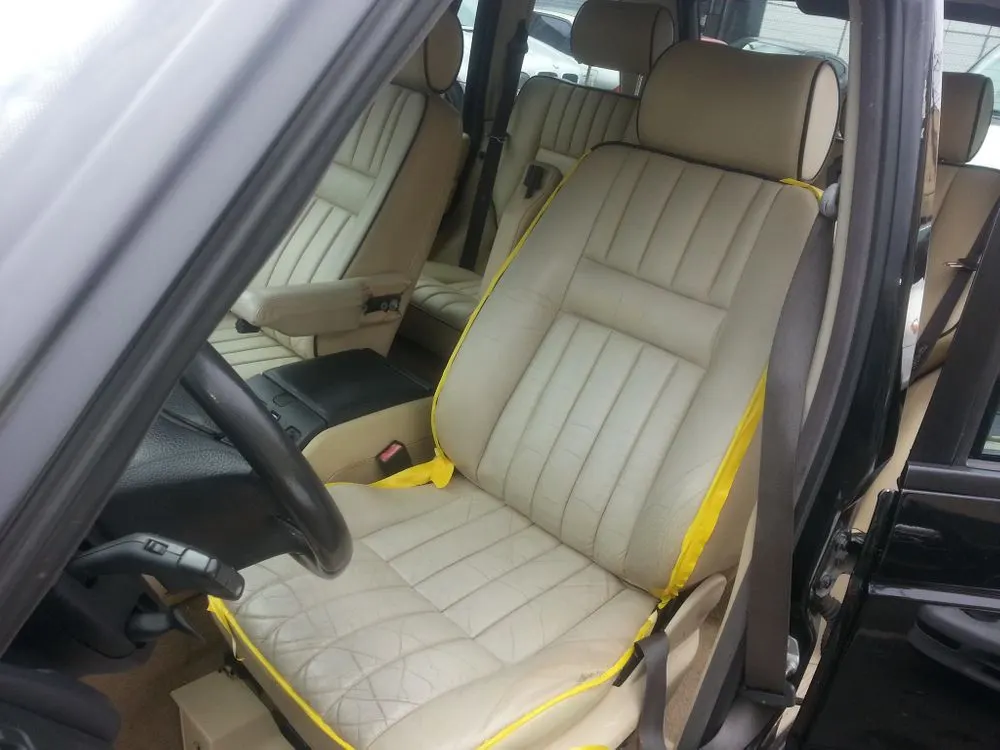
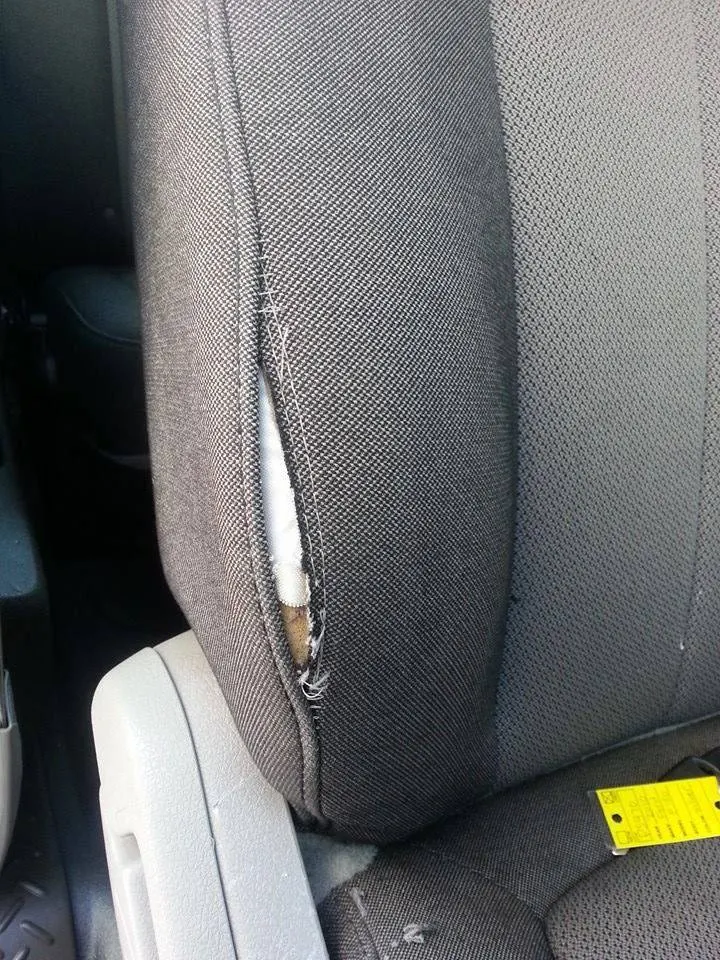
A worn or split driver's bolster is the single most visible interior defect in most vehicles, and it reads as high mileage regardless of what the odometer says. A shiny, sticky steering wheel does the same.
That impression is not proportional to the repair cost. Those two surfaces are among the cheapest things on the car to put right, and they carry a disproportionate share of how the vehicle is judged.
The same applies before anyone arrives. Most used-car shopping starts with photographs, and interior images with an obvious tear filter out buyers who never make contact.
The recon clock is the real constraint
For a dealer, the question is rarely whether interior work is worth doing. It is whether it can be done without adding days.
Every day a vehicle sits in reconditioning is a day of holding cost, a day off the lot, and a day not being photographed or shown.
The traditional route adds days: transport to a trim shop, waiting for a slot, transport back. For a single vehicle that is an inconvenience; across a month's inventory it is a real number.
Mobile interior repair removes the transport entirely. The vehicle stays in its space, the work happens there, and it is available the same day.
That is the whole argument, and it is why interior repair is one of the few recon items that does not compete with the clock.
Triage before booking
The efficiency comes from deciding what not to do as much as what to do.
Walk the inventory and sort each vehicle into three groups.
Group one: cosmetic damage on sound material — a worn bolster, a shiny wheel, a scuffed console, a faded panel top. These repair on the lot and return the most per dollar.
Group two: material that has failed — bonded or synthetic panels delaminating widely, a seat worn through to the backing, a dash cracked over collapsed foam. These need panel replacement or a trim shop, and they should be priced separately rather than lumped in.
Group three: vehicles where the interior is not what is holding the sale, and where recon spend belongs elsewhere.
That sort takes a few minutes per vehicle and it prevents money being spread evenly across cars that need very different things.
The scope that covers most of what buyers notice
For a typical used vehicle, a short list handles the majority of the impression.
The driver's seat bolster, which is the first thing seen when the door opens.
The steering wheel, which is the first thing touched.
The center console lid, which is under the driver's arm and in their eyeline.
Faded panel tops — the tops of rear seat backs and front seat shoulders — where uneven fading reads as neglect even with no damage.
The driver's footwell carpet, where heel wear and burns are visible on entry.
Beyond that, damage a buyer will not encounter during a normal inspection generally does not repay the spend on a vehicle being moved quickly.
Batching is where the economics change
Per-vehicle cost drops substantially when several cars are handled in one visit, and the reason is structural rather than a discount.
Travel, setup and equipment are fixed costs that get spread across the vehicles worked on at one location.
Color mixing is partly shared. A lot with several vehicles in similar interior colors means fewer separate matches.
The specialist stays in one place rather than moving between sites, so more of the paid time goes into repairs.
The practical approach is to accumulate a small group rather than calling for each vehicle as it arrives — a weekly or twice-weekly visit that clears whatever has come in, rather than reactive single jobs.
For a larger operation, a standing slot works better still: the specialist knows they have a session, the lot knows when work happens, and nothing waits.
Sequencing against photography and test drives
Two scheduling points make a real difference and both get missed.
Do the interior work before the photographs. Most shopping starts with images, and photographing a car with a torn bolster and repairing it afterward means the listing that is working hardest shows the worst version of the vehicle. Re-shooting costs more time than sequencing correctly.
Allow for cure before test drives. A repaired bolster needs a period before it should take friction, and a prospective buyer sliding into the seat an hour after the work is the worst case — it can mark the finish and it undoes the money spent.
Morning work gives the whole day. Late-afternoon work in humid weather is better held until the next morning before the car goes back on the front line.
Detailing should follow repair rather than precede it, so the repair area is clean and the vehicle presents as one job rather than two.
Setting expectations with the specialist
A few things are worth agreeing up front, because dealership work has different priorities from retail customer work.
Scope discipline. A specialist should tell you which items will move a buyer's impression and which will not, rather than quoting everything that could be done.
Honest exclusions. Damage on a seat back's airbag deployment seam belongs to a trim shop working to the manufacturer's specification, not to a cosmetic repair. Anyone offering to fill and refinish that area should be declined.
Realistic turnaround, including the cure period, stated before the visit rather than discovered when a salesperson wants the keys.
Consistency across vehicles, so the same standard applies to every car rather than varying with who was on the lot that day.
And a clear line on the cars where the honest answer is that interior work will not move the number. That answer is worth more than an extra invoice.
The Texas inventory reality
Vehicles taken in around here arrive with a predictable set of interior problems, and knowing the pattern speeds up triage.
Sun damage is the dominant theme. Cracked dashboards, faded panel tops, brittle door card uppers and cracked seat cushions all trace back to cabin heat and UV through the glass, and they appear on vehicles years younger than they would elsewhere.
Driver's bolsters are worn through more often than in milder markets, because stiffened leather abrades rather than flexing.
Light interiors are common, chosen for heat reasons, and they show dye transfer, sunscreen marks and general soiling far more visibly than dark ones.
Sticky soft-touch console and door surfaces are frequent on vehicles that have lived outside.
The useful consequence: a lot here can standardize on a short list — bolster, wheel, console, panel tops, dash — because the same items come up again and again.
What the work does not cover
Being clear about the boundaries protects both the lot and the customer who buys the car.
Damage on or beside the outboard edge of a seat back is an airbag deployment area on most modern vehicles. That seam is engineered to split at a set force, and cosmetic filler, adhesive or ordinary thread across it can change how it opens. It belongs to a trim shop working to the manufacturer specification, and a cosmetic specialist should decline it rather than quote it.
Structural damage, frame or mechanism faults, and anything electrical are separate trades.
Odor is not a surface problem. Smoke, pet and spill odor live in the carpet padding and the seat foam, and a perfectly cleaned interior still smells if the source is underneath. That is a padding or foam question, and disclosing it honestly is better than a temporary masking treatment that fails on the buyer.
And material that has genuinely failed cannot be made durable by refinishing. Bonded or synthetic panels delaminating across a seat will keep shedding whatever is applied on top, and a cosmetic finish over them is a complaint waiting to arrive after the sale.
Consistency is what makes it a process
The difference between a lot that handles interiors well and one that handles them ad hoc is repeatability rather than skill.
One standard applied to every retail unit means a buyer sees the same quality across the inventory, and it means a salesperson can describe the interior with confidence.
One point of contact for scheduling, so vehicles are not chased individually.
One agreed short list of what gets done by default, with exceptions handled deliberately rather than by whoever happens to notice.
And a record of what was done to each vehicle, which is useful if a buyer asks and essential if a question arises later.
None of that requires a large operation. It requires deciding the approach once rather than making the same decisions vehicle by vehicle.
What to send when requesting a visit
For a batch, a list beats a photo album.
Stock numbers with a one-line description of each interior issue, and one representative photograph per vehicle rather than a full set.
The count by type: how many bolsters, how many wheels, how many dashes. That is what allows an accurate time estimate for the visit.
Interior colors, since matching is where time goes and similar colors batch efficiently.
Any vehicle where damage sits on a seat back's outboard edge, flagged specifically, since that is the exclusion.
The access window and where the vehicles will be parked — a shaded row is a better working environment than an open front line in August, and it affects both quality and speed.
Questions we get asked next
- How long does a typical lot vehicle take?
- A single item like a bolster or a wheel is usually a couple of hours. A vehicle needing bolster, wheel and console together takes longer but not three times as long, since setup and color mixing are shared. Across a batch, per-vehicle time drops further.
- Can vehicles be worked on while they are on the front line?
- Yes, though a shaded row or a quieter part of the lot is a better working environment — glare affects color matching and surface heat affects curing. Moving vehicles to a shaded area for the session usually improves both quality and speed.
- What about vehicles that need more than cosmetic work?
- Those should be separated out at triage. Delaminating synthetic panels, seats worn through to the backing, and dashes over collapsed foam need panel replacement or a trim shop, and pricing them as cosmetic repairs produces a disappointing result and a second cost.
- Is it worth reconditioning interiors on wholesale units?
- Usually not to the same standard. On a vehicle going to auction rather than the retail line, the impression matters less and the spend rarely returns. Triage should separate retail units from wholesale rather than applying one standard to the whole intake.
- dealerships
- reconditioning
- turnaround