Why Does Leather Become Dry and Stiff, and Can It Be Softened Again?
Leather does not dry out the way a plant does. It loses the compounds that let it bend, and there is a window where that is still recoverable.
Quick answer
Leather stiffens because the plasticizers in the finish and the hide migrate out over time, driven by heat and dry air. Partly reversible: proper conditioning on leather that is stiff but not yet cracked restores much of the suppleness. Once cracking has started, conditioning slows further loss but cannot close what has already split. The test is a thumb press at a fold line — if fine cracks appear, you are past the recoverable stage.
At a glance
| Cause | Plasticizers migrating out of the finish and hide, driven by heat and dry air |
|---|---|
| Recoverable | Stiff but no cracking — conditioning restores much of the flexibility |
| Partly recoverable | Fine surface cracking — needs filling and refinishing, plus conditioning after |
| Not recoverable | Board-hard throughout, cracks appearing in new places under light pressure |
| The test | Thumb press at a fold line, then look under raking light |
What is actually happening
The phrase 'dry leather' misleads people, because it suggests water and implies that adding moisture would fix it. That is not the mechanism.
Leather stays flexible because of plasticizers — compounds in both the hide and the finish that let the material bend and recover instead of fracturing. Tanning and finishing put them there deliberately.
Over time those compounds migrate out. Heat drives it, airflow carries it away, and use works the material so that the loss shows up first wherever it flexes.
The hide also loses natural oils and fats through the same process, which is why old leather feels papery rather than simply hard.
So stiffness is a chemistry problem, not a hydration one. Wetting stiff leather does nothing useful and drying it afterward makes it worse.
The test that tells you where you stand
This takes ten seconds and it is the difference between buying a bottle of conditioner and booking a refinish.
Press a thumb firmly into the leather at a fold line — the front edge of a seat cushion is the best place, because that is where flexibility is most needed and where loss shows first. Hold for a second, release, and look closely under a raking light.
Supple leather deforms with fine wrinkling and recovers smoothly. Nothing to do beyond normal maintenance.
Stiff but sound leather feels board-like or papery and recovers slowly, with no cracks appearing. This is the recoverable stage and the point at which conditioning genuinely works.
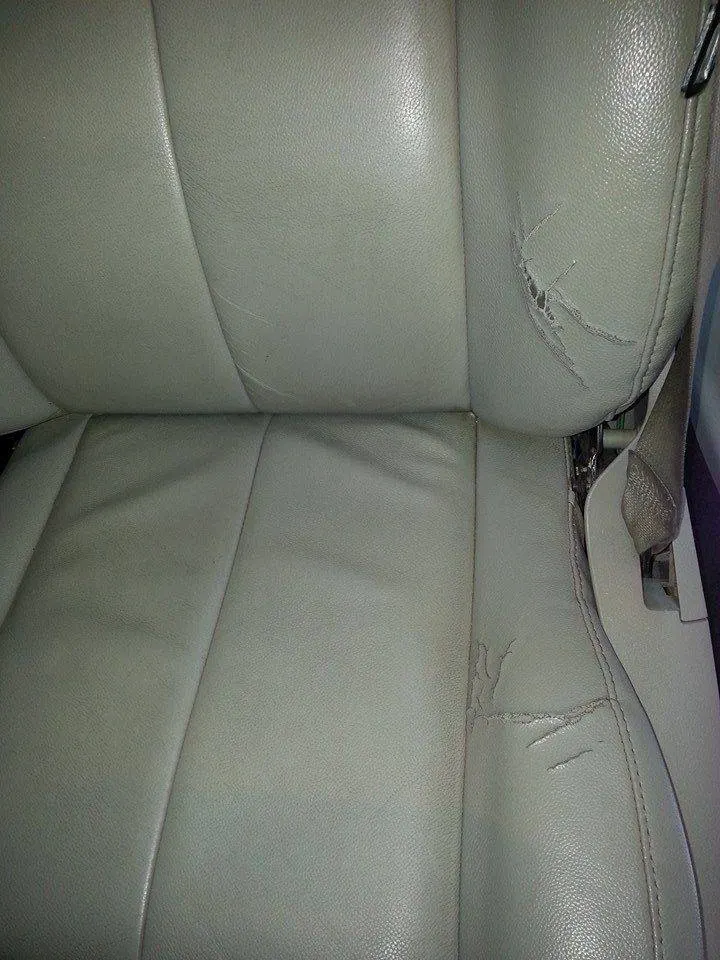
Cracking leather shows fine lines under the pressure that remain after you release. The coating has already split, and conditioning cannot close a split.
Failing leather flakes or powders onto your thumb. The finish is at the end of its life.
Do the test in three or four places — a seat, an arm, a back, and somewhere that gets no use. Comparing a used area with an unused one tells you how much of the stiffness is age and how much is wear.
How much can be recovered
Honest expectations matter here, because conditioning is often oversold.
On leather that is stiff without cracking, proper conditioning over a few applications restores a substantial part of the original suppleness. Not all of it — some plasticizer loss is permanent — but enough that the piece feels like leather again rather than like a board, and enough that the fold lines stop being at risk.
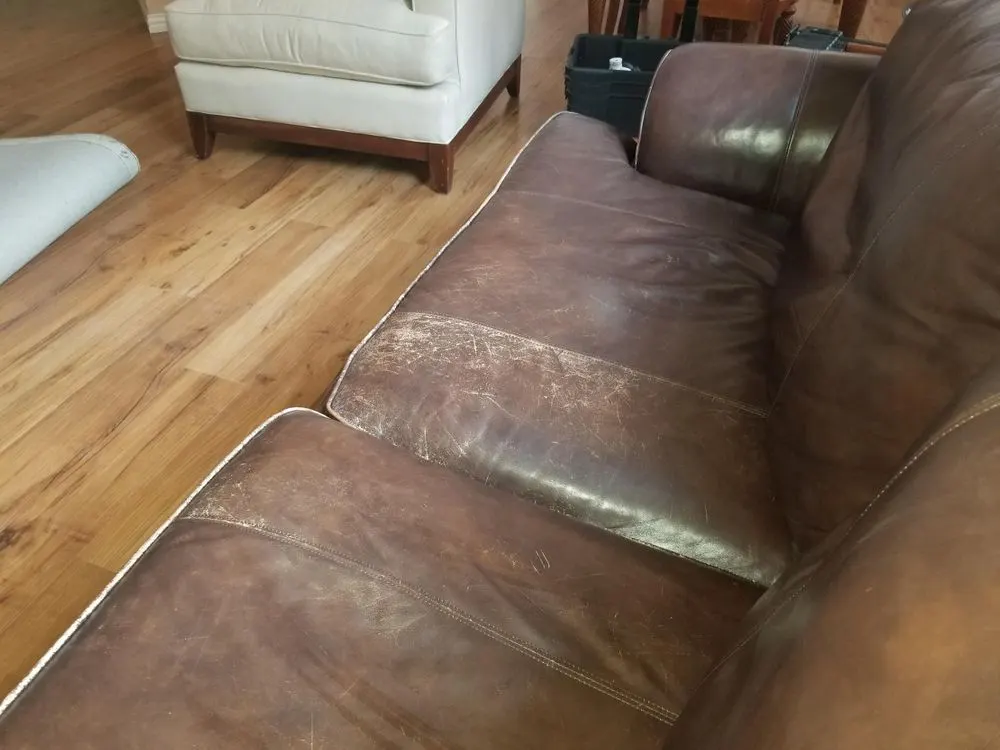
On leather with fine surface cracking, conditioning improves the feel and slows further deterioration, but the existing cracks stay. Those need filling, texturing and refinishing.
On leather that has gone hard throughout and cracks in new places under light pressure, conditioning achieves very little. The hide itself has lost its plasticity and the honest answer is refinishing where it is worth it, or replacement where it is not.
The pattern across all three: the earlier you catch it, the more comes back. This is the single strongest argument for conditioning on a schedule rather than in response to a problem.
Conditioning it properly, over several sessions
Recovering genuinely stiff leather is not a one-afternoon job, and treating it as one is why people conclude conditioner does not work.
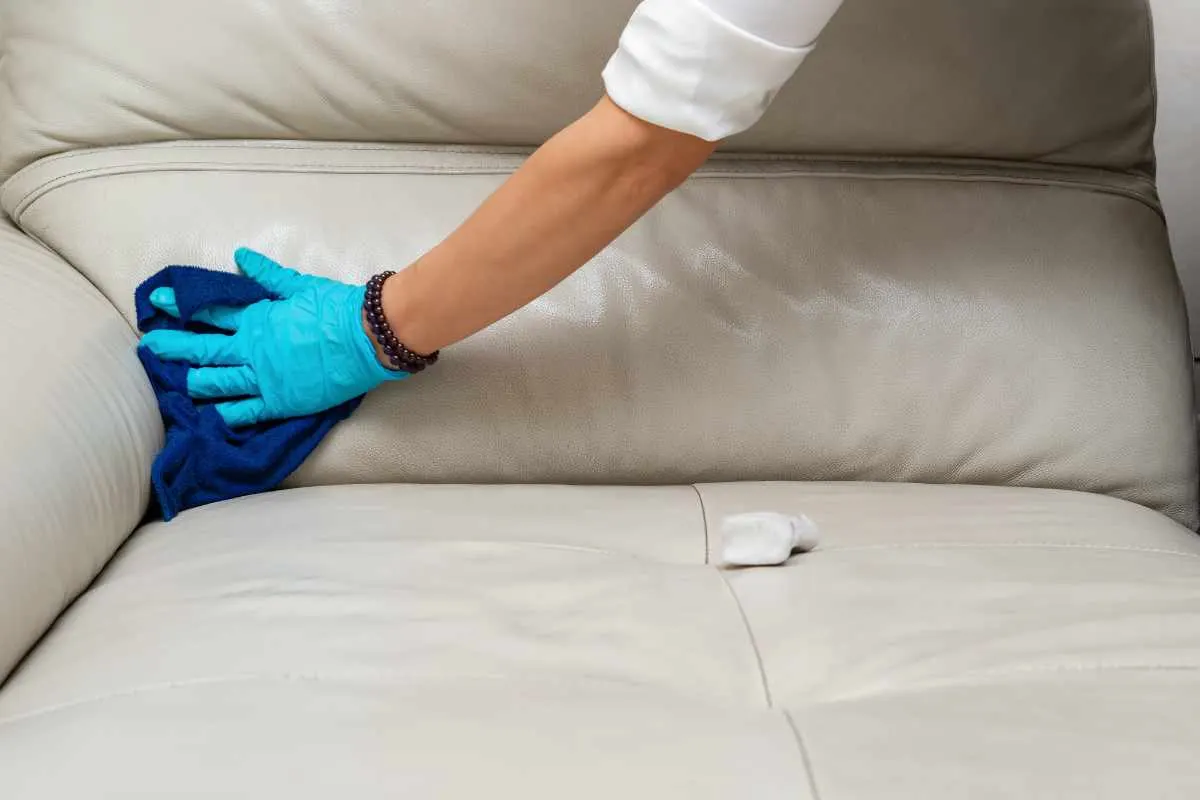
Clean first, thoroughly. Years of body oil and surface soil sit between the conditioner and the finish, and conditioner over dirt seals the dirt in place.
Use a conditioner made for finished upholstery leather. Test it on a hidden area and let it dry fully before judging.
Apply a modest amount to a cloth rather than the surface, and work it in evenly across a whole panel. Concentrate on the fold lines.
Let it absorb for ten to fifteen minutes, then buff off whatever has not been taken up. That step is not optional — product left sitting on top produces the tacky, dust-attracting film that people mistake for a different problem.
Then wait a few days and do it again. Stiff leather absorbs in stages, and three light applications spread over two weeks achieve considerably more than one heavy one.
Assess after the third pass. If the fold lines now flex without complaint, you have recovered it. If they still feel brittle, the piece has passed the point where maintenance is the answer.
What will not soften leather
Several popular approaches either do nothing or cause a second problem.
Water does nothing useful. It is not what is missing, and wetting then drying stiff leather can shrink and harden it further.
Steam is worse — heat plus moisture, which is the combination that hardens hide permanently.
Heat of any kind, including leaving a piece in the sun in the hope of loosening it, accelerates plasticizer loss. It is the cause, not the cure.
Kitchen oils do not absorb through a finished surface, go rancid, and contaminate the leather so that future repair products will not bond.
Mink oil and heavy dressings intended for boots and tack sit on a furniture finish and leave a residue that transfers to clothing.
Working the leather mechanically — bending it repeatedly to loosen it — is actively harmful on stiff material, because that is exactly the fatigue loading that turns stiffness into cracking.
Why this region is hard on leather
The two drivers of plasticizer loss are heat and dry air, and North Texas supplies both for most of the year.
Year-round air conditioning keeps indoor humidity low for the majority of the calendar. There is no visible event — no spill, no sun patch — just a slow, uniform loss across every leather surface in the house. This is why stiffness here is so often uniform rather than localized.
Strong UV through west and south-facing windows degrades the binder in the finish, which compounds stiffness with brittleness. A sun-facing panel is both drier and more fragile than a shaded one.
Vehicles are the extreme case. Cabin temperatures in a car parked outside through a Dallas summer far exceed anything indoors, and the cycle repeats daily for months. Car seats reach the cracking stage years before an equivalent sofa.
The practical consequence is that conditioning intervals published for milder climates are too long here. Two to three times a year for household furniture, three to four for vehicle interiors, more for anything in direct sun.
Where stiffness turns into damage
Stiff leather does not fail everywhere at once. It fails at fold lines, and knowing them means catching it early.
The front edge of a seat cushion, the sharpest fold on a sofa and the one that moves every time anyone sits down.
The crown of an armrest, where the material bends over a curve and takes friction at the same time.
The crease behind a recliner headrest, which folds through its full range on every use.
The driver's outer bolster in a vehicle, which combines a fold with the highest abrasion in the car.
Seams, where stitching holes are stress concentrations and where stiff material tears rather than flexing.
If a piece feels stiff overall, check those places specifically. They will tell you how much time is left before stiffness becomes a refinishing job.
Different materials, different outlooks
The recovery prospects vary by material and it is worth knowing which you have.
Pigmented and finished leather is the most recoverable, because conditioner works on the finish and the finish is what needs the flexibility.
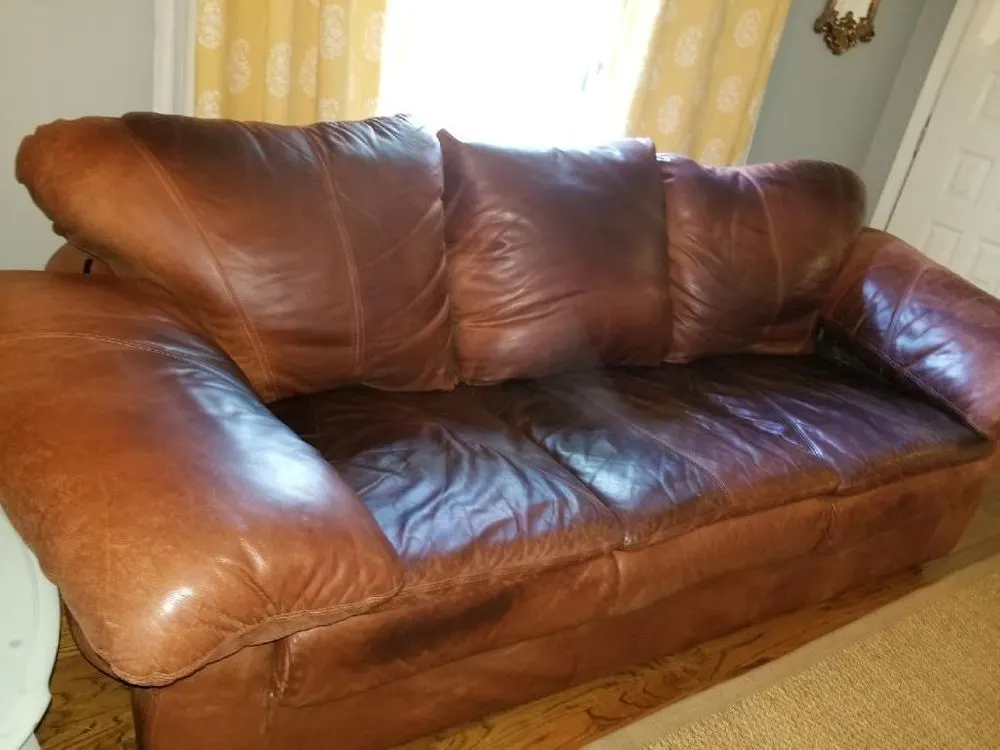
Aniline and semi-aniline leather absorbs conditioner readily and responds well, but it also darkens as it does — which is usually acceptable and occasionally not, so test on a hidden area.
Nubuck and suede should not be conditioned at all. Conditioner mats the nap permanently. Stiffness in these materials is a specialist question rather than a home one.
Bonded leather cannot be softened meaningfully. Its stiffness is a symptom of the coating and its bond failing, and conditioner works under lifting edges and loosens them.
Vinyl and PU stiffen from plasticizer loss too, and there are dressings formulated for them — but a vinyl surface that has gone hard and crazed has reached the end of its life rather than needing treatment.
When refinishing is the right answer instead
Some pieces are past maintenance, and recognizing that saves money spent on product that cannot help.
If fine cracking is present across a panel rather than in one or two lines, the correct scope is refinishing that panel: cleaning, stabilizing, filling and texturing the cracks, then recoloring and sealing.
If the surface flakes or powders under thumb pressure, the finish has aged out and needs rebuilding.
If the leather has faded as well as stiffened, the two arrived together — UV caused both — and refinishing addresses them in one job.
Refinished leather is conditioned afterward on a normal schedule, and because the new finish is flexible and intact, the piece stays supple for years rather than months.
That is the useful framing: conditioning maintains a sound finish, and refinishing replaces a finished one. Neither substitutes for the other.
Getting it assessed
Photograph a fold line square-on and again from a low raking angle in daylight, no flash. Raking light is what reveals fine cracking that a flat photograph hides completely.
Do the thumb press and photograph the result immediately, while any cracks are still open. That image is the single most diagnostic thing you can send.
Photograph an area of the same piece that gets no use, for comparison — it shows what the material looked like before wear.
Say how old the piece is, where it sits relative to windows, and whether it has ever been conditioned. A fifteen-year-old sofa that has never been conditioned and a five-year-old sofa in a sunroom can be in identical condition for different reasons.
And say what has been applied to it. Kitchen oils and silicone dressings both change the preparation needed, and both are better known in advance.
Questions we get asked next
- How many conditioning sessions does stiff leather need?
- Usually three light applications spread over about two weeks, rather than one heavy one. Stiff leather takes up product in stages, and a single saturating application mostly ends up as residue on the surface that then has to be buffed off.
- Can stiff leather be made as soft as it was when new?
- Not entirely — some plasticizer loss is permanent. What is realistic is recovering most of the suppleness in the fold lines, which is what matters for both feel and durability. A piece that flexes without complaint is a good outcome even if it is not showroom-soft.
- My leather is stiff but there are no cracks. How urgent is it?
- Urgent enough to do this month rather than next year. Stiffness without cracking is the recoverable stage, and the difference between conditioning now and refinishing later is substantial. Cracking is what happens next if nothing changes.
- Does covering leather furniture help?
- A breathable cover reduces UV exposure, which slows the binder degradation that makes stiffness worse. Do not use plastic — it traps heat and moisture against the surface, which causes a different set of problems including mold and a tacky finish.
- dry leather
- stiffness
- conditioning