A Weekly, Monthly and Annual Leather-Care Schedule for DFW Homes
Leather care fails because it is advice rather than a schedule. Put it on a calendar and it takes about fifteen minutes a month.
Quick answer
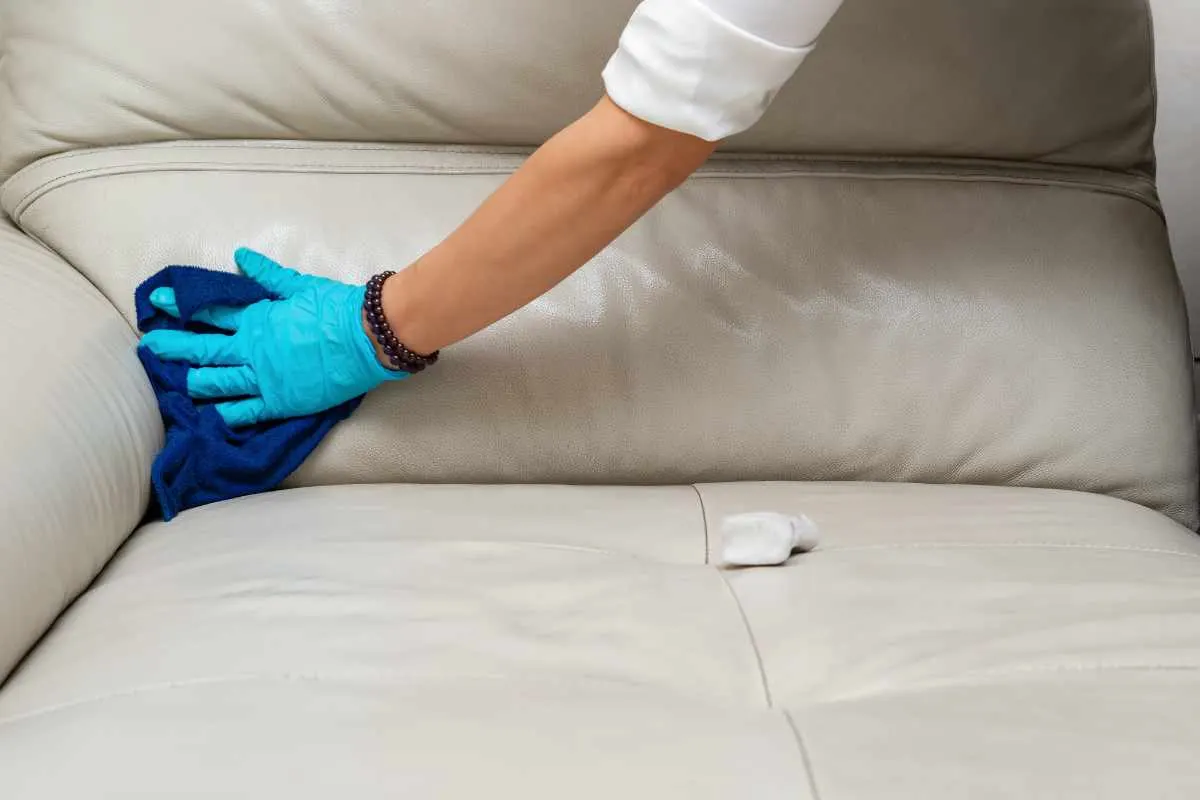
Weekly: dust or vacuum, including the seams. Monthly: rotate and reshape cushions, and wipe the high-contact areas. Quarterly: a full clean and a light conditioning, which in this climate means three to four times a year rather than the once-yearly advice written for milder places. Annually: a proper inspection in daylight, seasonal adjustments in spring and fall, and a professional assessment for anything that has changed. The total is roughly fifteen minutes a month.
At a glance
| Weekly | Dust or vacuum, seams included — five minutes |
|---|---|
| Monthly | Rotate cushions, wipe high-contact areas |
| Quarterly | Full clean and light conditioning, buffed off |
| Annually | Daylight inspection and an honest assessment |
| Why more often here | Conditioned indoor air runs dry for most of the year |
Why a schedule beats advice
Everyone knows leather needs looking after. Very few people do it, and the reason is not laziness — it is that the advice has no timing attached to it.
Told to condition leather periodically, most people do it when it occurs to them, which in practice means when it already looks dry. By then the fiber structure has been depleting for a long time.
Told to condition it in March, June, September and December, most people do it.
The same applies to everything else on this list. Vacuuming the seams is obvious and it does not happen unless it is part of a routine.
The other reason schedules work is that leather deteriorates invisibly. Nothing looks different from one month to the next, so there is never a moment that prompts action.
The total time involved is smaller than people expect: about five minutes a week, ten minutes a month, half an hour four times a year, and an hour once a year.
Weekly: five minutes
The most valuable item on the whole schedule, and the one most often skipped.
Dust with a dry microfiber cloth, or vacuum with a soft brush attachment.
Get into the seam channels, the cushion crevices and underneath the cushions. That is where grit, crumbs and pet hair collect.
Grit is abrasive. Every time somebody sits, whatever is trapped in a seam is ground against the finish, and over years that is a significant share of the wear on a sofa.
This single habit protects the finish more than any product does, and it costs nothing.
In a household with pets, do this twice a week rather than once, since hair and dander accumulate faster and hold soil.
Nothing wet is involved and no product is needed, which is why it takes five minutes.
Monthly: ten minutes
Two jobs, both about evening out what daily use concentrates.
Rotate the loose seat cushions end to end, and flip them where the construction allows. Do the same with back cushions.
This evens out both compression and fading. Two sofas of the same age, one rotated and one not, look noticeably different at five years.
Reshape and plump the cushions while they are off, which helps the foam recover and keeps the leather sitting the way it was cut to sit.
Then wipe the high-contact areas with a barely damp cloth — arm tops, the headrest area, the front edges of the seats.
Skin oils build up on those surfaces invisibly, and they are a major cause of the shiny, darkened look on older sofas. Removing them monthly prevents that far more effectively than dealing with it later.
Dry the areas afterward rather than leaving them damp.
Quarterly: the real maintenance
Four times a year, half an hour each time, and this is what keeps leather sound in this climate.
Clean the whole piece with a leather-specific cleaner, panel by panel rather than spot by spot. Spot-cleaning leaves visibly cleaner patches, which is why whole-panel work matters.
Let it dry fully.
Then condition lightly. Apply a small amount to a cloth rather than to the leather, work it in with light circular motions across the whole panel, let it sit briefly, and buff off with a clean dry cloth.
The buffing is not optional. It removes the excess that would otherwise sit on the surface, attract soil, and complicate any future refinishing.
Match the product to the leather type. Pigmented, semi-aniline and aniline take different products in different quantities, and nubuck and suede should not be conditioned with a cream at all.
March, June, September and December is a rhythm that is easy to remember and lines up reasonably with the seasons here.
Why quarterly rather than annually in this region
Most published leather advice suggests conditioning once or twice a year, and it was written for milder indoor climates.
In North Texas, cooling systems run for a large part of the year, and cooling removes moisture from indoor air as a side effect of how it works.
In winter, heating warms already dry outdoor air, which drops its relative humidity further.
So indoor air here is drier than the outdoor climate suggests, for most of the calendar, with a genuine recovery window only in the mild parts of spring and fall.
Leather exchanges moisture with the air around it continuously, and it gives that moisture up to dry air.
Conditioning four times a year replaces what is being lost at roughly the rate it is lost, which is the whole objective.
Pieces sitting in the direct path of a vent, or in strong window light, justify going to five or six times a year — or better, being moved.
Twice a year: the seasonal adjustments
Two moments in the calendar are worth using for more than conditioning.
In spring, before the cooling season: check where the supply vents are aimed and redirect any that point at leather furniture. Vent deflectors cost very little.
Check the window treatments in the rooms with west and south exposure, and think about whether the furniture is sitting in the afternoon light patch.
In fall, before the heating season: the same check for heat sources — fireplaces, space heaters, radiators — which produce a local dry zone far more aggressive than the room average.
Pull furniture a few inches off exterior walls if it has drifted back, so air circulates behind it.
Both are also good moments to turn a piece where the layout allows, so the same panel is not always facing the window.
These take ten minutes each and they address the environment rather than the furniture, which is where most of the long-term damage originates.
Annually: the inspection
Once a year, in daylight, spend an hour actually looking at the furniture rather than at the room.
Look at the flex points at a low raking angle — the front edges of seat cushions, arm tops, the crown of the back. Fine lines appearing there are the earliest warning of stiffening, well before anything is visible straight on.
Press a thumb into the leather beside a seam. It should yield and spring back. Board-like resistance means it has stiffened.
Compare a used panel against an unused one, such as an outside back, which shows exactly what a year of your household does.
Look for color flattening, which is light exposure rather than dryness and needs recoloring rather than conditioning.
Check the seams and stitching for any loosening or fraying.
Look underneath and behind for anything you would never otherwise see.
Photograph anything that has changed since last year, which is what turns a vague impression into something a specialist can assess.
Adjusting the schedule to the household
The baseline suits an average home; a few situations need more or less.
Homes with pets: weekly vacuuming becomes twice weekly, and a throw on the pet's spot is worth more than any addition to the schedule.
Homes with young children: monthly wiping of the high-contact areas becomes fortnightly, and the speed habit on spills matters more than everything else combined.
Furniture in a sunroom, a conservatory or a room with a wall of west-facing glass: condition six times a year and address the glazing, because the schedule alone will not keep up.
Second homes and properties that sit empty: condition before a long unoccupied stretch rather than after, and leave the system running at a sensible setting rather than off.
Lightly used formal rooms: quarterly conditioning still applies, because the air is doing the damage rather than the use. This surprises people, and it is why a rarely used sofa can be stiffer than a daily one.
Aniline and semi-aniline leather: more frequent light conditioning and considerably more care about what touches it.
What belongs to a specialist rather than the schedule
Maintenance keeps sound leather sound. It does not fix what has already happened, and knowing the boundary saves money.
Cracks that have gone through the finish into the hide. Conditioning hides them temporarily while they grow.
Color loss and fading, which need recoloring rather than any care product.
Peeling or flaking, which means either a failed finish or a bonded material.
Worn-through areas, tears and punctures.
Stiffness that has not improved after several months of proper conditioning.
Any tacky or sticky surface, which is either accumulated residue that needs stripping or a coating that has broken down.
And stains that have not responded to a leather cleaner, which should be photographed and left alone rather than escalated through household products.
Putting it on a calendar
The practical step that makes the difference, and it takes five minutes once.
Set a weekly reminder for the vacuum, attached to something else in the routine so it happens without thought.
Set a monthly reminder for cushion rotation and the wipe-down.
Set four quarterly reminders — March, June, September and December — for the full clean and condition.
Set two seasonal reminders, spring and fall, for the vent and light check.
Set one annual reminder for the inspection, in daylight, ideally at the same time each year so the comparison is meaningful.
Keep the products together in one place, because the schedule fails when the cleaner is somewhere else.
That is the whole system, and it amounts to roughly fifteen minutes a month for furniture that should last decades.
Questions we get asked next
- How often should leather be conditioned in Dallas?
- Three to four times a year for indoor furniture, which is more often than most published advice suggests. Cooling and heating both dry indoor air, so leather here spends most of the year giving up moisture. Quarterly replaces what is lost at roughly the rate it is lost.
- Does a rarely used sofa still need the schedule?
- Yes, and this surprises people. The air is doing most of the damage rather than the use, so a formal room sofa can be stiffer than a daily one. Vacuuming can be less frequent; conditioning should not be.
- What is the single most valuable habit?
- Weekly vacuuming of the seams and cushion channels. Grit trapped there is ground against the finish every time somebody sits, and over years it accounts for a large share of the wear. It takes five minutes and costs nothing.
- Can I do the whole schedule with one product?
- You need two — a leather cleaner and a conditioner matched to your finish type. One product claiming to do both generally does neither well, and conditioner applied over soil drives the soil into the hide, which is why the order matters.
- maintenance
- schedule
- DFW