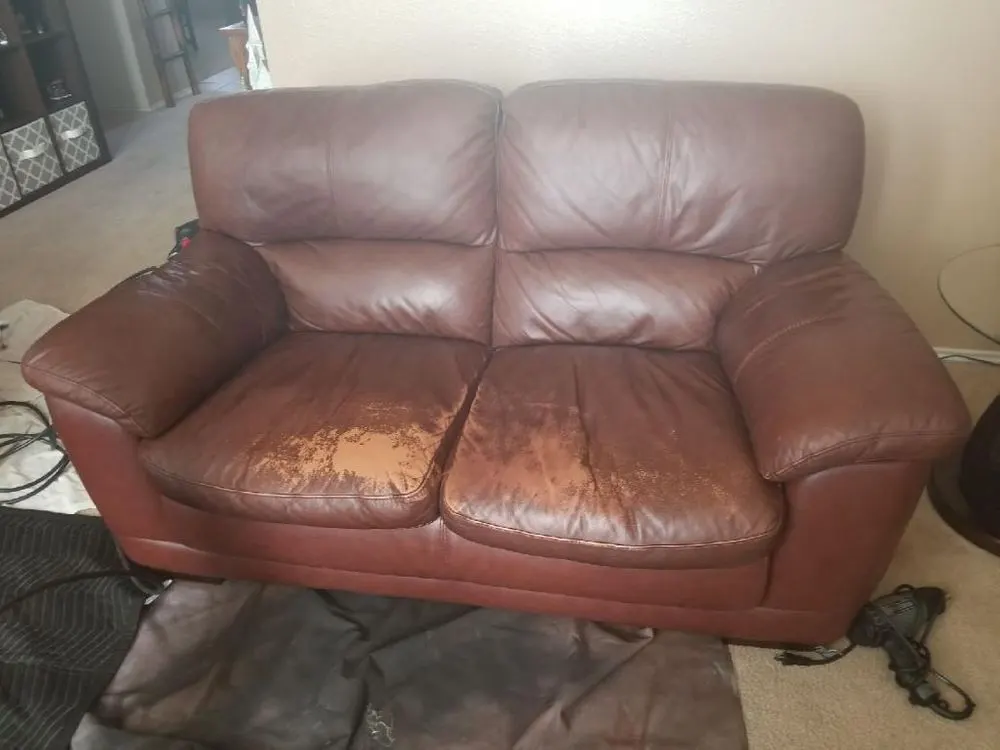
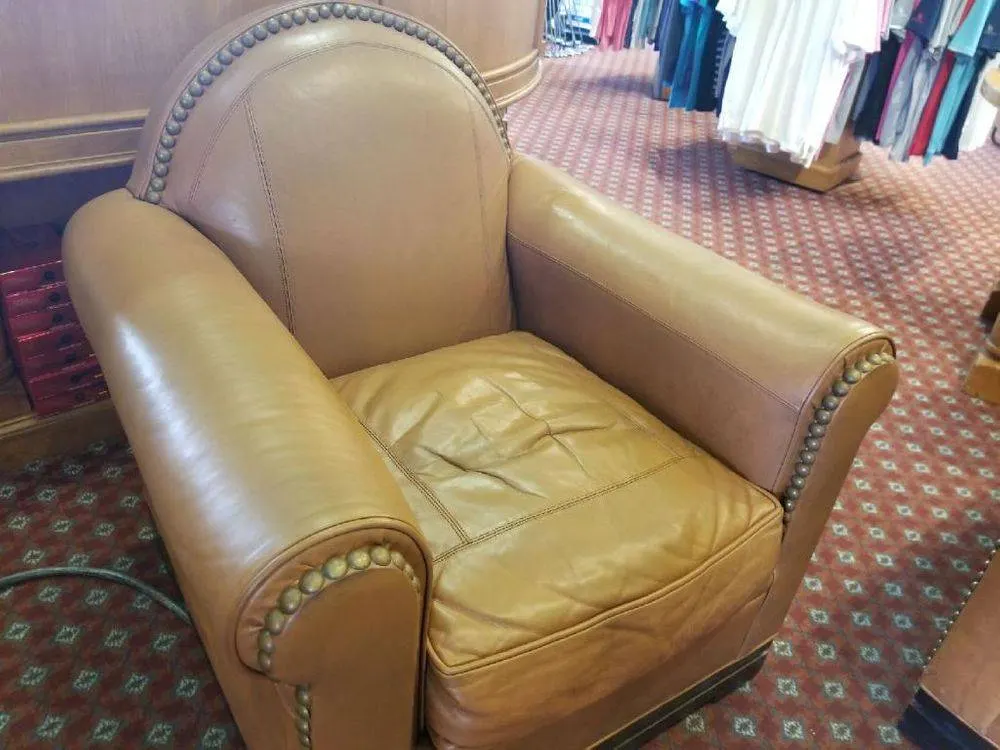
Can Mildew, Mold Spots and Pink Staining Be Removed from Marine Vinyl?
Black spotting and pink blotching look like the same problem and are not. One is on the vinyl; the other is in it.
Quick answer
Surface mildew — the black or gray spotting on top of the vinyl — usually cleans off with a marine vinyl cleaner and a soft brush, and it returns unless the moisture source is fixed. Pink staining is a different problem: it is pigment produced by bacteria growing in the foam and backing underneath, and it migrates up into the vinyl from below. Surface cleaning does not touch it. Light pink discoloration can sometimes be treated; established staining usually means replacing the vinyl and addressing the foam.
At a glance
| Black or gray spots | Surface mildew — usually cleans off |
|---|---|
| Pink or salmon blotches | Pigment from inside the material — cleaning does not reach it |
| Root cause of both | Moisture held in the foam and backing |
| Avoid | Household bleach — it damages the vinyl and does not stop the return |
| Real fix | Dry the foam, restore airflow, then treat the surface |
Why boat upholstery is such good growing conditions
Both problems trace back to the same thing: moisture that gets in and does not get out.
Water reaches the foam through split seams, stitching holes, punctures, gaps around fasteners, and any opening in the vinyl.
Once it is in, foam holds it. A cushion can feel dry on top with saturated foam underneath.
The boat is then covered, which is correct for UV but traps humidity against the upholstery.
Add North Texas summer temperatures and you have warmth, moisture and organic residue in an enclosed space — close to ideal conditions for both mildew and the bacteria that produce the pink pigment.
This is why the problem concentrates in specific places: the lowest point of a cushion, the seam lines, anywhere water pools, and cushions that sit flat rather than draining.
Treating surface mildew properly
This is the straightforward half, and most of the damage done to boat seats happens during it.
Use a cleaner formulated for marine vinyl, applied to a cloth or a soft brush rather than sprayed and left.
Work it into the grain and into the seams, where the growth concentrates and where a wipe never reaches.
Rinse thoroughly with fresh water. Cleaner residue left in the grain attracts soil and feeds the next round of growth.
Dry the surface, and then leave the cushions open to air so the moisture underneath can escape.
For established growth, a mildew treatment made for marine upholstery works better than a general cleaner, and it is worth using the product designed for the material rather than improvising.
Finish with a UV protectant once the surface is fully dry.
Why bleach is the wrong tool
Household bleach is what most people reach for, and it is a bad trade.
It strips plasticizers out of the vinyl, which is what keeps the material flexible. Vinyl treated with bleach repeatedly stiffens and starts cracking years early.
It degrades the surface coating, leaving a duller, more porous surface that soils faster and holds growth better than before.
It attacks the stitching. Thread is often the first thing to fail on a bleached boat, and a seam that lets go admits more water into the foam — which makes the underlying problem worse.
And it does not solve anything, because the moisture in the foam is still there. The growth returns, the bleach comes out again, and each round ages the material further.
Diluted bleach is sometimes recommended for marine use and is less harsh, but it still does not address the cause. The cause is water in the foam.
What pink staining actually is
This is worth understanding because it explains why nothing you do to the surface works.
A bacterium that thrives in damp foam produces a pink pigment as a byproduct. The pigment is oil-soluble, so it dissolves into the plasticizers in the vinyl and travels through the material.
By the time it is visible on the face of the seat, it is distributed through the thickness of the vinyl rather than sitting on it.
That is why scrubbing removes nothing, why cleaners have no effect, and why the stain often reappears within weeks of any treatment that appears to lighten it.
It also explains the pattern. Pink staining spreads outward in irregular blotches from wherever the foam is wettest, rather than appearing as discrete spots the way surface mildew does.
Light-colored vinyl shows it dramatically, which is why it is mostly reported on white and cream boat interiors — the same staining on dark vinyl often goes unnoticed until it is severe.
What can be done about pink staining
The honest answer is that the options narrow quickly, and how far it has progressed decides which you have.
Caught very early, with faint discoloration and foam that can be dried thoroughly, some marine-specific stain treatments reduce it. This works occasionally and is worth attempting before anything more involved.
Where the staining is established, the vinyl is stained through and surface work does not recover it. Recoloring over it can cover the discoloration cosmetically, but the source is still underneath and the pigment can bleed through a new coating in time — so it is a compromise rather than a fix, and it should be described that way.
The durable answer is replacing the affected vinyl and dealing with the foam, because leaving contaminated foam under new material puts you back where you started.
Which is a real cost, and it is why the prevention section below matters more than the treatment section.
The foam is the part that decides
Whatever the surface treatment, nothing holds unless the foam question is answered.
Press firmly on the cushion and watch for moisture coming to the surface or a damp feel that does not match the exterior.
Smell it. A musty odor from a cushion means growth inside regardless of how the surface looks.
Check the weight against a cushion you know is dry, since saturated foam is noticeably heavier.
Foam that is wet but not contaminated can be dried, given time, airflow and warmth — which usually means removing the cushions from the boat rather than leaving them in place.
Foam that is contaminated, crumbling, or has been wet repeatedly over years should be replaced. Closed-cell or reticulated marine foam drains and dries far better than standard foam, and on a boat that has had this problem once it is the right specification.
Replacing foam and reusing sound vinyl is common on boat work and is often the sensible middle option.
Preventing the return
All of this is far cheaper to prevent than to treat, and the measures are unglamorous.
Fix seam splits and punctures promptly. Every opening is a route for water into the foam, and this is the single highest-value maintenance item on a boat's upholstery.
Get airflow under the cover. A cover with vents, or a support that keeps it off the seats, changes the humidity underneath dramatically.
Tilt or stand cushions where the layout allows, so water drains rather than pooling.
Dry the boat out after use, and lift cushions rather than leaving them flat on a wet deck.
Open the boat up periodically during long storage. A boat sealed for four months in a Texas summer is the classic pink-staining scenario.
And keep light-colored vinyl clean, since surface residue is what surface mildew feeds on.
The North Texas seasonal pattern
The timing here is predictable enough to plan around.
The problem shows up in spring, when boats come out of winter storage and owners find what grew over four or five months of closed, humid conditions.
It also appears mid-season on boats that are used, rinsed and covered wet without a chance to dry.
Late summer is when heat plus humidity under a cover produces the fastest growth.
The two moments that matter are therefore the day the boat goes into storage and the day it comes out. Going in dry, clean and ventilated prevents most of it. Coming out, an inspection of the cushions and the foam catches what did occur while it is still surface-level.
That inspection takes ten minutes and it is the difference between a cleaning job and a reupholstery quote.
Where each one shows up on a boat
The location tells you almost as much as the color does, and knowing the pattern speeds up the diagnosis.
Surface mildew concentrates where residue collects and air does not move: along seam lines, in the grain of textured vinyl, in corners, under cushion edges, and on any horizontal surface that stays shaded under a cover.
It appears as discrete spots that multiply, and it is generally worst on the surfaces that were dirtiest when the boat was put away.
Pink staining follows the water instead. It spreads outward from the wettest part of the foam, which means it starts at the lowest point of a cushion, beside a split seam, or under a puncture — and it ignores whether the surface was clean.
It appears as irregular blotches rather than spots, and it grows as a patch rather than multiplying.
So a cushion with even spotting across a shaded face is a cleaning job, while a cushion with a spreading blotch centered on an old hook hole is a foam problem that has already reached the vinyl.
Where both are present on the same boat, which is common, the mildew is a symptom and the pink staining is the thing that determines the recommendation.
What to send for an assessment
Photograph the discolored areas in daylight without flash, since flash washes out both colors badly.
Say clearly what color the discoloration is — black or gray spotting, or pink through to purple blotching. That one answer separates the two problems.
Take a close-up showing whether it sits on the surface as discrete spots or spreads as irregular patches from an area.
Say whether it wipes off at all, even partially, on a damp cloth.
Press the cushion firmly and report whether moisture comes up and whether there is a musty smell.
Say how the boat is stored, whether it is covered, whether the cover has vents, and how long it sits between uses.
And say what has already been used on it, because a boat that has been bleached repeatedly is in a different condition from one that has not.
Questions we get asked next
- Will bleach get rid of the pink stains?
- No. The pink pigment is inside the vinyl rather than on it, so a surface treatment cannot reach it. Bleach also strips plasticizers, degrades the coating and attacks the stitching, so it ages the material while leaving the staining. It is the worst combination available.
- Why does the mildew come back every season?
- Because the moisture source has not changed. Growth is fed by water held in the foam and by humidity trapped under a cover. Cleaning removes what has grown; it does not remove the conditions. Sealing seam splits and getting airflow under the cover are what actually stop the cycle.
- Can pink-stained vinyl be recolored instead of replaced?
- It can be covered cosmetically, but the pigment source is still in the foam beneath and it can migrate through a new coating over time. It is a compromise that buys appearance rather than a permanent fix, and anyone offering it should say so plainly.
- How do I know if the foam is contaminated?
- Weight, smell and feel. A cushion noticeably heavier than a dry equivalent, a musty odor, or moisture surfacing under firm pressure all point at foam rather than surface. Foam that has been wet repeatedly over years is usually best replaced with a marine-grade drainable foam.
- marine vinyl
- mildew
- pink staining