RV Interior Restoration vs. Replacement: How to Decide Before a Trip
Treating an RV interior as one decision is what makes it feel expensive. Taken piece by piece, most of it is straightforward.
Quick answer
Decide piece by piece, not coach by coach. For each item ask three questions: is the material sound, is the damage localized, and how long are you keeping the coach? Sound material with localized damage restores, and that covers most captain's chairs, dashes and solid vinyl seating. Material that is delaminating throughout, foam that has collapsed, or a base that has softened from water means replacement or recovering. Working through it item by item usually shows that only part of the interior needs the expensive answer.
At a glance
| Decide per item | Most coaches need restoration on some pieces, replacement on others |
|---|---|
| Restore when | Material is sound and the damage is localized |
| Replace when | Delamination throughout, collapsed foam, or a water-damaged base |
| Time before a trip | Restoration is days; recovering and replacement is weeks |
| Order of spend | What you touch and see first, then what will get worse |
Stop treating it as one decision
Owners look at a tired coach interior and price the whole thing, and the number is discouraging enough that nothing happens.
But an RV interior is a collection of separate items with different materials, different ages of wear and different answers.
The captain's chairs may be leather and entirely restorable while the sofa is a bonded material that is delaminating.
The dash may need refinishing while the dinette needs new foam and nothing else.
Priced as one project it feels like a rebuild. Worked through item by item, it usually turns out that two or three things need the expensive answer and everything else is straightforward.
So the first step is a list, not a quote.
The three questions for each item
Apply the same three to every piece and the answer usually becomes obvious.
First: is the material sound? Press and flex it. Material that returns without cracking or powdering can be built on. Material that crazes, powders or sheds a surface layer cannot.
Second: is the damage localized? One worn armrest on an otherwise good chair is a repair. The same wear appearing in four places on the same piece means the material is at the end of its life generally.
Third: how long are you keeping the coach? A coach staying in the family for another decade justifies doing things properly. One being sold next season justifies making it presentable.
Sound material plus localized damage plus a long horizon means restore, every time.
Failed material or a short horizon shifts the answer, in different directions.
What restoration covers well
The list of things that reliably restore in a coach is longer than most owners expect.
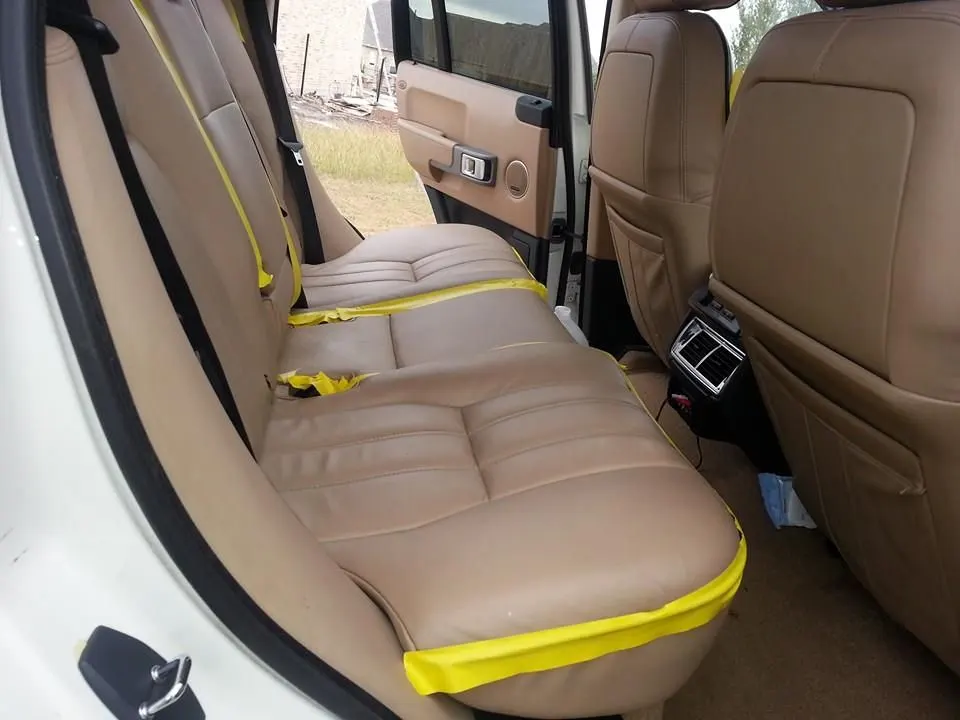
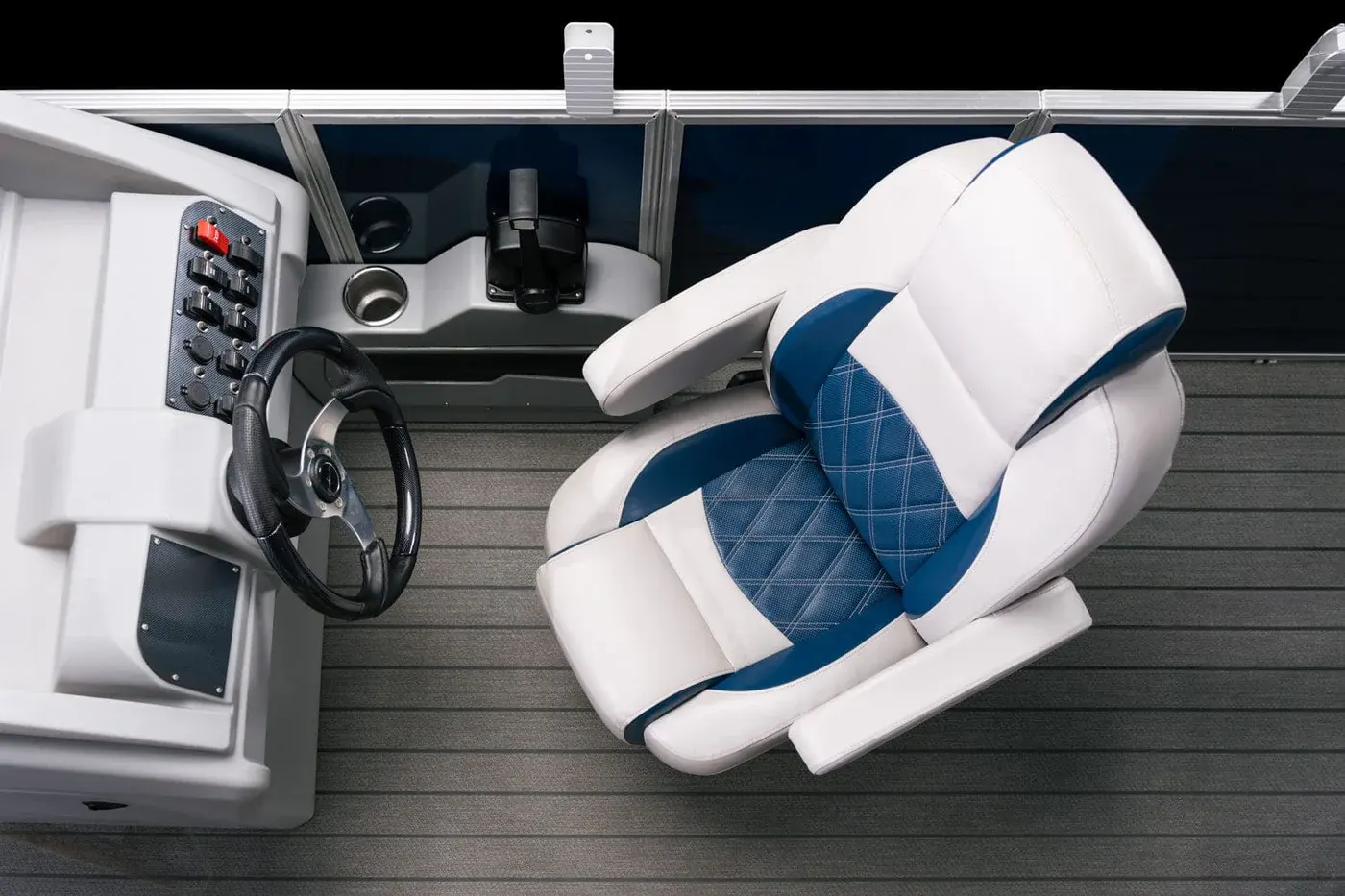
Leather captain's chairs with cracking, wear or color loss — cleaned, filled, texture-matched and recolored, in place.
Solid vinyl seating with tears, punctures or worn areas.
Faded surfaces of almost any kind, which recolor evenly and transform a coach's appearance for relatively little.
Dashes and consoles with fading, dullness or sticky soft-touch coatings.
Steering wheels, which go shiny and tacky and come back very well.
Split seams, which restitch.
Localized burns, spills and stains.
All of this happens in the coach, over days rather than weeks, which is what makes it the realistic option before a trip.
What needs replacing or recovering
Being clear about this is what stops money going into a losing position.
Bonded or coated synthetic material that is peeling across a piece. The delamination is happening throughout the material, so refinishing one area is followed by another failing nearby.
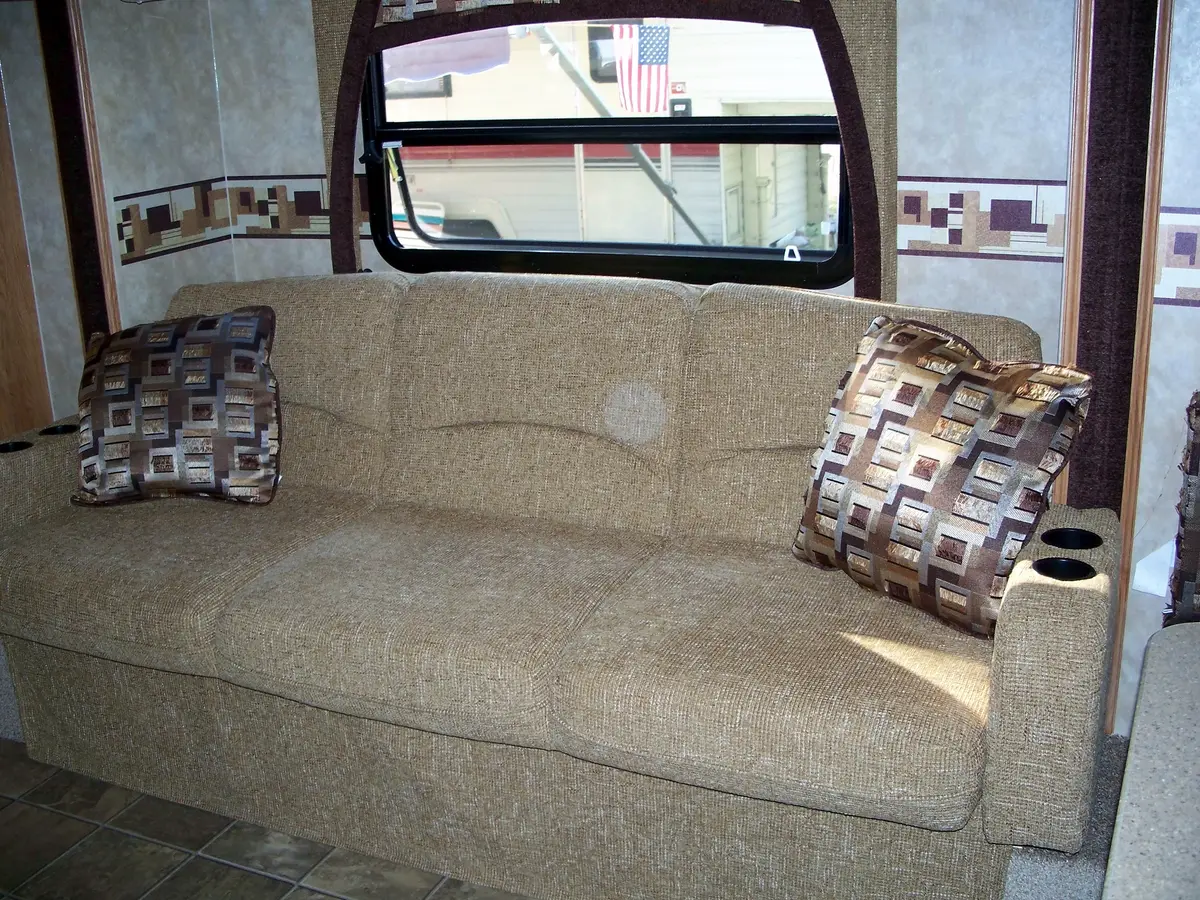
Foam that has collapsed, gone hard or crumbled. No surface work changes how a flat cushion sits, and this is common on dinettes and older sofas.
A cushion base — usually plywood — that has softened from a leak or from condensation. That is structural and it has to be dealt with before anything goes over it.
A dash cracked over collapsed foam, where the surface has nothing stable to sit on and a cap or replacement panel is the durable answer.
Material that has gone stiff and crazes under thumb pressure, whatever it looks like from a distance.
And anything mold-contaminated in the foam, since the source is underneath and new material over it recreates the problem.
The middle option people forget
Between restoring a surface and replacing furniture there is recovering, and on RV furniture it is often the best value.
Dinette cushions are simple flat shapes with straight seams, and recovering them costs far less than most owners assume.
Sofa and jackknife-bed cushions are similarly straightforward compared with domestic upholstery.
Recovering keeps the frames, the bases and the fit — which matters in a coach where furniture is built to the space and replacements may not fit the layout.
It is also the moment to upgrade the material. A contract-grade or marine-type vinyl handles coach heat, window sun and long storage far better than what most coaches are built with, and it costs little more at that point.
Compare it against replacement furniture, though. RV furniture is modular and aftermarket units exist for common layouts, and for some pieces replacing genuinely costs less than retrimming.
Time is the constraint before a trip
This is what usually decides the plan when there is a departure date.
Restoration work is measured in days. A specialist comes to the coach, works in place, and the main scheduling factor is the cure period before surfaces take friction.
Recovering cushions is measured in a week or two, because material has to be sourced and the work is done off site.
Replacement furniture depends entirely on availability, and on a coach with a less common layout it can be considerably longer.
Dash caps and replacement panels have to be ordered and can have long lead times.
So with four weeks before a trip, the realistic plan is restoration on everything that can be restored, and a decision about whether the replacement items wait until after.
Booking the restoration early in that window rather than the week before departure also puts the cure period somewhere it costs nothing.
Where to spend first if the budget is limited
A sensible order, which is not the same as doing the worst-looking thing first.
Anything that will get worse if left. Tears, split seams, openings that let moisture into foam, and water reaching a base. These grow, and deferring them costs more later.
Then what you touch: the captain's chairs, the steering wheel, the armrests, the dinette front edge. Tactile surfaces affect how a coach feels far more than their size suggests.
Then what you see from the driver's seat and from the doorway, which is the dash and the first seating.
Then fading, which is cosmetic but transforms the impression of a coach for relatively little.
Last, anything out of sight and stable.
And separate out anything that will not affect either use or resale on a coach you are selling soon, since that spend rarely returns.
If you are selling the coach
The calculation changes and it is worth being deliberate about it.
Buyers form an impression in the first minute, and most of it happens in the cab and the main living area.
The highest-return items are almost always the captain's chairs, the steering wheel, the dash and the first seating a buyer sees — all of which restore rather than needing replacement.
Fading is worth addressing because it reads as neglect across the whole coach.
What rarely returns is replacing furniture. A buyer does not credit new furniture at anything like its cost, and the money is better spent making what is there look cared for.
One thing to be careful about: cosmetic work over failing bonded material is legitimate for presentation and it should not be described to a buyer as a repair. Being straight about the coach's condition protects you as well as them.
Phasing the work across two seasons
Where the list comes back longer than the budget, spreading it deliberately works better than doing a bit of everything.
The principle is that anything getting worse goes first and everything cosmetic can wait, because cosmetic damage on sound material does not change over a year.
So season one covers the things with a trajectory: tears, split seams, punctures, any opening letting moisture into foam, a leak reaching a cushion base, and material that is peeling badly enough to shed.
It also covers the tactile surfaces, because those change how the coach feels to use more than anything else on the list — chairs, steering wheel, armrests, the dinette front edge.
Season two covers appearance: fading, recoloring, the panels that look tired but are structurally fine.
There is a practical bonus to that order. Doing the structural work first means the cosmetic work in season two goes onto surfaces that have already been stabilized, rather than being redone when a deferred problem finally forces the issue.
The one thing not to phase is anything involving moisture. A leak reaching foam, or an opening on a coach that sits through a Texas summer, gets worse on a timescale of months rather than years, and deferring it usually means paying for foam as well as covering.
It is also worth booking the second phase provisionally rather than leaving it open, because the work that gets scheduled is the work that happens.
Building the list
A practical way to work through the coach in half an hour.
Go piece by piece: captain's chairs, sofa, dinette, any recliners, dash, console, door tops, steering wheel, bedroom seating.
For each one, note the material — does it flake and shed, or crack without shedding.
Do the thumb-flex test and note whether it stays sound, crazes or powders.
Press the cushions and note whether the foam is flat, whether the base gives, and whether there is any musty smell.
Note whether the damage is one area or several.
Photograph each piece as a whole and each problem close up.
That list is what turns a vague sense that the interior is tired into a set of specific decisions, and it is what a specialist needs in order to quote it accurately in one visit rather than several.
It is also worth noting, beside each item, what you would accept. Some pieces you want right; others you would happily leave alone if the money is better spent elsewhere. A specialist cannot guess that, and it changes the recommendation as much as the condition does.
Keep the list. A year later it is the record of what was done, what was deferred and why, and it saves repeating the whole assessment from scratch.
Questions we get asked next
- Should I redo the whole interior at once?
- Rarely. Different pieces are different materials at different stages, and priced as one project the number discourages doing anything. Worked through item by item, most coaches need the expensive answer on two or three items and straightforward restoration on the rest.
- How long before a trip should I book the work?
- For restoration, a few weeks gives comfortable room — the work takes days and the main factor is the cure period before surfaces take friction. Recovering cushions needs a week or two more, and replacement furniture or dash caps depend on lead times, so those should be decided first.
- Is it worth restoring an interior on a coach I am selling?
- The restoration items usually are — chairs, steering wheel, dash, fading — because buyers judge a coach in the first minute and those carry most of the impression. Replacing furniture generally does not return its cost, so the spend is better placed on making what is there look cared for.
- How do I know if the foam needs doing?
- Sit on it and press it. A cushion that feels flat and hard, or that does not recover its shape, is a foam problem and no surface work changes it. On dinettes and older sofas this is common, and replacing the foam under sound covering is often the better first spend.
- RV
- restoration
- decision guide