Why Does Leather Feel Sticky or Tacky, and Can the Finish Be Restored?
A tacky sofa feels like it needs feeding. It almost never does — tackiness is a surface problem, and adding product is the standard way to deepen it.
Quick answer
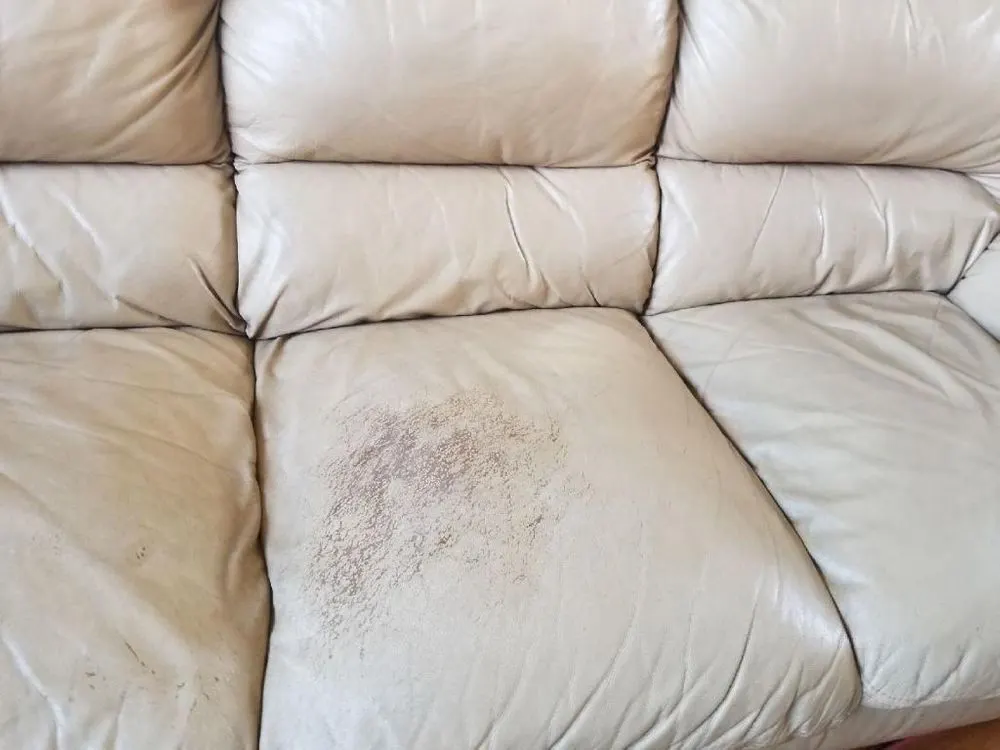
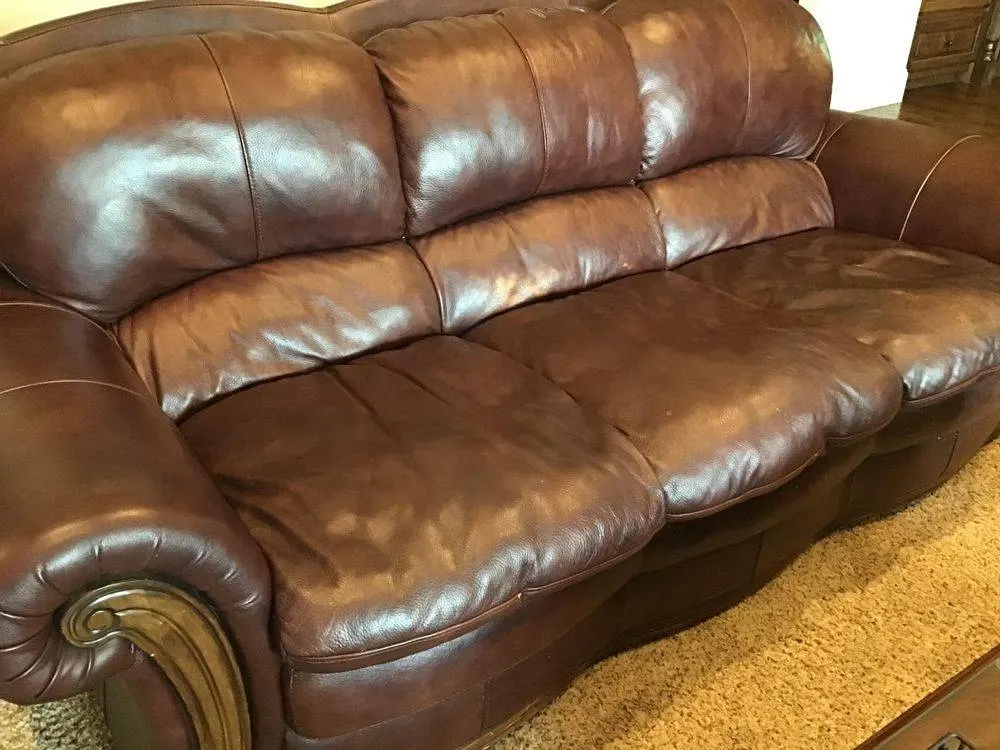
There are two causes. Either something is sitting on the surface — conditioner residue, silicone dressing, body oil, hair product — or the finish itself has begun breaking down, usually from solvent exposure or age. Cleaning fixes the first completely. The second needs refinishing, because the coating has failed rather than gotten dirty. In both cases, applying conditioner is the wrong move and makes the surface tackier.
At a glance
| Cause 1: residue | Excess conditioner, silicone dressing, body oil, hair product. Cleans off |
|---|---|
| Cause 2: failing finish | Coating breaking down from solvents or age. Needs refinishing |
| How to tell | If proper cleaning leaves it dry-feeling, it was residue. If it returns, the finish is failing |
| Never do | Apply conditioner, oil or dressing to a tacky surface |
| Where it shows first | Headrests, armrests, steering wheels, chair arms |
Why the instinct is wrong
A tacky leather surface feels like something is missing from it, and the natural response is to put something back. Conditioner is what people reach for.
That reads the symptom backwards. Tackiness is almost never a shortage of anything — it is an excess of something on the surface, or a coating that has become too soft.
Both causes get worse with added product. Residue plus more product is more residue. A softening coating plus a softening agent is a softer coating.
This is one of the few situations in leather care where doing nothing is measurably better than doing the obvious thing, and where the correct move — cleaning — is the opposite of the instinctive one.
Cause one: something is sitting on the surface
This is the more common cause and the better news, because it cleans off entirely.
Over-conditioning is the leading version. Finished leather can only absorb so much, and anything beyond that stays on top as a film. Applied every month rather than a few times a year, it builds up, and the surface goes from slightly slick to definitely tacky.
Silicone dressings — the products that leave a high gloss on a dashboard — produce the same result and are harder to remove, because silicone repels the water-based cleaners that would otherwise lift it.
Body oil is the third source, and it concentrates in exactly the places tackiness appears: headrests, armrests, the tops of door panels. Scalp oil, hand lotion and sunscreen all transfer readily, and many of them contain compounds that soften a finish as well as sitting on it.
Airborne kitchen grease is a real factor in open-plan homes. A sofa within range of a cooktop accumulates a fine film over years, and that film is sticky.
Cause two: the finish itself is breaking down
This is the case that needs work rather than cleaning, and it has a specific set of causes.
Repeated solvent exposure is the most common. Hand sanitizer, disinfectant wipes, alcohol, all-purpose sprays — each contact softens the topcoat, and repetition takes it apart. The surface goes dull, then pale, then tacky.
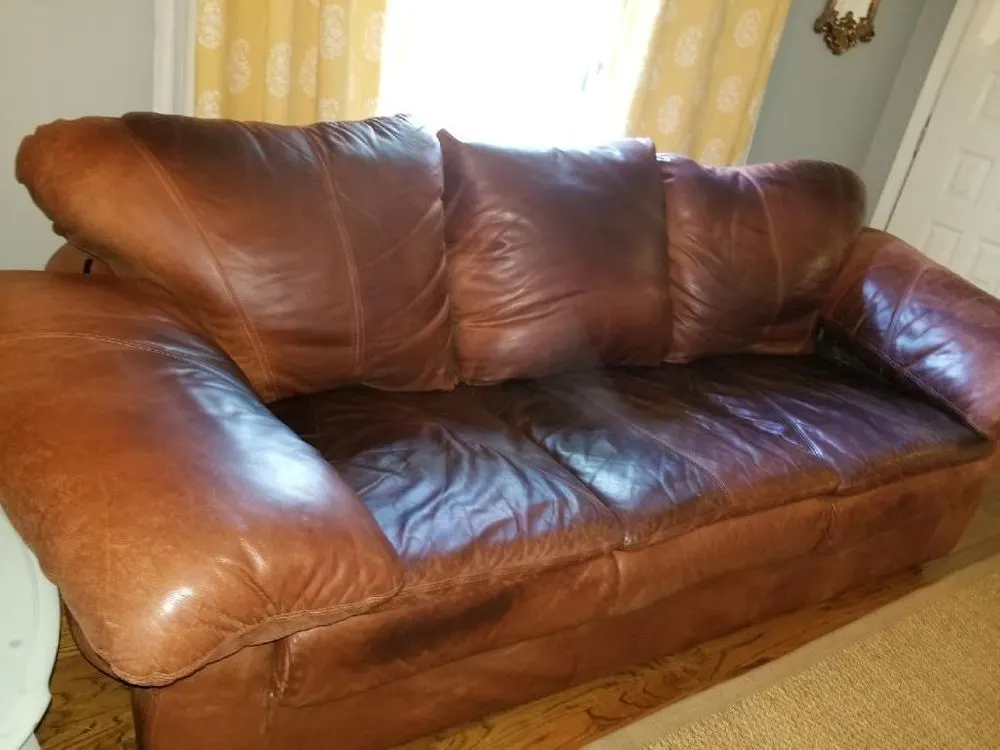
Age plus heat does the same thing more slowly. Coatings have a service life, and in a hot climate that life is shorter. A twenty-year-old sofa with a tacky surface may simply have reached the end of its finish.
Some polyurethane finishes also undergo hydrolysis in persistently humid, warm conditions — the polymer chains break down and the surface becomes soft and sticky. This is the classic failure on synthetic materials stored in warm humid places, and it is why a boat or RV closed up through a Texas summer can come out tacky throughout.
The distinguishing feature of a failing finish is that cleaning gives temporary improvement and the tackiness returns within days or weeks.
The test that separates them
It takes one cleaning session and a few days of patience.
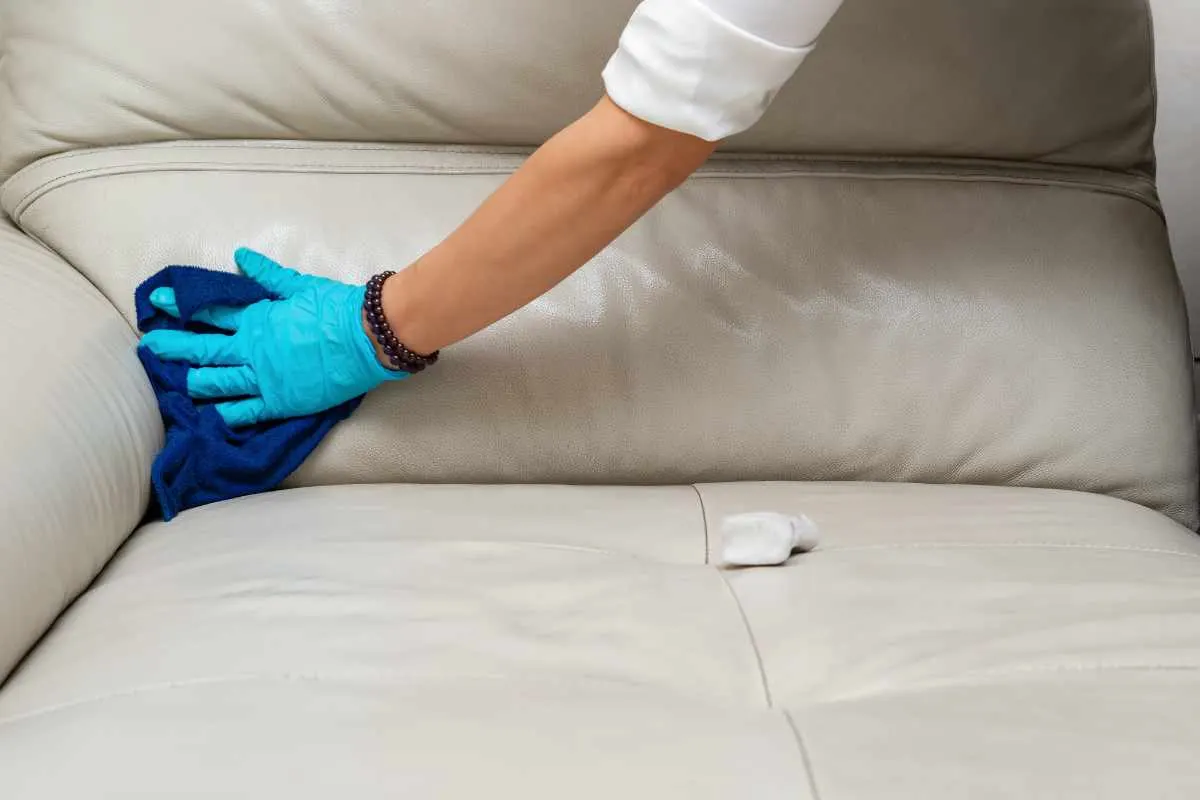
Clean a small area properly: a cleaner made for finished leather, applied to a cloth, worked over the surface, wiped with a barely damp cloth, dried with a third. No conditioner afterward.
Let it dry fully and leave it a few days without touching it.
If the area now feels dry and normal, and the surrounding untreated leather still feels tacky, the cause was residue. Clean the whole piece the same way and the problem is solved.
If the area went dry and then became tacky again within a week, the finish is breaking down. Cleaning removed the softened surface layer temporarily and more has come to the surface.
There is a second clue: run a fingertip firmly across a tacky area and look at your finger. Residue transfers something visible. A failing finish usually transfers nothing but leaves the surface slightly drag-y.
Cleaning off residue properly
If the test says residue, the job is thorough rather than difficult, and it usually needs more than one pass.
Start with a leather cleaner on a cloth, working a panel at a time. Change to a clean part of the cloth often, because you are transferring the residue rather than dissolving it in place.
Expect to repeat. Built-up conditioner film comes off in layers, and a single pass typically improves the feel without fixing it.
For silicone or heavy grease, consumer cleaners often will not get there. That is where professional degreasing agents make the difference, and it is a reasonable point to hand it over rather than escalating to something harsher at home.
Do not use alcohol, disinfectant wipes or all-purpose spray to cut through the residue. They will cut through it, and they will take the finish with it — converting a cleanable problem into a refinishing one.
Once the surface is genuinely clean and dry, leave it. Do not condition immediately. Wait until the piece is due for conditioning on its normal schedule, and then use less than before.
Repairing a failing finish
If the tackiness keeps returning, the coating needs rebuilding, and the process is standard.
The surface is cleaned and degreased thoroughly, which removes both accumulated oil and the softened material at the top of the failing coating.
What remains is assessed: keyed where it is still sound, taken back where it has broken down, so new material bonds to something solid.
Any unevenness is leveled with flexible filler and grain is pressed to match the surrounding texture.
Color is rebuilt in thin coats, matched against the actual leather and feathered out past the affected area so no boundary shows. On a headrest or arm cap, that usually means the whole panel.
A flexible topcoat seals it, and the sheen is matched to the rest of the piece.
The result is a surface that feels like leather again rather than like tape. The important second step is removing whatever caused the breakdown, or the same panel is back in the same state within a year or two.
Where it shows first, and why
Tackiness has a geography, and it maps onto human contact rather than wear.
Headrests take the worst chemistry on any piece of furniture: scalp oil, hair products, sunscreen, and sanitizer transferred from hands. They are the single most common tacky area.
Armrests take oil from forearms plus friction, and in vehicles they take sanitizer directly.
Steering wheels and gear selectors get the heaviest sanitizer exposure of anything in a car, touched with freshly treated hands on every trip.
Office chair arms are the commercial equivalent, wiped with disinfectant on a daily schedule.
The pattern is diagnostic: if the tacky areas are exactly the places hands and heads touch, the cause is contact chemistry rather than the finish simply aging out.
The Texas contribution
Two local factors accelerate both causes.
Heat softens coatings. A finish that is marginally sound at 70 degrees can be noticeably tacky at 95, which is why furniture in a sunroom or a car interior in August feels worse than the same material in a cooler room. Some of that is reversible when it cools; some of it is permanent degradation.
Humidity drives hydrolysis in some polyurethane systems, and this region has plenty of it in summer. Combined with heat and poor air movement — a closed RV, a stored boat, a garage — it produces the classic uniformly sticky surface that is not localized to contact points at all.
If a piece is tacky everywhere rather than just where people touch it, and it has been stored somewhere warm and humid, suspect the finish rather than residue.
Vinyl and synthetics behave the same way
Everything above applies to vinyl and PU upholstery, with one difference in outlook.
Vinyl gets tacky from the same causes — dressing residue, body oil, solvent damage, and heat-and-humidity breakdown of the coating.
Residue on vinyl cleans off readily, often more easily than on leather, because the surface is non-porous.
A vinyl surface that has broken down chemically is a different matter. If it is tacky and also chalky, powdery to the touch, or crazed with fine cracks, the material is at the end of its life rather than dirty, and refinishing sits on a failing substrate.
This is the common finding on marine and RV vinyl after storage. Tacky plus intact is worth refinishing; tacky plus crazed usually is not.
What to send for an assessment
Photograph the tacky area square-on and from a low raking angle in daylight, no flash. Raking light shows whether the surface has a film on it or has changed in itself.
Photograph an area of the same piece that is not tacky, for comparison.
Say exactly which areas are affected — is it only the headrests and arms, or the whole piece? That single answer separates contact chemistry from finish failure.
List everything that has been applied over the piece's life, including products used years ago. Silicone in particular changes the preparation substantially.
And say whether the piece has been stored somewhere warm, humid or closed up, and whether the tackiness varies with the room temperature. Both point toward a finish problem rather than residue.
One last thing worth checking before you send anything: whether the tackiness transfers. Press a sheet of white paper against the surface for a few seconds and lift it. Paper that sticks slightly, or comes away with a faint residue on it, confirms there is something sitting on the finish rather than a coating that has gone soft in itself — and that is the difference between a cleaning job and a refinishing one.
Questions we get asked next
- Can I just wipe it with a damp cloth every week and live with it?
- If the cause is residue, proper cleaning solves it outright, so there is no reason to live with it. If the finish is failing, wiping keeps it manageable for a while but the surface continues to break down, and the tackiness will be joined by dullness and then cracking.
- Why did conditioning make it worse?
- Because tackiness is a surface excess or a softening coating, and conditioner adds to both. If the surface could not absorb what was already on it, it certainly cannot absorb more, and the new product simply joins the film.
- My car seats are sticky only in summer. Is that a real problem?
- Possibly not yet. Heat softens finishes temporarily, and a surface that firms up again when the cabin cools may just be warm. If it stays tacky at normal temperatures, or if it is also dull or pale, the coating is degrading and it is worth assessing.
- Is a sticky surface harmful?
- Not in itself, but it holds dust and dirt against the finish, which abrades it, and it transfers to clothing. It is also usually the second stage of a sequence that ends in cracking, so it is a useful warning rather than a cosmetic annoyance.
- sticky leather
- finish failure
- diagnosis