Can a Cracked Leather Couch Seat Be Restored Before It Tears?
Cracks in a seat cushion are not the damage. They are the warning, and there is a period where acting is cheap.
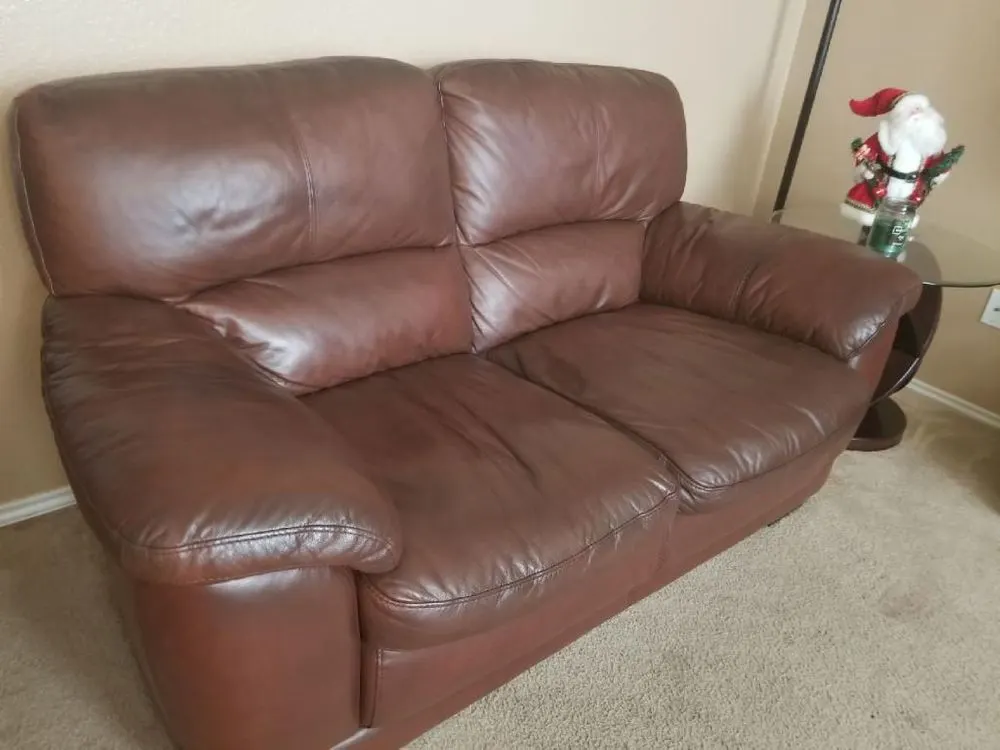
Quick answer
Yes, and the earlier the better. Cracking on a seat begins in the finish, and at that stage the area is cleaned, filled in thin flexible layers, texture-matched and recolored — a routine repair that lasts. Once the cracks go through into the hide and the material begins to separate, the repair is larger and the result depends on how much sound leather remains around it. The deciding factor is whether the hide is still supple, which a thumb test answers in seconds.
At a glance
| Stage one | Fine lines in the finish — easiest and cheapest to fix |
|---|---|
| Stage two | Cracks through to the hide — repairable, more work |
| Stage three | Separation and tearing — panel replacement territory |
| The test | Press a thumb beside the crack — supple or board-like? |
| The cause | Stiffened leather flexing, not the sitting itself |
Why seat cushions crack and back panels do not
Look at almost any aging leather sofa and the pattern is the same: the seat cushions are cracked and the outside back is perfect, on identical leather of identical age.
The difference is flexing, not wear. Sitting is not abrasive in the way people assume — the hide is not being scrubbed, it is being bent.
Supple leather bends without damage. The fiber bundles inside slide against each other, the movement distributes through the material, and it returns to shape.
Stiffened leather cannot do that. It resists the bend, so the stress concentrates in a line instead of spreading, and the finish on the surface takes the load.
That is where the cracks appear — along the fold lines a cushion makes, across the front edge, and radiating from where people sit.
So cracking is a stiffness problem expressed at the flex points, which is why it shows up where it does and why the back panel, which never bends, stays sound.
What made it stiff in the first place
Leather holds moisture and fatliquors — oils introduced during tanning that let the fibers move freely. Both deplete over time.
Indoor air in this region is drier than most people realize, because cooling removes moisture as a side effect of how it works, and heating in winter does the same by a different route.
Leather exchanges moisture with the air around it continuously, so it gives some up to that dry air, year after year.
Heat accelerates the loss of fatliquors, so a piece near a vent, a window or a fireplace ages faster than the rest of the same sofa.
Body oils are a complicating factor. They soak into the hide at the contact points and change how the material behaves locally, which is why the most-used seat often cracks first.
And cleaning with household products strips the finish, leaving a more porous surface that loses moisture faster.
None of this is sudden. The stiffening takes years and the cracking appears in months, which is why the failure feels abrupt when it is not.
The three stages, and where the window is
Cracking progresses predictably, and knowing which stage you are looking at determines both the cost and the outcome.
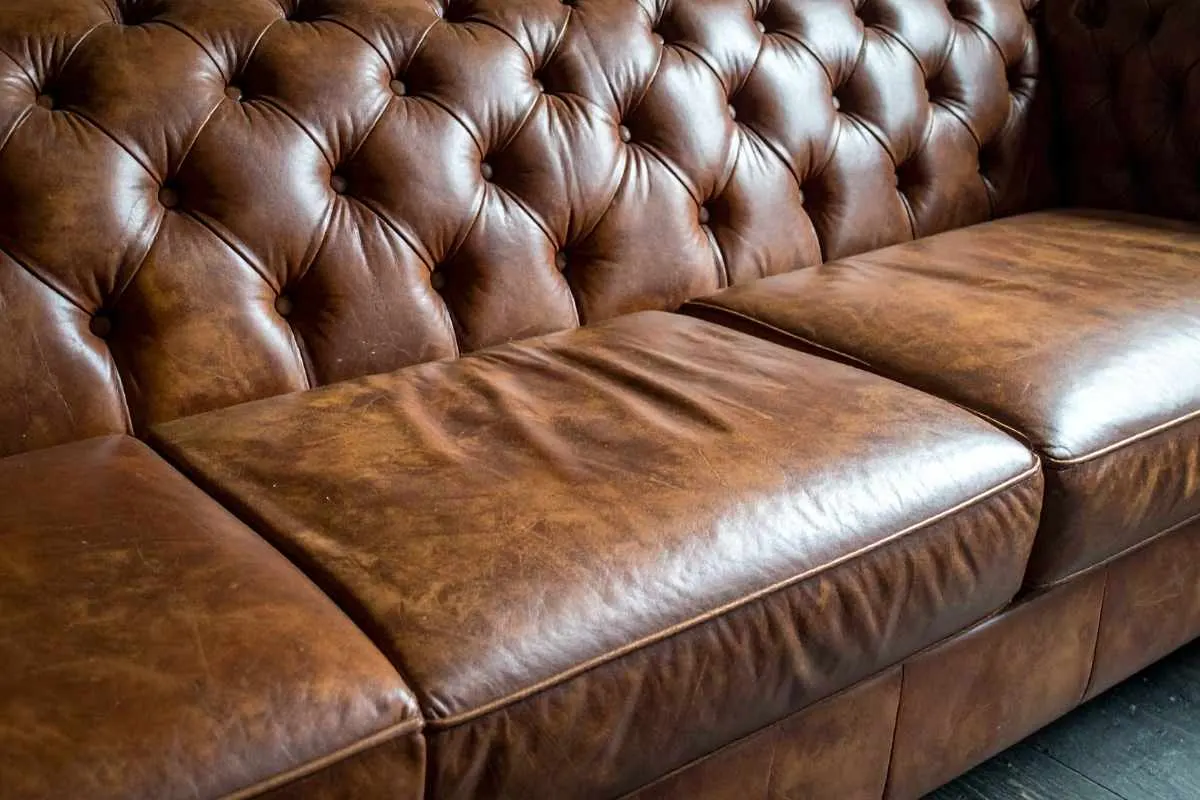
Stage one is fine lines in the finish only. They are usually visible at a low raking angle before they are visible straight on, and they do not catch a fingernail. This is the window — the repair is straightforward, the result is invisible, and it lasts.
Stage two is cracks that have gone through the finish into the hide. They catch a nail, they may show a lighter color in the base of the crack, and they widen when the cushion is flexed. Still repairable, more work, and still a good outcome.
Stage three is separation — the crack has opened into a split, the edges have lifted, and the surrounding material is failing in new places as soon as it moves. At this point the repair area is large and a panel replacement may be the better spend.
Most people call at late stage two, when the cracks became impossible to ignore.
The useful habit is looking at the flex points at a raking angle once a year, which catches stage one while it is cheap.
The test that decides the recommendation
Before anyone quotes anything, this tells you what is actually possible.
Press a thumb firmly into the leather beside the cracked area, not on it, and flex it.
If it yields and springs back, the hide is still supple. The cracking is in the finish and the surrounding material is sound, which means a repair will hold because there is something stable to build on.
If it feels board-like and resists, the hide has stiffened throughout. A repair to one cracked area will hold and new cracks will appear beside it, because the cause has not changed.
If new fine cracks appear under the pressure, the material is at the end of its usable life in that area.
Compare against an unused panel — an outside back, a side — which shows what the same leather feels like without the flexing and the body oils.
That comparison is the single most informative thing an owner can do before calling, and it is what separates a repair recommendation from a reupholstery one.
What the repair actually involves
The technique is well established, and the details are what make it last.
The area is cleaned and degreased thoroughly. A seat cushion carries years of body oil, and nothing bonds through it. On a heavily used seat this stage takes longer than the filling does, and skipping it is the main reason cheap repairs fail within months.
Loose or lifting finish around the cracks is removed back to a sound edge.
Each crack is filled with a flexible compound applied in thin layers, each allowed to set before the next. Thin layers move with the hide; a single thick fill shrinks, hardens and cracks along its own edge.
The surface is texture-matched to the grain around it, so the repaired area does not read as a smooth patch in a grained surface.
Color is mixed to the sofa as it is now, not to a factory reference, since the leather has aged.
It is applied in light coats and sealed with a flexible topcoat that flexes with the cushion rather than sitting on it as a shell.
Then it cures before the seat takes weight, which is the part that needs planning rather than patience.
Repair the panel, not the crack
This is the scope decision that separates a result people are happy with from one they are not.
Filling and recoloring an individual crack, then blending into the surrounding leather, rarely looks right. The surrounding leather has faded and aged, so the blend is visible from certain angles even when the fill is perfect.
Working to the seam lines — treating a whole cushion panel as the unit — gives a clean visual break where the eye already expects one.
Doing the whole cushion, top and front, is better again on a piece where the cracking runs across both.
And where several cushions are cracked, doing all of them together costs considerably less than doing them one at a time, because the cleaning, the color mixing and the setup are largely shared.
The incremental cost of the second and third cushion is mostly labor rather than setup, which is why staging this work across years is usually the most expensive way to do it.
How long a repair lasts
A fair question, and the answer depends on what happens after rather than on the repair itself.
A properly built repair on supple leather wears at the same rate as the material around it. It is not a weak point, and it does not have a shelf life of its own.
What shortens it is the cause continuing. If the leather stiffened because it was never conditioned and it goes back to never being conditioned, new cracks appear elsewhere on the same cushion.
So conditioning on a schedule after the repair is not an upsell — it is the thing that determines whether you are back in two years.
In this climate that means three or four times a year rather than annually.
Moving the piece out of a vent path or an afternoon sun patch does the same job from the other direction.
Repairs that fail early almost always fail for one of two reasons: inadequate degreasing before the work, or a thick single-layer fill that could not flex. Both are workmanship rather than material.
When a repair is not the right answer
Being clear about this saves money and it is the part an honest assessment leads with.
Leather that crazes under thumb pressure across the whole cushion. Filling one area on material that is failing generally means chasing it around the piece.
Bonded leather that is peeling rather than cracking. That is a different material with a different failure, and no filling or refinishing holds on it once delamination is widespread.
Cracking that has opened into splits with lifted edges over a large area, where the repair becomes a rebuild of most of the panel.
A cushion where the foam beneath has collapsed, since the leather is being asked to bridge a void and it will keep failing regardless of surface work.
And a piece where several panels have reached stage three at once, where reupholstery or replacement is genuinely the better spend.
In each of those cases a specialist who says so early is worth more than one who takes the job.
Preventing the next one
Everything that prevents cracking is about keeping leather supple, and it is unglamorous.
Condition on a schedule — three or four times a year in this climate — rather than when it looks dry. By the time it looks dry, the depletion has been going on for years.
Apply lightly and buff off. Excess sits on the surface, attracts soil, and does nothing for the fiber structure.
Redirect any supply vent aimed at the sofa. A vent deflector costs very little and removes the single worst local factor.
Move the piece out of the afternoon sun patch, or address the window, since sun dries and fades at the same time.
Rotate the cushions so one seat does not take all the flexing and all the body oil.
Wipe the high-contact areas every few weeks, since body oils build up invisibly and change how the hide behaves.
And vacuum the seams weekly, because grit trapped there abrades the finish that is protecting everything underneath.
What to send for an assessment
Photograph the whole sofa first, so the piece and its layout are clear.
Photograph each cracked cushion straight on, then again at a low raking angle, which shows depth far better and reveals fine cracking that is invisible face-on.
Run a fingernail across a crack and say whether it catches.
Press a thumb beside the crack and say what happens: yields and springs back, feels board-like, or produces new fine cracks.
Photograph an unused panel — an outside back or a side — for comparison.
Say how old the piece is, whether it has ever been conditioned, and what has been used on it.
Say where it sits relative to vents, windows and heat sources, since that usually explains why one cushion is worse than another.
And say whether other cushions are heading the same way, because doing them together is substantially cheaper than one at a time.
Questions we get asked next
- Will conditioner fix the cracks?
- No. It darkens the area and fills the texture temporarily, so the cracks look better for a few days, and nothing has been repaired. Meanwhile they keep growing. Conditioning prevents cracking; it does not fix it, and using it to hide cracks usually means a larger repair later.
- How can I tell if my cracks are still repairable?
- Press a thumb into the leather beside the crack and flex it. If it yields and springs back, the hide is supple and a repair will hold well. If it feels board-like, or new fine cracks appear under the pressure, the material has stiffened throughout and the outlook is different.
- Can just one cushion be repaired?
- It can, and it is worth asking whether the others are heading the same way. Doing several together costs considerably less per cushion, since cleaning, color mixing and setup are shared — and it avoids one freshly recolored cushion sitting beside two faded ones.
- Will the repair be visible?
- On supple leather, properly done, generally not. The area is filled in thin layers, texture-matched to the surrounding grain and recolored to the sofa as it is now. What makes repairs visible is blending into faded leather rather than working to the seam lines.
- couch repair
- cracking
- seat cushions