Can a Cracked Dashboard Be Repaired Without Replacing the Entire Dash?
Dash replacement means dismantling half the interior. Surface repair means a few hours with the car parked where it is — and it handles most cracking.
Quick answer
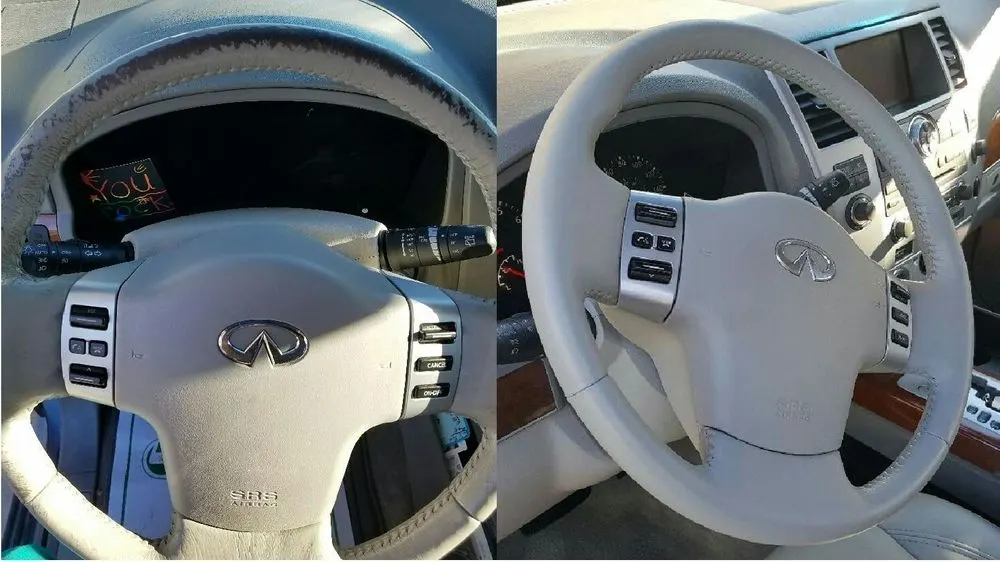
Usually yes. Cracks in the dash skin are cleaned, stabilized, filled with flexible material, textured to match the surrounding grain and recolored — done in the vehicle, in a few hours, at a fraction of replacement cost. Replacement becomes the better answer when the foam beneath has collapsed so the surface is no longer supported, when cracking is severe across the whole top, or when the dash has warped away from its mountings.
At a glance
| Repairs in place | Surface cracks, splits, sun damage, small holes, faded areas |
|---|---|
| Replacement territory | Collapsed foam beneath, warping, cracking across the entire top surface |
| Where it cracks | The top surface facing the windshield, above the instrument cluster, near vents |
| Cause | UV through the windshield plus daily thermal cycling |
| Never repair | The passenger airbag door area |
Why dashboards crack where they do
Dashboard cracking follows the sun with almost perfect precision, and the pattern tells you the cause without any investigation.
The top surface, angled up toward the windshield, takes the heaviest UV dose of any interior surface in the vehicle. The windshield is the largest glass area and it is angled to deliver light straight onto the dash top.
That same surface heats most in a parked car, because it is absorbing solar energy directly.
Most dashboards are a flexible skin — vinyl or a polyurethane material — over a foam layer over a rigid substrate. UV breaks down the polymer chains in the skin, and heat drives plasticizers out of it. The skin becomes brittle.
Then thermal cycling does the mechanical work. The dash expands as it heats and contracts as it cools, every day, and a brittle skin cannot accommodate that movement. It splits.
This is why cracks concentrate on the top, above the instrument cluster, and radiating from vents and seams where the material is already interrupted.
What repair actually involves
Dash repair is done in the vehicle, with the surrounding areas masked, and the process is closer to bodywork than to leather repair.
The area is cleaned and degreased thoroughly. Dashboards accumulate years of protectant dressings, and silicone in particular has to be removed or nothing will bond.
Cracks are opened slightly and undercut so filler has something to key into rather than sitting in a narrow slot. Loose or lifting material at the edges is removed.
Flexible filler is worked into the cracks and built in thin layers until level with the surrounding surface. Flexibility matters as much here as on a seat, because the dash keeps expanding and contracting.
Grain is pressed into the final layer to match the surrounding texture. Dash grains are molded patterns that repeat, so they match well — and this is the stage that determines whether the repair disappears.
Color is sprayed in thin coats and feathered outward. On a dash the blend usually covers a defined section, because a small patch of newer color on a large sun-faded surface is visible.
An automotive topcoat seals it, matched to the low-sheen finish dashboards use — matte is standard, because a shiny dash reflects into the windshield.
When replacement is genuinely the better answer
Three findings point away from repair.
Collapsed or degraded foam beneath the skin. Press gently on the cracked area — if it feels hollow, spongy or sinks noticeably, the layer supporting the surface has broken down. Filler over an unsupported skin dents under pressure and cracks again.
Cracking across the entire top surface rather than in specific areas. At that point there is nothing sound to blend into, and while a full resurface is possible, the cost approaches other options.
Warping, where the dash has deformed and pulled away from its mountings or no longer sits flush against the windshield or the trim. That is a structural change and no surface work corrects it.
Against that, understand what replacement involves: the dash is one of the largest assemblies in a vehicle, and removing it usually means taking out the steering column area, disconnecting the airbag system, removing trim, ducting and wiring, and reassembling all of it. It is a substantial labor job, and it is why repair is worth assessing first even on fairly severe cracking.
The airbag door
Modern dashboards contain the passenger airbag, and it deploys through a designated section of the dash top.
That area is molded with tear seams designed to open in a controlled way. On many vehicles the seams are invisible from the outside, which is exactly the point.
Filler, adhesive or coatings applied across that area can affect how it opens, in the same way as a seat's deployment seam.
A specialist should identify the airbag door location and exclude it, and should say so rather than being asked.
The practical implication for owners: cracking directly above the glovebox area on the passenger side is worth flagging specifically when you ask for an assessment, since that is where the deployment area usually sits.
Why dashboards here have it worst
North Texas is close to the worst case for dashboard longevity in the continental United States.
The sun season is long and intense, and the windshield delivers that directly to the dash top for hours every afternoon.
Cabin temperatures in a parked vehicle reach levels far above ambient, and the dash top is the hottest surface in the car because it is absorbing solar energy directly rather than being warmed by the air.
The daily cycle between that peak and overnight cooling is large, which is what drives the expansion and contraction that turns brittleness into cracks.
The practical result is that dash cracking here appears on vehicles years younger than it would elsewhere, and that a windshield sunshade is not a marginal accessory — it is the difference between a dash that cracks at eight years and one that does not.
What prevents it, and what does not
A windshield sunshade is the single most effective measure, and it is close to free. It blocks the UV and cuts the peak surface temperature, and it addresses the actual mechanism rather than the symptom.
Covered parking does the same thing more completely.
Windshield UV film helps, though windshields already block more UVB than side glass; the greater gain from film is usually on the side windows within legal tint limits.
A quality UV-protectant dressing formulated for interior plastics and vinyl offers real protection, applied a few times a year and buffed off rather than left glossy.
What does not help: silicone-heavy high-gloss dressings, which produce a shiny dash that reflects into the windshield, attract dust, and contaminate the surface so any later repair needs extra preparation.
And dash covers, which prevent UV reaching the surface but trap heat against it and can hold moisture — a reasonable trade on an already-cracked dash, a poor one on a sound one.
Repair versus a dash cover versus a cap
Owners weighing options usually encounter three, and they are not equivalent.
Repair restores the original surface. It costs a fraction of replacement, is done in the vehicle, and if the grain and color are matched properly it is invisible.
A dash cover is a fitted fabric or carpet piece laid over the dash. It hides cracking rather than fixing it, it is visible as a cover, and it traps heat against the material beneath. It is a cheap cosmetic option for a vehicle being kept but not cared about.
A dash cap is a molded plastic skin bonded over the original dash. It is more permanent than a cover and better looking, but it is an added layer with visible edges, it can trap moisture, and it makes any later proper repair or replacement harder.
For a vehicle you intend to keep or sell, repair is normally the answer. Covers and caps are compromises for vehicles where the calculation is different.
Getting it assessed
Photograph the dash from the driver's seat with the door open, in daylight, no flash. Flash on a dash produces a hotspot and shows nothing useful.
Take a close-up of the worst cracking square-on, and one from a low raking angle along the surface, which shows depth and whether edges are lifting.
Press gently beside the cracks and say whether the surface feels firm or hollow. That single answer separates a surface repair from a foam-collapse case.
Photograph the whole top surface so the extent is visible, and photograph the door panel tops and console if they show the same problem.
Say what the vehicle is and roughly its age, whether it is parked outside, and whether any dressing has been used on the dash — silicone changes the preparation substantially.
And note where the passenger airbag door is if you can identify it, since that area is excluded from repair.
It is also worth photographing the dash from outside the windshield, looking down at the top surface. That angle shows the full extent of sun damage in a way a photograph from the driver’s seat cannot, and it is usually the view that determines whether the job is a few cracks or a full resurface of the top.
Finally, say whether the cracking has appeared recently or has been developing for years. A dash that cracked suddenly over one summer behaves differently from one that has been slowly crazing since the vehicle was new, and the difference affects how much of the surrounding material is likely to be brittle.
Questions we get asked next
- How much cracking is too much to repair?
- Extent matters less than support. Widespread fine cracking over a firm, well-supported skin repairs as a full resurface of the top. A small area of cracking over collapsed foam does not, because there is nothing holding the surface up. Press beside the cracks — firm means repairable, hollow means not.
- Will the repaired area match the rest of the dash?
- It should. Dash grains are molded patterns that repeat, so texture matches well, and the color is mixed against your actual dash and blended across a defined section rather than patched. Getting the sheen right matters as much as the color — dashboards are matte, and a shiny repair reflects into the windshield.
- My dash is cracked and so are the door tops. Same job?
- Same visit, and it is worth doing together. The cause is identical and the color is matched once for all the affected pieces, which produces a consistent interior and costs less than treating each surface as it becomes noticeable.
- Is a cracked dash an inspection or safety issue?
- Not in itself in most cases, but two things are worth knowing: sharp lifted edges are a minor hazard, and cracking in the passenger airbag deployment area is a genuine concern that belongs to a dealer or trim shop rather than a cosmetic repair.
Sources
- Air Bags — U.S. National Highway Traffic Safety Administration, checked 2026-08-21
- dashboard
- cracking
- UV damage