How Can Families Protect Leather Furniture from Kids and Pets Without Damaging It?
Leather is a better choice for a busy household than most people assume. The failures are narrow and they come from a short list of causes.
Quick answer
Choose the right finish, protect the specific spots that take damage, and clean quickly rather than thoroughly. Pigmented leather handles family life well because the color sits in a protective coating; aniline does not. The damage that happens is narrow and predictable — claw scratches on arms and cushion fronts, ink, dye transfer, food and drink, and shoe scuffs on the base. Throws on the pet's spot and trimmed claws prevent most of it.
At a glance
| Best finish | Pigmented or protected leather — color sits in a coating |
|---|---|
| Avoid for families | Aniline, which absorbs everything, and bonded, which delaminates |
| Main pet damage | Claw scratches on arms and cushion fronts |
| Main child damage | Ink, food, drink and shoe scuffs on the base |
| Best habit | Blot spills immediately — speed beats any product |
Leather is a better family material than it is given credit for
It is worth saying this plainly, because people often assume the opposite and choose fabric on that basis.
Leather does not absorb liquids the way woven fabric does, so a spill sits on the surface long enough to be wiped up rather than soaking straight into the padding.
It does not hold odors the way fabric does, which matters with pets more than anything else.
It does not trap dander, dust and pet hair in a weave. A vacuum and a wipe genuinely clears it.
It is repairable. A scratch, a tear or a worn area on leather can be rebuilt in place, whereas the equivalent damage to fabric usually means recovering the piece.
And it lasts. A well-made leather sofa outlives several fabric ones, which changes the cost comparison considerably over a decade of family use.
The caveat is that the wrong kind of leather in a busy house is a genuinely poor choice, which is why the finish type matters more than any other decision here.
Which leather to choose for a busy house
This decision does more for the outcome than every habit and product combined.
Pigmented or protected leather is the right answer for most families. The color sits in a durable coating over the hide, which resists staining, cleans easily and tolerates the daily contact of a household.
Semi-aniline is a compromise — better feel, less protection — and it works in a household that is careful rather than one with toddlers and dogs.
Aniline is beautiful and it is the wrong choice here. There is no pigment coating, so it absorbs everything: water marks, food, oils from hands, and dye from clothing. In a family room it will show its history within months.
Bonded leather should be avoided regardless of household, because it delaminates after a few years and no care prevents it.
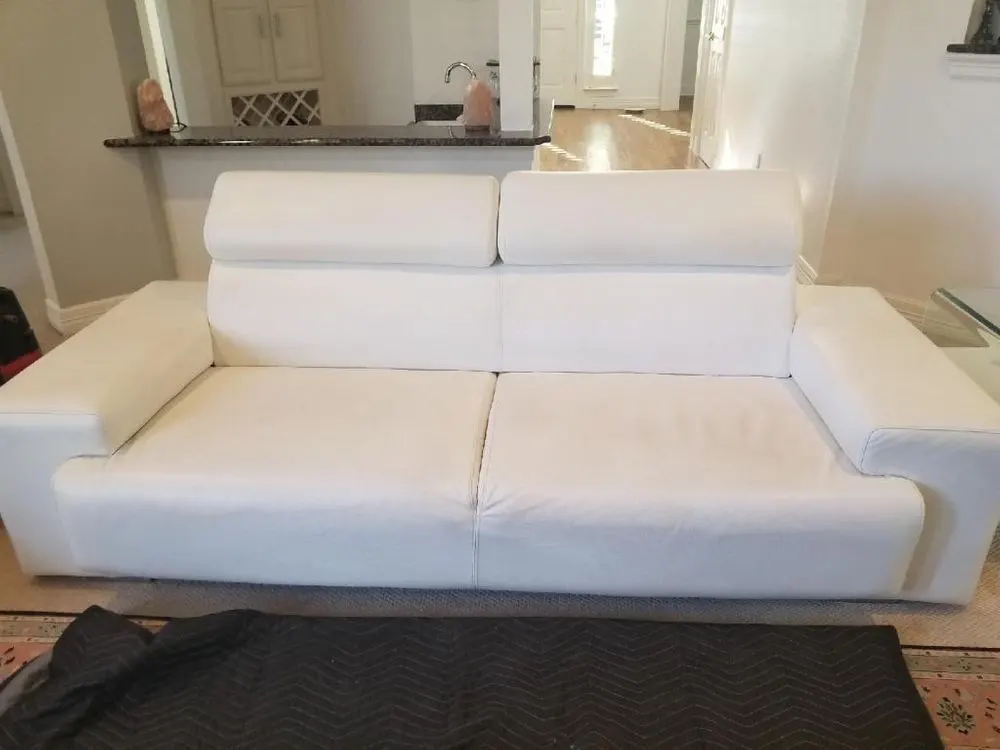
On color: mid-tones hide daily life best. Very light leather shows dye transfer and soiling; very dark shows dust, scratches and lint. A mid-brown or a mid-gray is the practical middle.
And textured or lightly distressed finishes hide scratches far better than smooth ones, which is genuinely useful with pets.
Pet claws, and what actually happens
This is the most common pet damage and it is worth understanding because the response depends on the depth.
Cats scratch deliberately, to mark and to maintain their claws, and they choose vertical surfaces with texture — which describes the side of a sofa arm precisely.
Dogs damage leather incidentally rather than deliberately, by jumping up, pushing off and settling repeatedly in the same spot.
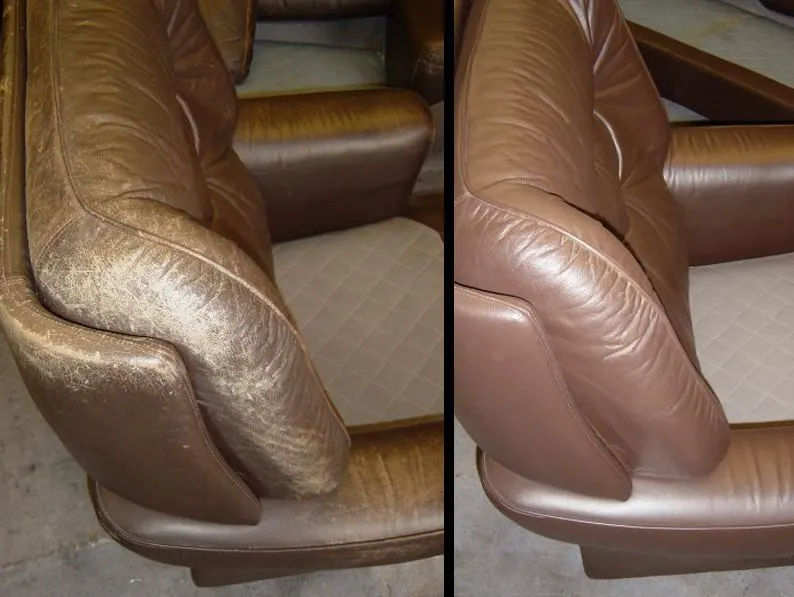
Light surface scratches sit in the finish only. On pigmented leather these often improve with cleaning and a light conditioning, and they respond well to a touch-in.
Deeper scratches go through the finish into the hide. They need filling, texturing and recoloring, and they disappear when done properly.
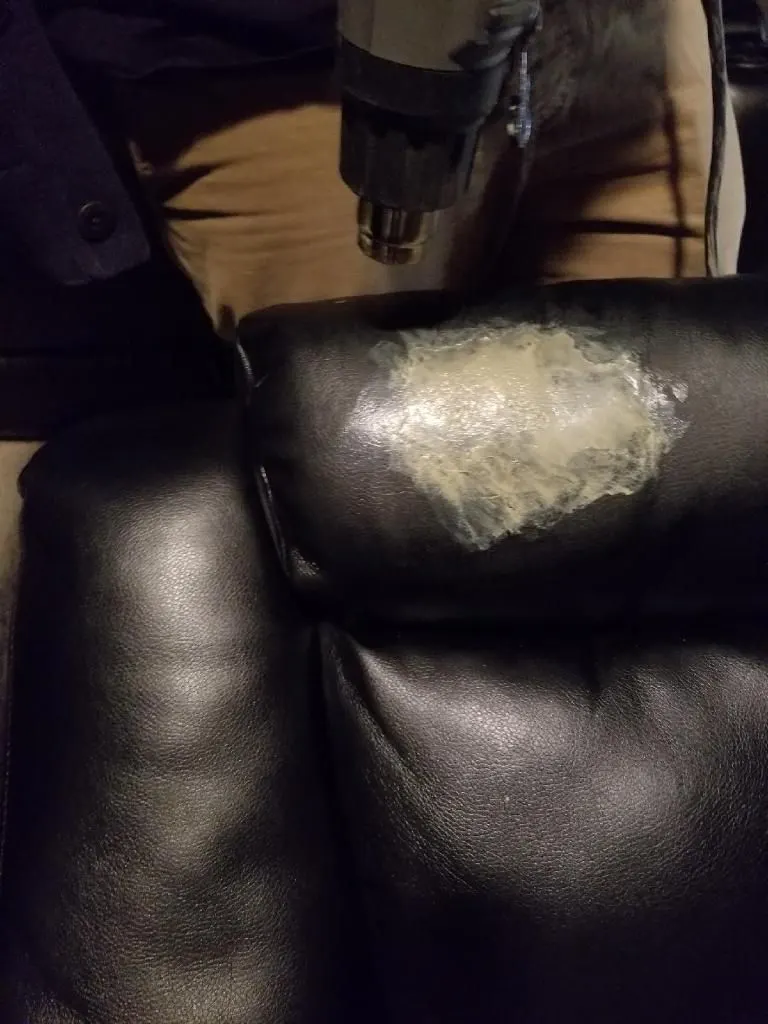
Punctures and tears from a claw catching are backed, filled and refinished.
The pattern is predictable: the outside of arms for cats, and the seat cushion front and the spot a dog uses for dogs. Protecting those two areas specifically catches most of it.
Preventing pet damage without banning the pet
The measures that work are the ones that fit how the household already operates.
Trim claws regularly. This single habit prevents more damage than anything else on the list and it costs nothing.
Give a throw or a blanket to the spot the pet actually uses. Pets are creatures of habit and they use the same place, so one throw in the right place does most of the work.
Provide a scratching post near where a cat scratches the furniture, rather than somewhere logical to a human. Position matters more than the post.
Consider a fitted cover on the piece that takes the most pet use, which is less attractive and considerably cheaper than refinishing.
Keep claws off the arms specifically, since arm sides are the hardest area to repair invisibly on some finishes.
And clean up accidents immediately and thoroughly, because urine is one of the few things that damages leather chemically as well as staining it.
The speed rule
If there is one habit worth establishing in a family house, this is it.
Blot spills immediately with a dry or barely damp cloth. Nearly everything comes off pigmented leather if it is dealt with in the first minutes.
Blot, do not rub. Rubbing spreads the spill outward and works it into the grain, turning a small mark into a larger one.
Work from the outside of the spill inward for the same reason.
Do not reach for a household cleaner. Wipes, all-purpose sprays and glass cleaner strip the finish, and on a fresh spill they usually make the situation worse rather than better.
Do not use heat to dry it, and let the area dry naturally.
Keep a clean microfiber cloth somewhere near the sofa, because the habit only works if the cloth is within reach at the moment it is needed.
Anything that has already dried and set is worth leaving alone for a specialist rather than escalating through products at home.
Protecting the specific spots
Blanket protection over a whole sofa defeats the point of owning leather. Targeted protection does not.
A throw over the pet's spot and the seat that takes the most child use. Two throws, in the right places, handle the majority of household wear.
Arm caps on the arm nearest the traffic route, which takes bag knocks, hands and claws.
A washable cover on the seat cushion where snacks happen, if there is one such seat.
Nothing on the panels that see light use, which is most of the piece.
The point is that protection is placed where the damage is rather than spread evenly, so the furniture still looks and feels like leather.
It is also worth revisiting as children grow and habits change, since the spot that needs a throw at three is not the one that needs it at eight.
Cleaning routine for a family house
More frequent than a quiet household and no more complicated.
Vacuum weekly with a brush attachment, getting into the seam channels and under the cushions where crumbs, grit and hair collect. Grit is abrasive, and this is the step that protects the finish most.
Wipe the high-contact areas — arm tops, headrest area, cushion fronts — with a barely damp cloth every couple of weeks, since skin oils build up invisibly and are one of the main causes of the shiny worn look on older sofas.
Full clean with a leather-specific product three or four times a year, done panel by panel rather than spot by spot.
Condition on the same rhythm, lightly, buffed off afterward.
Deal with pet hair with a rubber glove or a damp cloth rather than anything abrasive.
And keep household cleaners, wipes and sprays away from it entirely, which is harder in a family house because they are always to hand.
What repairs well later
Worth knowing, because it changes how much anxiety any given incident deserves.
Claw scratches, at any depth, repair reliably on genuine leather. Deep ones are filled, textured and recolored and they disappear.
Tears and punctures are backed, filled and refinished.
Worn and shiny areas from years of contact are cleaned, rebuilt and recolored.
Color loss across a whole piece recolors evenly, which is a common outcome after years of family use and cleaning.
Ink, food and dye-transfer stains vary — often removable, sometimes needing the panel recolored, and the honest answer depends on the leather and how long it sat.
What does not repair durably is bonded material that is delaminating, and pet urine that has soaked through into the foam, since the source is underneath the surface.
So on genuine pigmented leather, almost everything a family does to a sofa is fixable, which is the strongest argument for choosing it in the first place.
What to send for an assessment
Photograph each damaged area close up, with something for scale, in daylight and without flash.
Take a second shot at a low raking angle, which shows how deep a scratch goes far better than a straight-on photograph.
Photograph the whole piece so the extent and the pattern are visible.
Say what caused it, if you know, and how long ago — a fresh scratch and a two-year-old one are different jobs.
Say what has already been tried on it, particularly any household product, since that changes the condition of the finish.
Do a water-drop test on a hidden area and say whether it beads or soaks in, which tells us the finish type.
And say whether the pet or the children still use the piece the same way, because that determines whether the recommendation should include protection alongside the repair.
Questions we get asked next
- Is leather a good choice with dogs and cats?
- Generally yes, provided it is pigmented rather than aniline. It does not hold odors or trap dander, it wipes clean, and claw damage is repairable in place. The main precautions are trimmed claws and a throw on the spot the pet actually uses.
- Can cat scratches be repaired?
- Yes. Light scratches in the finish often improve with cleaning and touch-in. Deeper ones that reach the hide are filled, texture-matched and recolored, and they disappear when done properly. It is one of the more routine jobs in the trade.
- How do I get pen ink off a leather sofa?
- Carefully, and preferably not by yourself. Ink is one of the harder marks on leather and household solvents commonly remove the finish along with it, turning a stain into a refinishing job. Blot anything fresh, then get it assessed rather than escalating through products.
- Should I cover the whole sofa to protect it?
- Not usually — that defeats the point of owning leather. Targeted protection works better: a throw where the pet lies, an arm cap on the arm nearest the traffic route, and a cover on the seat where snacks happen. Most of the piece needs nothing.
- pets
- children
- protection