What Does a Professional Leather Couch Cleaning Include, and Is It Worth Paying For?
A professional leather couch cleaning in Dallas is one home visit: the leather type is tested, the couch is cleaned panel by panel, the oily headrests and arms are degreased, and the leather is conditioned and sealed. It is worth paying for when the couch has darkened zones, dye transfer or a hazy finish, which a wipe-down cannot fix.
Quick answer
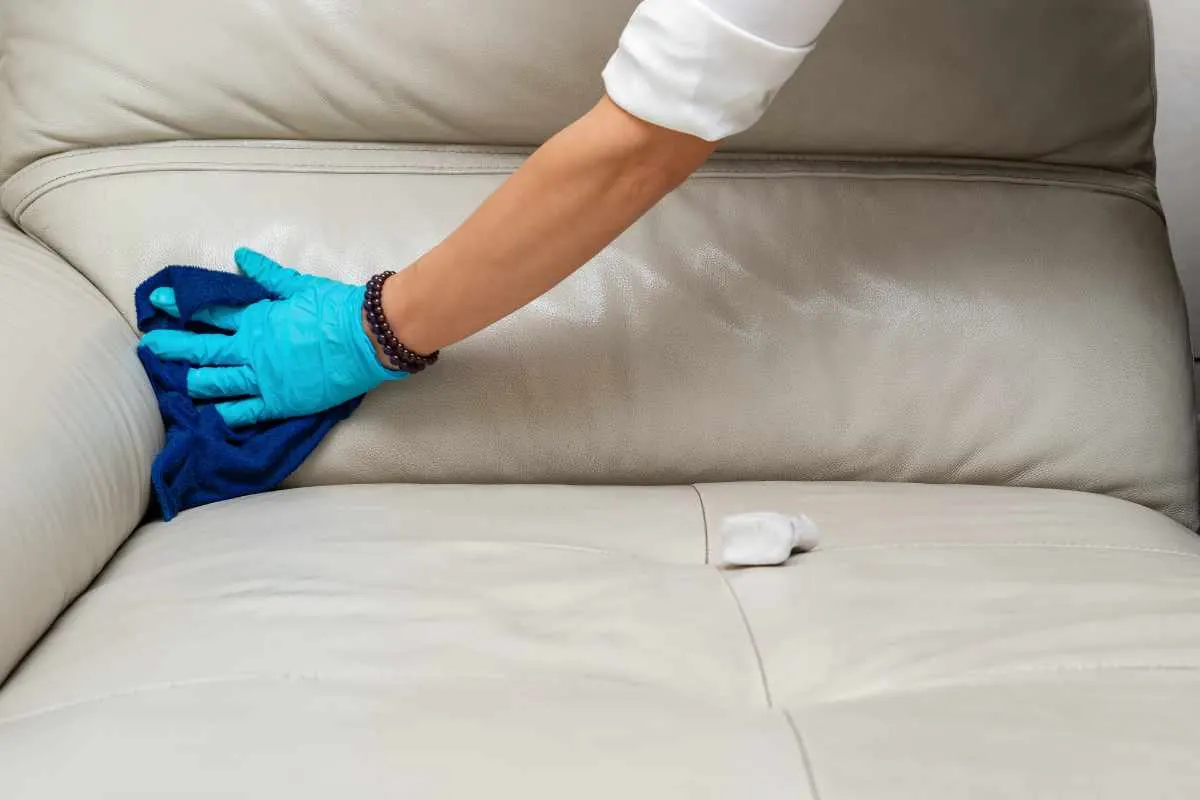
A professional leather couch cleaning starts by identifying the leather type, then deep cleans the couch panel by panel with pH-correct products, degreases the headrests, armrests and seat edges where body oils build up, conditions the leather and seals it under a protective finish. It is done in one home visit and the couch is back in use the same evening. It is worth paying for when the couch has darkened or sticky zones, dye transfer, a dull hazy finish or light-colored leather, because those are the problems home products either cannot remove or make worse.
At a glance
| Step one | Identify the leather type and test a hidden spot |
|---|---|
| The main work | Panel-by-panel cleaning, degreasing the oil zones |
| Finish | Conditioning, then a protective topcoat |
| Time | One home visit; usable the same evening |
| How often | About every six months in daily family use; yearly for light use |
Why a wipe-down is not the same job
The family couch is where the household actually lives: movie snacks, pets, homework, naps. Its leather quietly absorbs all of it, and most of what it absorbs does not come off with a damp cloth.
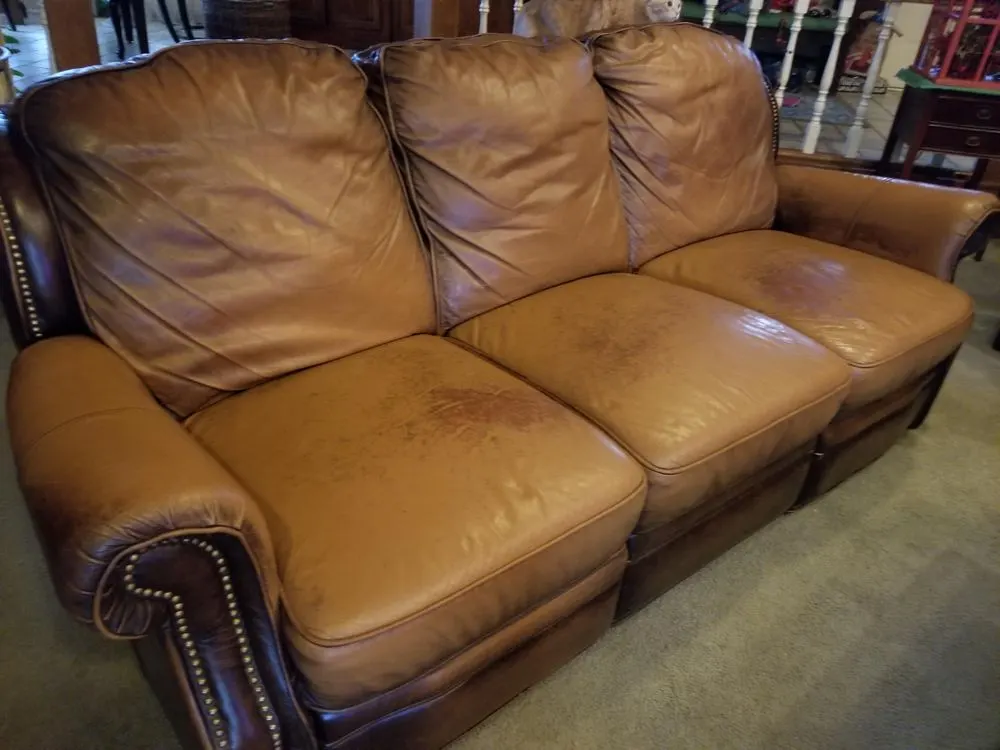
Three things build up. Ground-in dirt dulls the seat cushions. Food and drink residue settles into the grain and the seams. And body oils from hair and skin soak into the headrests, the armrests and the front edge of the seats.
A wipe-down moves the loose dirt around. It does not remove what has bonded to the finish, and it does nothing about the oils, which are the real long-term problem.
Store-bought cleaners and conditioners add a fourth layer. Many leave a film behind, and a conditioner applied over oily zones seals the oils in rather than taking them out. That is how a couch ends up both shiny and sticky in the same spot.
Professional cleaning is built around those four problems. It takes out what home cleaning cannot reach, removes what home products left behind, and puts back a finish that resists the next round.
The difference shows up most on the parts of the couch people touch, which are also the parts that crack first when they are neglected.
What happens during the visit
The visit starts with the leather itself. Finished, pigmented leather, aniline leather, faux leather and bonded material each need different chemistry, so the type is identified first and the products are matched to it. Anything uncertain is tested in a hidden spot before the main work starts.
Then the couch is cleaned panel by panel with pH-correct products, not sprayed and wiped all at once. Working one panel at a time keeps the cleaner on the surface long enough to lift bonded grime without soaking the leather.
The oil-saturated zones get their own step. Headrests, armrests and seat edges are degreased properly, which is the part home cleaning almost never does and the part that does the most for the couch's lifespan.
Dye transfer from jeans and other clothing is lifted during cleaning. Fresh transfer usually comes off the topcoat completely; transfer that has been sitting for months may have bonded into the finish and need light spot refinishing, which you will hear about before any extra work is done.
Once the leather is clean, it is conditioned to bring back the soft feel, then sealed under a protective finish. That last coat is what makes the next spill or dye rub blot off instead of soaking in.
The whole couch, including matching chairs and ottomans if you add them, is done in a single home visit. Nothing leaves the house.
| Step | What it is for | What a home wipe-down does instead |
|---|---|---|
| Identify the leather type, test a hidden spot | Matches the chemistry to finished, aniline, faux or bonded material | Uses one product on everything |
| Panel-by-panel cleaning | Lifts grime bonded to the finish without soaking the leather | Moves loose dirt around |
| Degreasing headrests, arms and seat edges | Removes the body oils that soften the finish and cause cracking | Leaves the oils, or seals them in with conditioner |
| Lifting dye transfer | Takes fresh jean dye off the topcoat before it bonds | Spreads it, or strips the finish with a strong cleaner |
| Conditioning | Brings back the soft feel once the leather is clean | Often adds a film over dirt |
| Protective coat | Makes the next spill or dye rub blot off | Nothing |
How to read this table: the third and fourth rows are what you pay a professional for, because home products cannot do them safely. If your couch only needs the first two, a careful home routine may be enough for now. Dark headrests are covered in detail in greasy patches on headrests and armrests, and blue jean marks in denim dye transfer on light leather.
The zones that decide how long a couch lasts
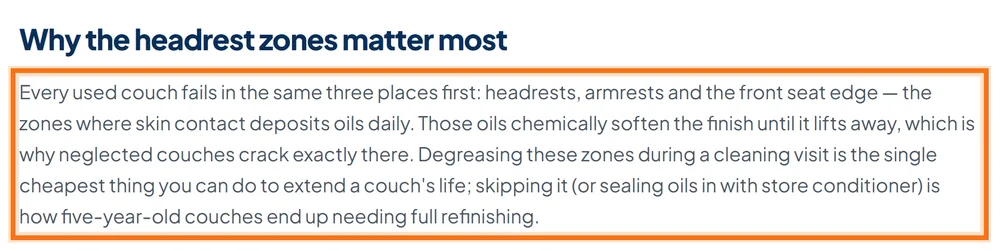
Every used couch fails in the same three places first: the headrests, the armrests and the front edge of the seat cushions. Those are the zones where skin contact deposits oils every day.
The oils soften the finish over time until it starts to lift away. That is why neglected couches crack and peel in exactly those spots while the backs and sides still look fine.
Degreasing those zones during a cleaning visit is the single cheapest thing you can do to extend a couch's life. Skipping it, or covering the oils with store conditioner, is how a five-year-old couch ends up needing a full refinish.
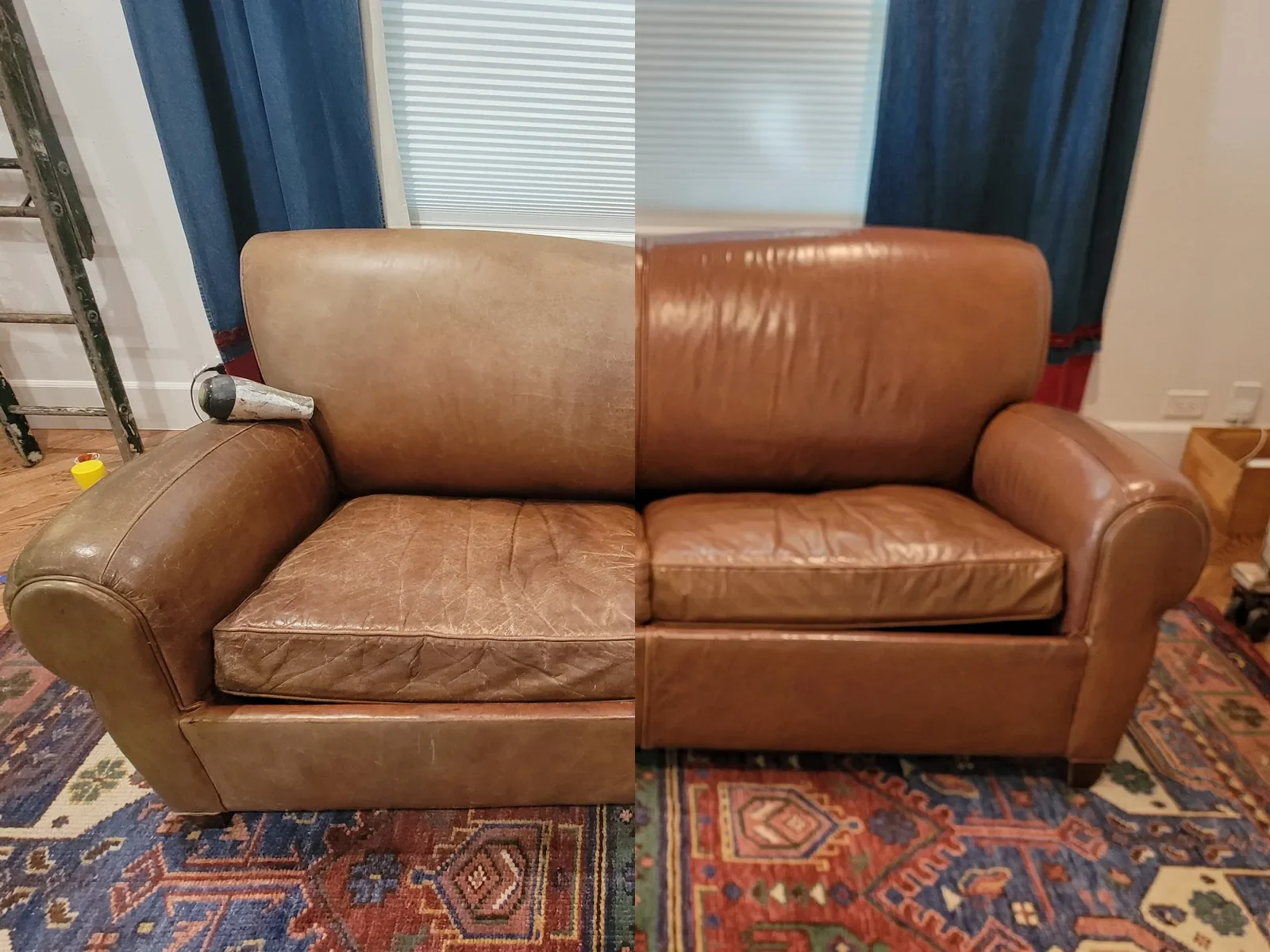
If the oils have already broken down the finish underneath, cleaning will show it. In that case we point it out at the visit and quote a small refinish of that zone honestly, rather than pretending cleaning has fixed it.
Sticky or hazy patches are often this same problem in an early stage. Removing the residue and the oil together usually brings the finish back to an even sheen.
In North Texas homes the pace is quicker than most people expect. Air conditioning dries leather out, and the sun through a window adds heat and UV, so the oil-damaged zones also dry and crack sooner.
White and light leather need a different approach
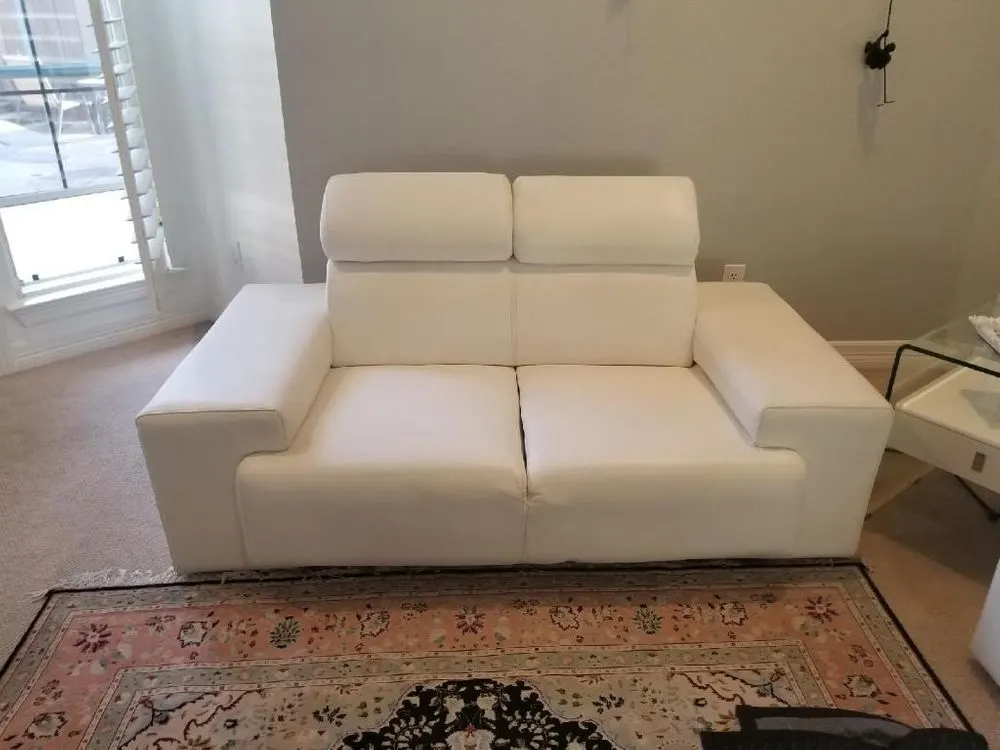
Light-colored couches show everything: jean dye, newsprint, the gray shadow of daily use on the seats and arms. They are also the easiest to damage with aggressive DIY products.
Strong household cleaners can strip the topcoat on light leather or leave it yellowed and patchy. Once the finish is damaged, the leather stains faster, which makes people scrub harder.
Our light-leather process uses gentle, finish-safe chemistry in more passes rather than a harsh cleaner in one. It takes a little longer and leaves the finish intact.
Dye transfer is the most common reason owners of cream and white couches call. The sooner it is treated, the more likely it is to come off completely, so it is worth sending a photo as soon as the blue shadow appears.
The protective coat at the end matters even more on light leather. It is what turns the next dark-denim mark into something you can wipe away.
If you have a light couch and young kids, pets or a habit of sitting in new jeans, six-monthly cleaning with that protective coat is usually what keeps it light.
When paying for cleaning is worth it, and when it is not
Professional cleaning is worth it when the couch has darkened headrests or arms, sticky or shiny patches, a dull or hazy finish, dye transfer, pet odor or dander film, or light-colored leather that has turned gray with use.
It is also worth it before problems start on a couch you want to keep for a long time. About every six months for a couch in daily family use, and once a year for lighter use, keeps the oil zones from turning into cracks. Homes with pets, kids or a sunny living room sit at the six-month end.
It is not the right service when the leather is already cracked, peeling or torn. Cleaning will make it cleaner, but it will not close a crack or rebuild a peeled panel. That is a repair or a recoloring job, and the estimate will say so.
It is also not worth paying for if the couch only needs a dusting. A lightly used piece in a guest room may need nothing more than a soft cloth between visits.
Between professional visits, keep it simple: a dry or lightly damp microfiber cloth, spills blotted straight away, and no household wipes, oils or all-purpose sprays. Our guides to choosing a safe leather cleaner and leather conditioning myths cover what to avoid.
If you are not sure which group your couch is in, send photos of the whole couch and the worst areas. Call or text (972) 522-9763, and you will hear whether it needs cleaning, a small repair, or nothing at all.
Leather couch cleaning in Dallas homes: what to plan for
Dallas living rooms are hard on leather in a specific way. The air conditioning runs for most of the year, which keeps the air dry, and big windows let strong afternoon sun reach the couch. Dry leather with body oils in the headrests is exactly the combination that cracks early.
That is why the six-month interval suits most Dallas, Plano and Frisco family homes, and the yearly one suits a formal living room that is rarely used. A couch in direct sun, a home with dogs, or a light-colored couch sits at the shorter end.
Timing helps too. A cleaning before the holidays, or before you list a house, makes the couch look its best when it matters. A cleaning after a move catches the scuffs and dirt from the truck before they set.
If you own matching chairs, an ottoman or a recliner, have them cleaned at the same visit. They age in the same room, so cleaning them together keeps the set looking like one set.
Leather that is already cracked, peeling or faded needs a different service. Our leather couch cleaning page covers the cleaning visit, and a damaged area is quoted as a small repair from the same photos.
How to book it and what to expect afterward
Booking starts with photos: the whole couch, then close-ups of the headrests, arms, seat edges and any stains, in daylight. Photos tell us the leather type, whether dye transfer is fresh or bonded, and whether any zone already needs more than cleaning.
Mention anything else in the room you want done at the same visit, such as matching chairs, an ottoman or a leather recliner. Doing everything together keeps the finish consistent across the set.
On the day, the couch stays where it is. The work is done in your home, and you do not need to move furniture beyond clearing the cushions of throws and pillows.
Leather cleaning is a surface process, not a soaking one, so the couch is back in use the same evening. You will get an exact time at the visit; it is usually two to four hours of light-touch caution.
Afterward the couch should feel softer, look brighter and resist spills better than it did. The protective finish does not make leather indestructible, but it gives you time to blot a spill before it sets.
To get a quote, text photos to (972) 522-9763 or use the free photo estimate form. We serve homes across Dallas–Fort Worth and come to you.
Questions we get asked next
- Can you get the dark, sticky patches off the headrests?
- Yes. That is body-oil saturation, the most common couch-cleaning fix. The zone is degreased and resealed. If the oils have already broken down the finish underneath, we show you and quote a small refinish of that zone.
- Will cleaning remove blue jean stains from a cream couch?
- Fresh dye transfer usually lifts off the topcoat completely. Transfer that has been there for months may have bonded into the finish, and then cleaning plus light spot refinishing restores the color. Photos tell us which one you have before you book.
- Do you clean faux leather couches too?
- Yes. The leather type is identified at the start of every visit and the products are matched to it, including faux and bonded materials, which need gentler chemistry than genuine leather.
- How often should a leather couch be professionally cleaned in Dallas?
- About every six months for a couch in daily family use, and once a year for lighter use. Homes with pets, kids or a sunny living room sit at the six-month end, because dry air and sun make the oily zones crack sooner.
- Can cleaning fix cracks or peeling?
- No. Cleaning removes dirt, oils and residue and protects the finish, but cracks, peeling and tears need repair or recoloring. If the couch needs that, the estimate says so.
- leather cleaning
- leather couch
- dallas
- leather care