How Do Airbnb Hosts and Rental Managers Fix Leather Furniture Between Guests?
In Dallas, most guest damage on a rental's leather sofa is fixed on site between one checkout and the next check-in: the cleaner's photos become the quote, the owner approves by message, and the estimate and invoice become the paper trail for a damage claim. A torn or stained sofa in a furnished rental is a booking problem before it is a furniture problem.
Quick answer
Most guest damage on rental leather furniture — scratches, stains, small tears, burns, pet claw marks and worn seats — is repaired on-site, inside the gap between checkout and the next check-in. The usual workflow starts with the cleaner's turnover photos: they are enough for a quote, the owner approves by message, and the repair is scheduled into the vacancy window. The estimate and invoice describe the damage and the work, which is the paper trail hosts use for a damage claim or deposit deduction. Replacement only wins when the leather itself has aged out across the piece.
At a glance
| Start with | The cleaner's turnover photos, taken in daylight |
|---|---|
| Quote | From photos; one follow-up shot if anything is unclear |
| Repair | On-site, scheduled inside the vacancy window |
| Paperwork | Estimate and invoice describe the damage and the repair |
| Several units | Standing per-item rates and one invoice for the portfolio |
Why rental furniture is a different repair problem
A sofa in a family living room wears slowly and has one owner who notices everything. A sofa in a short-term rental has a new user every few days and nobody watching it in between.
That changes three things. Damage arrives suddenly rather than gradually. It is discovered by the cleaner, not the owner. And it has a deadline — the next guest's arrival — that no ordinary furniture repair is built around.
It also changes what the damage costs. In a home, a scratched cushion is an annoyance. In a listing, it shows up in a guest photo or a review, and a review outlives the repair by years.
Leather and faux-leather sofas are popular in rentals for a good reason: they wipe clean and do not hold odors the way fabric does. The trade-off is that cuts, burns and claw marks are visible immediately.
The good news is that the typical rental damage list is almost entirely surface damage, which is the kind leather repair handles on-site in hours.
So the real question for a host is not whether the sofa can be fixed. It is whether it can be fixed before the next check-in, and with enough paperwork to recover the cost.
What guest damage usually looks like
Turnover damage on leather falls into a short, predictable list.
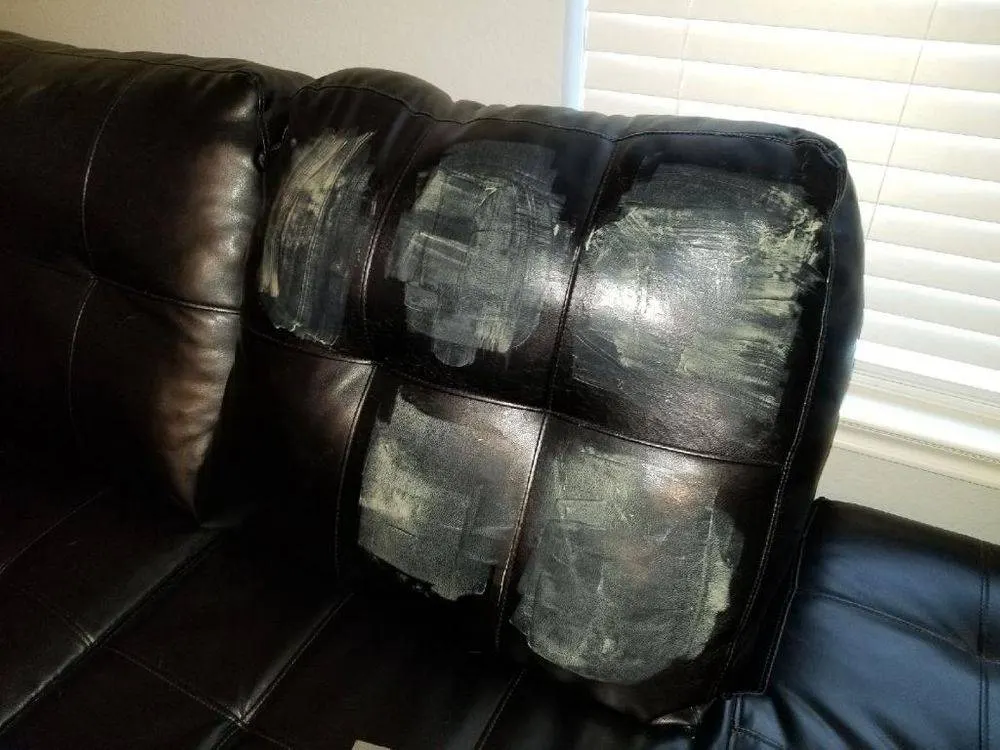
Stains: wine, coffee, makeup, ink from a pen left on a cushion, and dye transfer from new jeans on light-colored leather. Fresh stains on a sealed finish often come out with proper cleaning; stains that have soaked into worn or unsealed leather need color work.
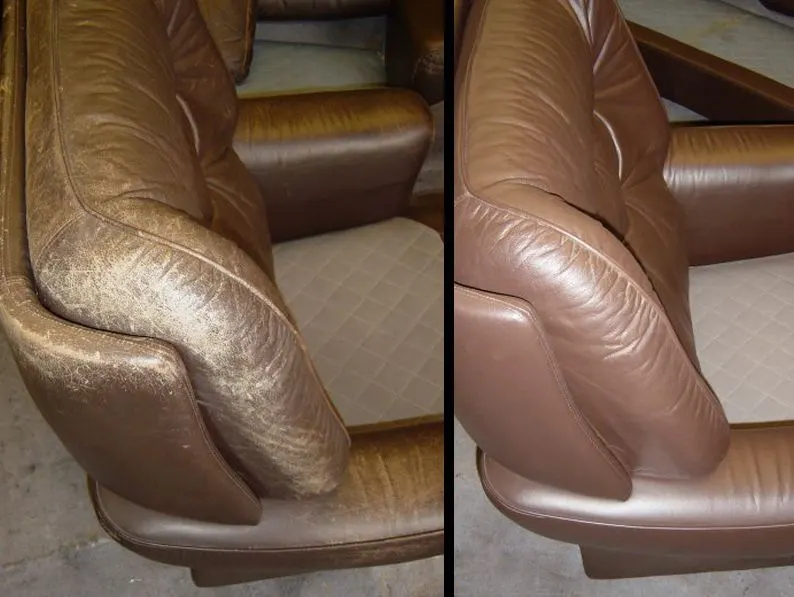
Scratches and claw marks from pet-friendly stays, luggage corners and belt buckles. Surface scratches are sealed down, filled where needed and recolored.
Small tears and cuts, usually at a seat edge or an arm where something sharp was dragged across. These are repaired from behind with a sub-patch, then filled and color-matched on top.
Burns from cigarettes, candles or a hot device left on the arm. A burn is cut back to sound material and rebuilt.
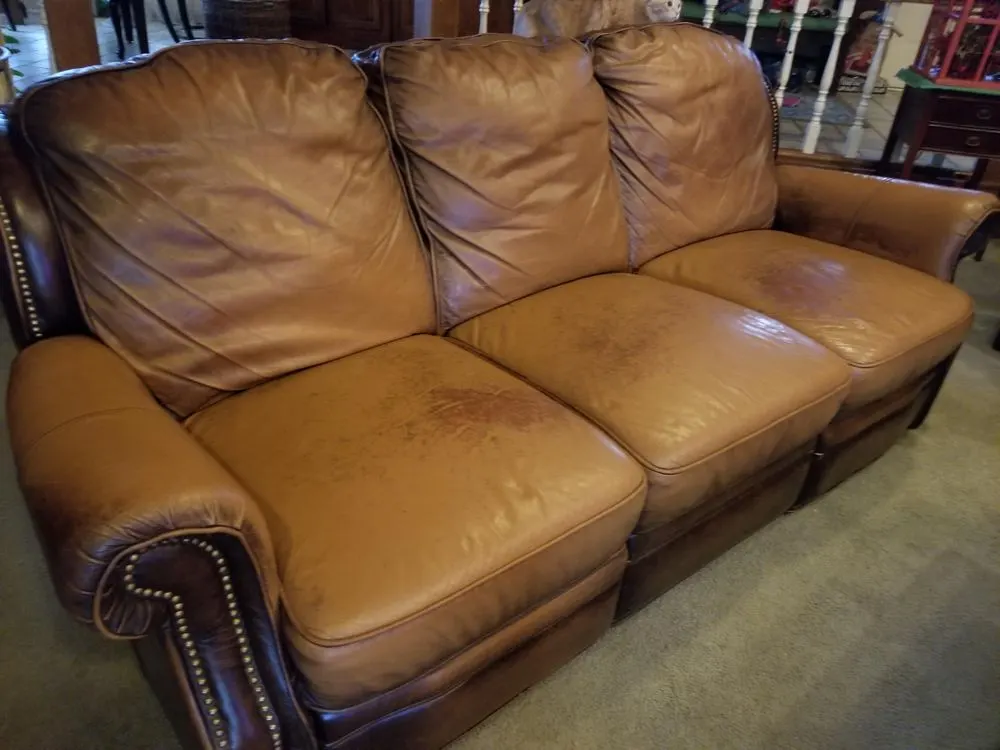
Worn seats and armrests on the most-used piece in the unit, which arrive faster in a rental simply because the sofa is used by more people. That is wear, not guest damage, and it is worth knowing the difference before filing a claim.
| Damage | How it is repaired | Fits one turn window? | Claim or wear? |
|---|---|---|---|
| Wine, coffee, makeup or ink stain | Cleaned off a sealed finish; color work if it soaked into worn leather | Usually | Guest damage |
| Jeans dye on light leather | Lifted during cleaning while fresh; spot refinish if it has bonded | Usually | Depends on the platform's rules |
| Pet claw marks or luggage scratches | Sealed down, filled where needed and recolored | Usually | Guest damage |
| Small cut or tear | Sub-patch from behind, filled and color-matched on top | Usually | Guest damage |
| Cigarette or candle burn | Cut back to sound material and rebuilt | Usually | Guest damage |
| Worn seat or armrest | Rebuilt and recolored to match | Usually | Wear, not a claim |
How to read this table: the last column is the one that matters for a claim. Guest damage is worth documenting at checkout; wear is a maintenance cost, and mixing the two in one claim usually weakens it. For the repair side, see what to do after a pet scratches leather, ink and dye transfer removal and cigarette burn repair.
The turnover workflow that fits the calendar
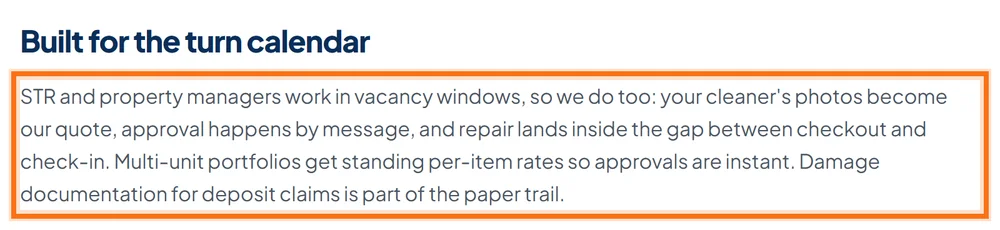
The process that works for hosts and property managers is built around photos, because the person who finds the damage is almost never the person who approves the repair.
Step one is the cleaner's photos: the whole piece, then each damaged area close up, in daylight, with something in the frame for scale. Turnover photos are usually enough for a firm quote.
Step two is the quote and approval. Anything ambiguous gets resolved with one follow-up shot, and the owner or manager approves by message instead of meeting anyone at the unit.
Step three is scheduling into the vacancy window. Flag the checkout date and the next check-in when you send the photos, so the repair is planned around the booking rather than squeezed in.
Step four is the repair itself, on-site. Leather and vinyl repair is mobile work; the sofa does not leave the unit and no truck or storage is involved.
Step five is the cure period the technician states before the repaired area takes full use. Build it into the turn the same way you build in cleaning time, and the next guest never knows there was a repair.
Documentation for damage claims and deposits
For a host, the repair is only half the job. The other half is recovering the cost from the guest, the platform's damage process or a tenant's deposit.
The paperwork that helps is simple: dated photos from the cleaner, and an estimate and invoice that describe the damage and the scope of the repair. Our estimates and invoices are written that way, and owners regularly use them in deposit and damage resolution.
Send the photos and get the estimate before the repair, not after. A claim supported by a written estimate made from photos taken at checkout is far easier to support than one reconstructed weeks later.
Be honest in the claim about what is damage and what is wear. A torn cushion after one stay is damage. A seat that has been fading for two years is maintenance, and claiming it usually weakens the rest of the claim.
Platforms and leases have their own rules and deadlines for claims, and those rules decide what is recoverable. Check them before relying on any of this; we provide the documentation, not the claim decision.
Either way, repairing the sofa is almost always cheaper than replacing it — which also makes the claim smaller and more likely to be paid.
Managing several units: one standard, one invoice
Property managers with a portfolio of furnished units have a different problem: the same few damage types repeating across many sofas, and approvals that cannot wait for a quote every time.
The answer is standing per-item rates. Once a scratch repair, a burn repair or a cushion recolor has an agreed price, the cleaner's photos can go straight to scheduling and the manager approves a known number.
Consolidated invoicing for multiple properties keeps the owner reporting clean, with each unit's repair listed against its address and date.
Matching matters more in portfolios than in single homes. Many managers furnish units with the same sofa model, and repairs that keep every unit the same color avoid the one sofa that looks patched in the listing photos.
A periodic check of every unit's leather furniture — between busy seasons rather than during them — catches worn arms and seat edges before a guest photographs them.
That turns furniture from a series of emergency replacements into a predictable maintenance line, which is the same model restaurants and hotels use for their seating. Our rental properties page describes how that works for portfolios.
Rental turnovers in Dallas–Fort Worth: what to plan for
Furnished rentals across Dallas–Fort Worth sit in very different places: downtown and Uptown apartments, houses near the stadiums in Arlington, and lake houses where guests come in wet from the water. The damage list changes a little with the setting, but the workflow does not.
Busy weekends compress the turn. When the checkout is at 11 and the next check-in is at 4 the same day, flag it in the message with the photos. A short window decides which repairs fit now and which wait for the next gap.
Sun is the slow problem. A leather sofa under a west-facing window in a North Texas summer fades and dries faster than one in a shaded room, and dry leather scratches and cracks more easily. Moving the sofa a few feet, or adding a sheer curtain, protects it between repairs.
Air conditioning in a vacant unit dries the leather too. If a unit sits empty for weeks with the AC running, a light conditioning at the next turn keeps the seats from stiffening.
Because the service is mobile, the repair is done in the unit itself, whether it is in Dallas, Fort Worth, Plano or Frisco. Nothing goes to a shop, so the unit never loses a booking to furniture being away.
When replacing the sofa is the better call
Repair is not always the right answer, and a host deserves a straight one.
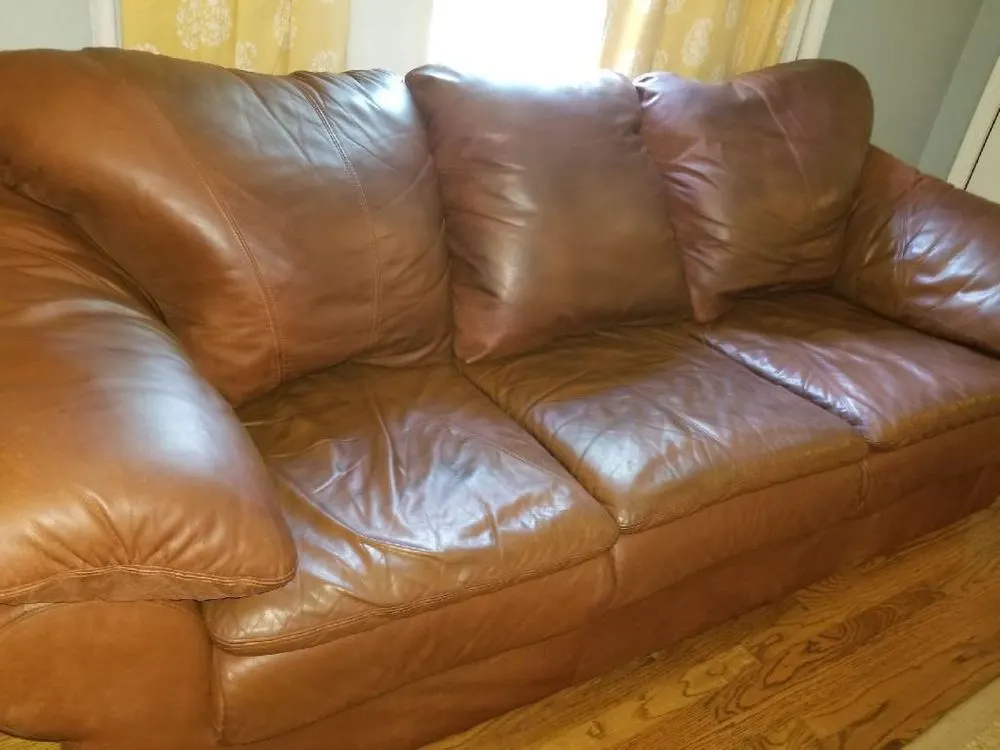
If the leather itself has aged out — stiff, cracking across every cushion, peeling over large areas — repairs will not hold, and replacement is the honest recommendation.
Bonded leather, which is common on budget rental furniture, peels as the material breaks down (see the limits of bonded leather repair). Small areas can be repaired, but widespread peeling on bonded leather is the end of that sofa.
Damage that reached the frame or the springs, such as a broken frame rail after a guest party, is a furniture-mechanic job rather than an upholstery one.
Everything else on the guest-damage list above — stains, scratches, claw marks, small tears, burns and worn seats on sound leather — is repairable, usually for a fraction of a new sofa plus delivery and disposal.
Send photos of the whole piece and each damaged area, with the checkout and next check-in dates, through the free photo estimate page or by text to (972) 522-9763, and the answer — repair, partial repair or replace — comes back before anyone visits the unit.
Questions we get asked next
- Can rental furniture damage be repaired between two bookings?
- Usually, yes. With the cleaner's photos sent in advance and the checkout and check-in dates flagged, repairs are scheduled inside the vacancy window and done on-site, with the cure period built into the turn.
- Is a photo from my cleaner enough for a quote?
- Turnover photos are usually enough for a firm quote: the whole piece plus each damaged area close up, in daylight. Anything unclear is resolved with one follow-up shot.
- Will I get paperwork I can use for a damage claim?
- Yes. The estimate and invoice describe the damage and the repair scope, which owners regularly use in deposit and damage resolution. Whether a claim is paid depends on the platform's or the lease's own rules.
- Do you repair rental furniture anywhere in Dallas–Fort Worth?
- Yes. The service is mobile, so the repair is done inside the unit in Dallas, Fort Worth and the surrounding cities, and the furniture never leaves the property.
- Do you offer set prices for property managers with several units?
- Yes. Managers running multiple properties can have standing per-item rates and consolidated invoicing, so routine repairs are approved without a new quote each time.
- rental properties
- airbnb
- leather repair
- property management