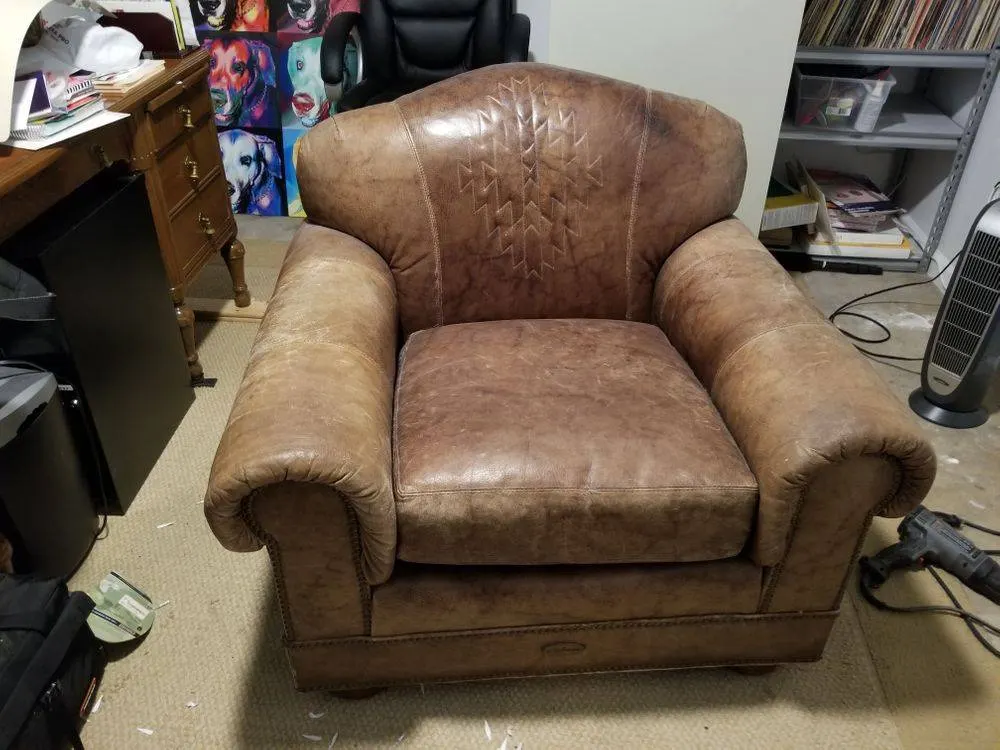
Is an Older High-Quality Leather Sofa Worth Restoring?
The frame under an old leather sofa is often better than anything you could buy today at the same price.
Quick answer
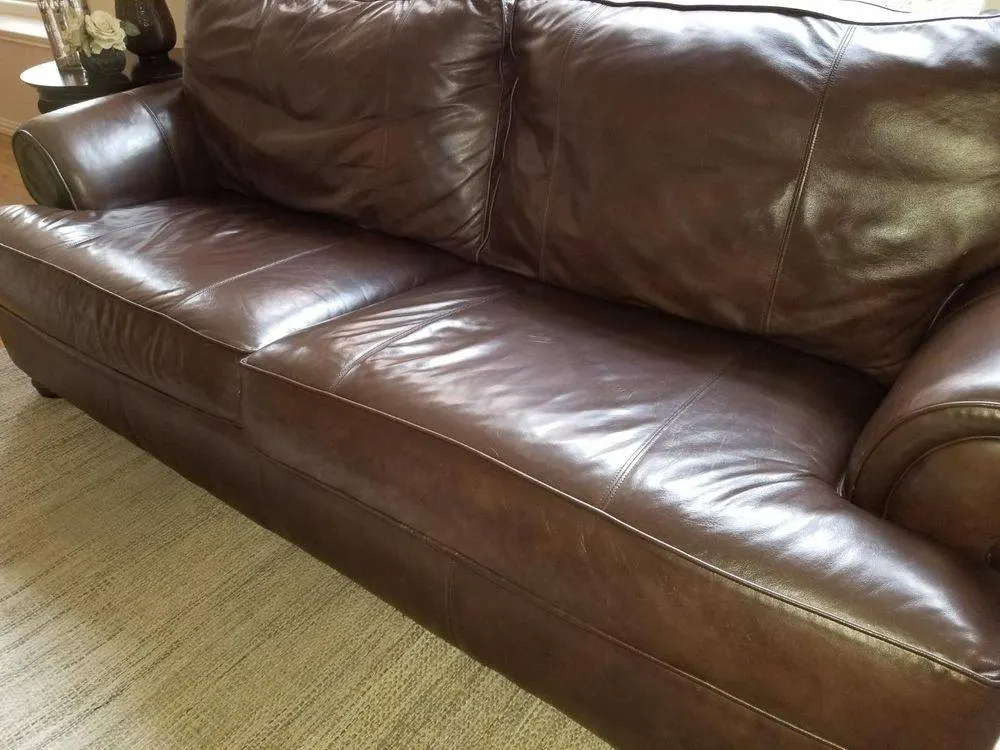
Usually yes, if the frame is well made and the hide is still supple. Quality furniture is built with a hardwood frame, proper joinery and a serious suspension system, and those outlast the covering by decades — so a tired sofa is frequently a sound sofa with a failed surface. Check the frame first, then the leather, then the foam, in that order. If the frame is stapled softwood or particle board, the calculation changes completely.
At a glance
| Check first | The frame — hardwood, joined, no creak or racking |
|---|---|
| Then the hide | Supple means restorable; board-like means aged out |
| Then the foam | Comfort problems are almost always here, not in the leather |
| Modern comparison | Equivalent build quality now often costs more than restoration |
| Fit counts | A piece sized to your room has value a replacement may not |
Why old quality furniture is worth a proper look
This is not nostalgia. It is a structural observation about how furniture is built.
A well-made sofa has a kiln-dried hardwood frame, joints that are doweled and corner-blocked rather than stapled, and a suspension system engineered to last — eight-way hand-tied springs on traditional pieces, or a good sinuous spring system.
That structure has a service life measured in decades, and it routinely outlasts two or three coverings.
So an old sofa that looks tired is frequently a sound sofa wearing a failed surface, which is a completely different proposition from a worn-out sofa.
Meanwhile a great deal of furniture sold now is built to a price, with softwood or engineered frames, stapled joints and lighter suspension.
That means an equivalent build quality today can cost more than restoring what you already have, which is the comparison worth actually running rather than comparing against the cheapest replacement.
The point is to check rather than assume in either direction.
Check the frame first
Everything else follows from this, and it takes two minutes.
Sit in it properly and shift your weight from side to side. A sound frame does not move, creak or rack.
Lift one front corner a few inches off the floor. The other front leg should rise with it. If the frame twists and the other leg stays down, the joints have loosened.
Look underneath. Hardwood rather than particle board, joints that are doweled or bracketed rather than only stapled, and corner blocks are all good signs.
Press on the arms and the back. They should feel solid rather than giving.
Listen. Creaking is loose joints, which are often repairable but need addressing before anything cosmetic.
A sound frame makes restoration straightforwardly worth considering. A failing frame does not rule it out, since frames can be repaired, but it changes the arithmetic and should be assessed by someone who does that work.
Then check the leather
This determines which restoration route applies rather than whether restoration is possible.
Press a thumb firmly into the hide in several places and flex it.
Supple leather that yields and springs back can be cleaned, fed, repaired and recolored, and the result is excellent.
Board-like leather that resists has lost its plasticity. Repairs will hold while new cracks appear beside them, and the honest answer is recovering rather than refinishing.
Leather that crazes under pressure, or powders on your thumb, has aged out.
Check several places rather than one, including a hidden area. If the hidden material is supple and the exposed material is stiff, that is exposure damage rather than age throughout, which is a much better outlook.
Also check whether it peels. Flaking with a fabric layer underneath means bonded material rather than hide, and that changes the whole assessment.
Old furniture from a quality maker is usually genuine hide, and it is worth confirming rather than assuming.
Then the foam and suspension
The part that determines comfort, and it is almost always what people are actually complaining about.
Sit properly, not perched. A seat that bottoms out, dips, or lets you feel the frame has a foam or suspension problem.
Press the cushions and watch whether they recover. Foam that stays compressed has taken a set.
On older pieces the padding may be foam, or cotton, horsehair or coir depending on the era, and traditional stuffing compresses and migrates over decades.
Check the suspension by pressing across the seat platform with the cushions off. Sagging or uneven support means webbing or springs.
None of this is affected by anything done to the leather, which is why a beautifully recolored sofa can still be uncomfortable.
Replacing foam is inexpensive relative to the rest of a restoration and it transforms how a piece feels, so it is frequently the single best-value item in the whole job.
And it is efficient to do at the same time as covering work, since the piece is already apart.
The three restoration routes
Which applies depends on what the checks found.
Clean, feed and refinish, where the hide is supple and the issue is soil, dryness, color loss or localized damage. The existing leather stays. This is the cheapest route by a wide margin and it produces a transformation on a neglected piece.
Reupholster, where the hide has stiffened, delaminated or been damaged beyond repair. The frame and often the suspension are kept, and new material goes on.
Rebuild, where the frame or suspension also needs work — joints reglued, webbing replaced, springs retied — with new covering over the top.
Most old sofas need the first or the second, and a proper assessment will say which.
Reupholstery is the point at which the material specification is a free choice, so it is worth choosing deliberately rather than matching what failed.
And any of the three costs considerably less than an equivalent new piece of comparable build quality, which is the comparison that matters.
What restoration achieves on an old piece
Realistic expectations, which on quality furniture are high.
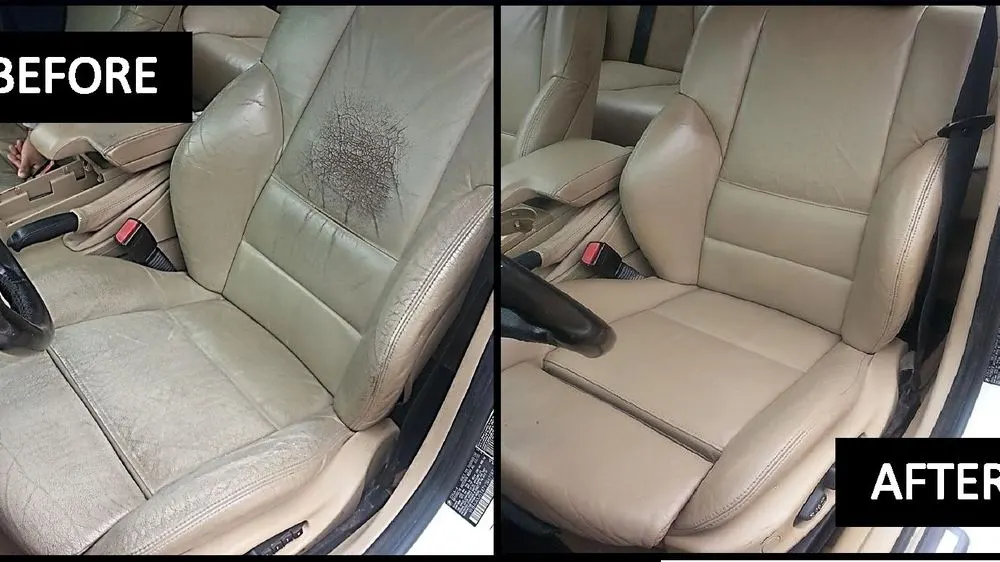
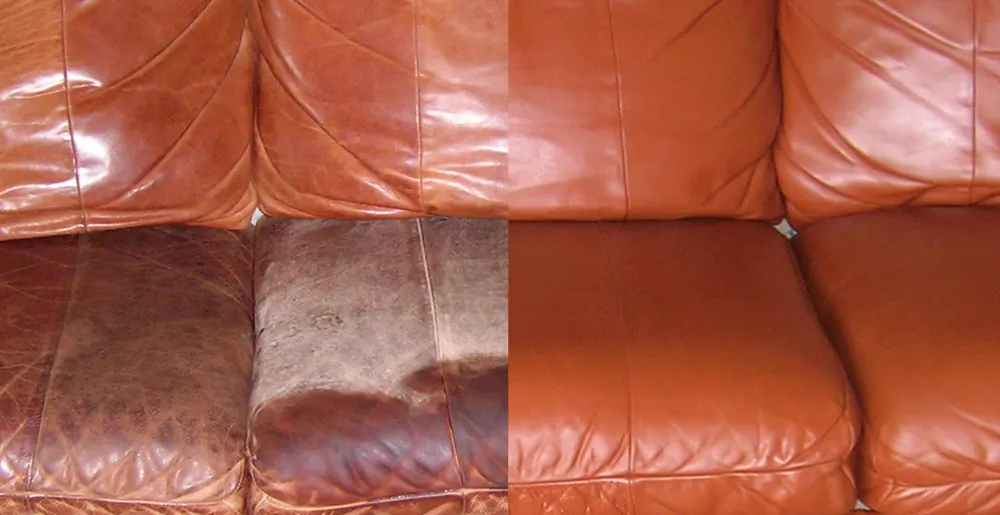
Decades of accumulated soil, body oil and old dressings come off, and that alone frequently transforms a piece that looked beyond help.
Dry hide is fed back to suppleness, which is a conservation measure as much as a cosmetic one since supple leather cracks far less.
Cracks, tears and worn areas are rebuilt and made good.
Color is restored evenly across the piece, including areas that faded at different rates.
Foam and suspension are dealt with, which restores the comfort.
The result on a quality frame is a sofa that is structurally sound, comfortable and looks right — with the character of a well-made older piece rather than the appearance of a new one, which many owners specifically want.
What restoration does not do is change the design, so a piece whose style no longer suits the room is a different question.
When it is not worth it
Being clear about this saves money, and there are real cases.
A frame that is failing structurally on an inexpensive piece, where frame repair plus recovering exceeds the value.
Bonded or coated synthetic covering, which delaminates throughout and cannot be durably repaired — though recovering may still be worthwhile if the frame is good.
Hide that crazes under thumb pressure across the whole piece, where refinishing will not hold and recovering is the only route.
A piece that no longer suits the room or the household, since restoration does not change the design.
A piece that was inexpensive when new and has no particular quality in the frame.
And any case where the owner would simply prefer something different, which is a legitimate reason that does not need justifying on technical grounds.
A specialist who tells you an item is not worth restoring is giving you the most useful answer available.
The comparison worth running
A short calculation that settles most of these decisions.
What would restoration cost, in the route that applies.
What would a new sofa of comparable build quality cost — not the cheapest available, but one with a hardwood frame, proper joinery and a serious suspension system, plus delivery.
How long do you expect to keep it.
Does the current piece fit the space in a way a replacement might not, which matters more in older houses and awkward rooms than people account for.
Is there anything about it you would miss — the proportions, the design, its history in the family.
And what would you actually do with the old one, since disposal of a large sofa is its own cost and its own consideration.
For a genuinely well-made older piece, restoration usually comes out ahead on the numbers as well as on everything else.
Where the good older sofas came from
Not brand advice, but a few construction signals that indicate a piece worth taking seriously.
Eight-way hand-tied springs are a marker of serious construction. You can sometimes see the tying through the dust cover underneath, and it is a labor-intensive method nobody uses on a cheap piece.
A frame that is heavy for its size usually means kiln-dried hardwood rather than engineered board or softwood.
Cushions with a feather or feather-and-down wrap over a foam core are a quality indicator, and they need plumping rather than replacing.
Full-hide upholstery on the outside back and the sides — rather than a matching synthetic on the parts nobody sits on — indicates a piece built without cost-cutting.
Hand-finished detailing, individually set buttons and hand-stitched piping all point the same way.
A maker's label or stamp under the seat or on the frame is worth photographing, since it may tell you more than the piece itself does.
None of these are decisive on their own, and two or three together generally mean the frame is worth keeping regardless of what the covering looks like.
What to send for an assessment
Photograph the whole sofa from several angles.
Photograph each damaged area close up and at a raking angle.
Photograph a hidden area of the leather for color and condition comparison.
Photograph underneath the piece, showing the frame construction and any labels or maker's marks.
Do the thumb-flex test in several places and report the results.
Sit in it and report whether it creaks, racks, dips or bottoms out.
Press the cushions and say whether they recover.
Say the age and the maker if you know them, since build quality varies enormously and it is the main variable.
And say how long you intend to keep it, which changes the recommendation more than the condition does.
Questions we get asked next
- How can I tell if my old sofa has a good frame?
- Sit in it and shift your weight — a sound frame does not creak or rack. Lift one front corner a few inches; the other front leg should rise with it rather than staying down. Underneath, look for hardwood, doweled or bracketed joints and corner blocks rather than staples alone.
- Is restoring cheaper than buying new?
- Against a comparable piece, usually yes. The comparison worth running is not against the cheapest new sofa but against one with a hardwood frame, proper joinery and a serious suspension system — which is frequently more expensive than restoring what you already own.
- My old sofa is uncomfortable. Will restoration fix that?
- Only if the foam and suspension are addressed, and that is almost always what comfort complaints are about rather than the leather. Replacing foam is inexpensive relative to the rest of a restoration and it transforms how a piece feels, so it is often the best-value part of the job.
- The leather is very dry. Is it too far gone?
- Not necessarily. Press a thumb in and flex it — leather that is stiff but yields can be cleaned, fed and restored, and feeding it is a conservation measure as well as a cosmetic one. Leather that crazes under the pressure or powders has lost its plasticity, and there recovering is the route.
- restoration
- old furniture
- value