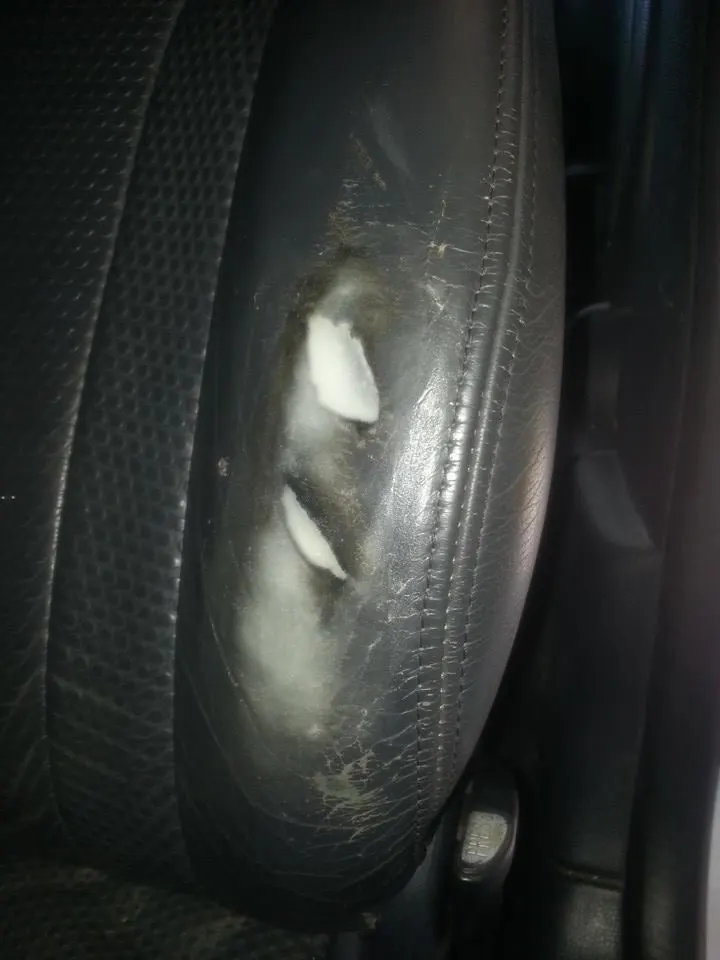
Torn Boat Seat: Repair the Vinyl, Replace a Panel or Reupholster the Cushion?
A tear in a boat seat has three possible answers, and the cheapest one is only right when the material around it is sound.
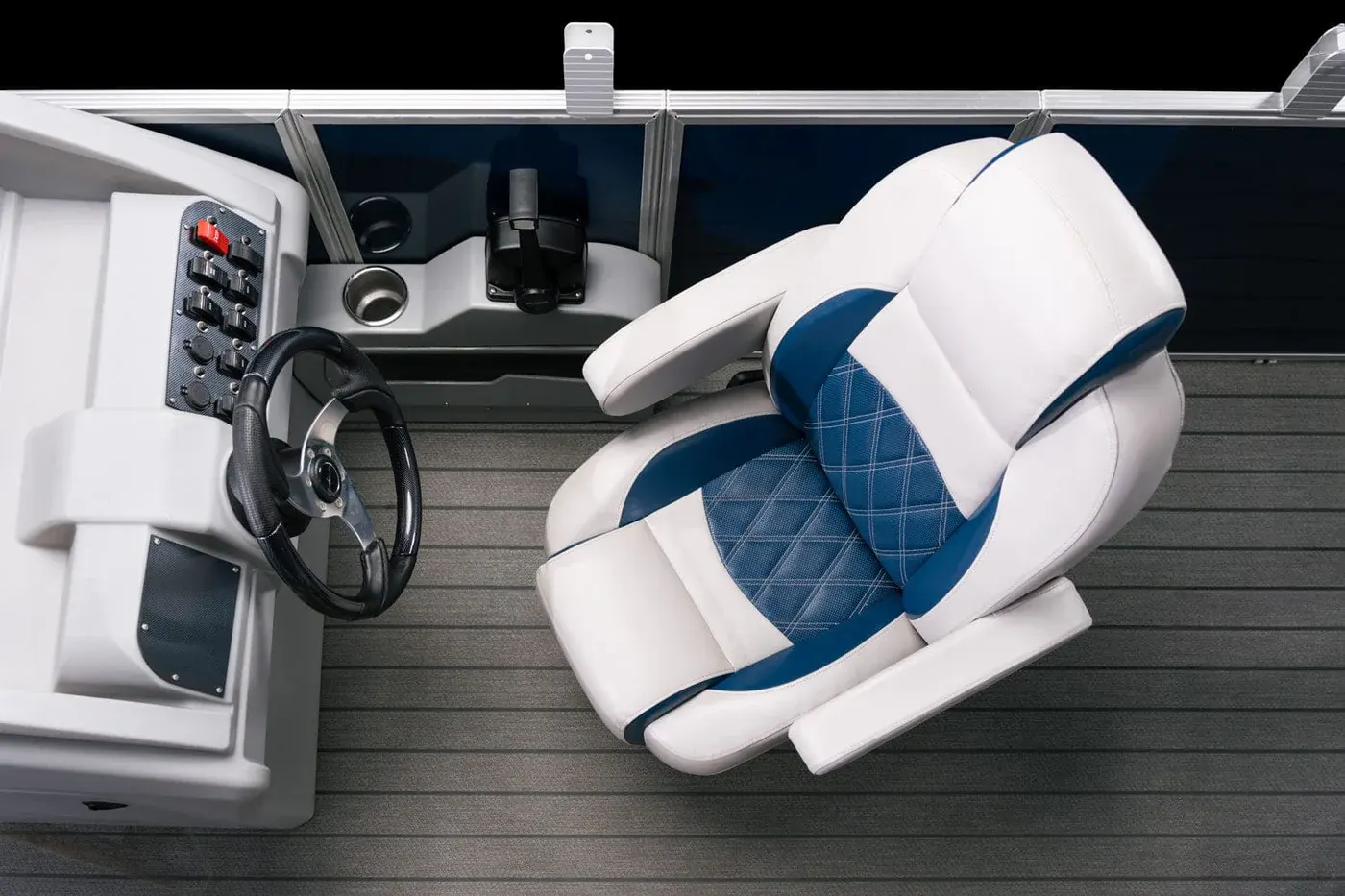
Quick answer
Repair the vinyl when the tear is small, the surrounding material is still flexible, and the foam is dry — the area is backed, filled, textured and recolored, and it holds. Replace the panel when the tear is long, sits on a seam or a flex point, or the panel is stretched, since boat seats are built from flat panels with straight seams and one panel can be remade. Reupholster the cushion when the vinyl is chalky throughout, several panels have failed, or the foam is soaked or contaminated.
At a glance
| Repair the vinyl | Small tear, flexible material around it, dry foam |
|---|---|
| Replace one panel | Long tear, seam-line damage, or a stretched panel |
| Reupholster the cushion | Chalky vinyl, multiple failures, or wet or contaminated foam |
| The deciding test | Press the vinyl beside the tear — cracks or powder change the answer |
| Do not wait | An open tear lets water into the foam within one outing |
Why boat seats give you a middle option
On a car seat the choice is usually repair or retrim, because automotive upholstery is shaped, contoured and sewn into complex assemblies.
Boat seating is built differently. Most cushions are flat or gently curved panels joined by straight seams, wrapped over foam on a plywood or composite base.
That construction means an individual panel can be unpicked and remade in matching material without touching the rest of the cushion.
It is genuinely a middle tier — more than a filled repair, considerably less than reupholstering a whole seat, and it produces a result with no repaired area at all on that panel.
Knowing this option exists matters, because owners are often quoted only the cheapest fix or the whole cushion when the sensible answer sits between them.
The test that decides more than the tear does
Before looking at the damage, look at the material around it.
Press a thumb firmly on the vinyl about two inches from the tear and watch what happens.
If it flexes and returns with no change, the material is sound and a repair will hold.
If fine cracks appear under the pressure, the vinyl has lost plasticizers and is near the end of its life. A repair will look fine and the material beside it will start failing.
If powder comes off on your thumb, the surface coating is chalking and the vinyl has aged out. Nothing bonds durably to a surface that is breaking down.
Do the same test in a shaded area — under the cushion, behind the backrest. If the shaded material is sound and the exposed material is not, the problem is UV exposure rather than age, and panel replacement or recoloring is likely the right route.
When repairing the vinyl is the right answer
This is the cheapest route and it is genuinely correct in a defined set of cases.
A tear or puncture up to roughly the length of a finger, in the middle of a panel rather than on a seam.
Vinyl around it that passed the flex test.
Foam underneath that is dry.
A location that does not take direct flex — the flat of a cushion rather than the front fold or the crown of a bolster.
The work is the same as any vinyl repair: the edges are trimmed and cleaned, a backing material is inserted beneath the opening, the void is filled in thin flexible layers, the surface is texture-matched to the grain and recolored, then sealed with a topcoat suited to marine exposure.
Done properly on sound material this lasts, and on a boat that gets used it is often the sensible spend.
When one panel should be replaced instead
This is the option most owners do not know they have, and it is frequently the best value on a boat.
A tear longer than a hand span, where a filled repair becomes a large area of rebuilt surface rather than a small one.
Damage running along or across a seam, where the stitching and the material are both compromised and filler has nothing stable to key into.
A panel that has stretched or distorted, which no amount of surface work corrects.
Several separate tears on the same panel.
The panel is unpicked at its seams, a new piece is cut from matching marine vinyl, and it is sewn back in using the original stitch lines and pattern.
The result on that panel is new material with no repair in it. The consideration is color match: new vinyl against panels that have several seasons of sun on them can differ noticeably, which is why matching material and, where needed, recoloring the surrounding panels is part of the conversation rather than an afterthought.
When the cushion needs reupholstering
Sometimes the honest answer is the expensive one, and recognizing it early saves paying twice.
Vinyl that failed the flex test — cracking or powdering under thumb pressure across the cushion.
Multiple panels damaged, where panel-by-panel replacement approaches the cost of doing the whole thing properly.
Seams failing in several places, which usually means the thread has degraded throughout rather than one seam being overloaded.
Foam that is soaked, crumbling, or pink-stained, since new material over contaminated foam recreates the problem.
And a cushion where the base itself — plywood, in a lot of older boats — has softened from water ingress. That is a structural issue and it must be dealt with before any covering goes on.
Reupholstery is also the moment to upgrade: a better grade of marine vinyl and a drainable foam specification cost little more at that point and change how long the next cycle lasts.
The foam question sits underneath all three
This is the part that gets skipped and it decides whether any of the three options actually lasts.
An open tear is a route for water into the foam, and on a boat that happens within one outing.
Foam that has been wet holds moisture for a long time, and warm damp foam in a covered boat is where mildew and pink staining begin.
So before any surface work, check it. Press the cushion firmly and watch for moisture surfacing. Compare its weight against a cushion you know is dry. Smell it, because a musty odor means growth inside regardless of how the surface looks.
Foam that is merely damp can be dried given time, airflow and warmth, which usually means taking the cushion out of the boat.
Foam that is contaminated or crumbling should be replaced, and doing that under sound vinyl is a common and sensible job in its own right.
Repairing the surface over wet foam is the one sequence that guarantees the work will not last.
Why waiting costs more here than almost anywhere
On furniture, a small tear left alone usually just gets slightly bigger. On a boat, it changes category.
Water enters through the opening on every outing and every rain.
The foam holds it, and the cushion is then covered, which traps humidity against everything.
Growth starts, and where the pink-staining bacteria take hold in the foam, the pigment migrates up into the vinyl and cannot be cleaned out.
Meanwhile the tear itself grows, because the edges are unsupported and the material is flexing.
A tear that would have been a straightforward repair in May can be a cushion reupholstery by September, and the difference is entirely about how long it stayed open.
If nothing else, tape it. A temporary cover over an open tear keeps the water out until the repair happens, and it costs nothing.
Getting the color and texture right
Marine vinyl matches better than most materials, and there are two reasons worth knowing.
It is manufactured to a consistent thickness with an embossed grain that repeats exactly, so a texture match on a repair reproduces the surrounding surface accurately. Leather, with its irregular grain, is harder.
And the color is uniform across a panel rather than varying as a hide does.
The complication is fading. A five-year-old white boat is not the white it left the factory as, and a new panel or a factory-matched color will read as a different material even though it is the correct one.
So color is mixed to the boat as it is now, not to a specification.
Where a new panel goes in beside faded ones, the usual answer is to recolor the adjacent panels so the whole cushion reads as one piece. That is a small addition to the job and it is the difference between a repair you notice and one you do not.
Timing it around the season
There is a scheduling point that costs nothing and improves both the result and the price.
End of season is the best time. The boat is coming out of use, the cure period costs you nothing, and the boat goes into storage sound rather than with an opening that lets water in all winter.
Spring is second best and it is when everyone calls, so it is the busiest window.
Mid-season is entirely workable and it costs you use of the boat during the cure period, which in July is the expensive time to lose.
For urgent damage, do not wait for a convenient window — cover the opening and book the work, because the foam is what you are protecting.
The work itself goes better in shade and out of direct sun, whether that is a covered slip, a storage building or a garage, for the same reasons that apply to vehicles.
What to send for an assessment
Photograph the tear close up with something for scale, in daylight and without flash.
Photograph the whole cushion so the tear's position relative to the seams and the flex points is visible.
Photograph the rest of the seating, since the condition of the other cushions often decides whether panel work or reupholstery makes sense.
Do the thumb test beside the tear and say what happened: nothing, fine cracks, or powder.
Press the cushion and say whether moisture comes up, and whether there is a musty smell.
Say the boat's age, how it is stored, whether it is covered, and what has been used to clean it.
And say what you want from it — another two seasons before the boat is sold, or a fix that lasts as long as you keep it. That changes the recommendation more than the tear does.
Questions we get asked next
- Can one panel really be replaced without redoing the whole seat?
- Yes, and it is one of the advantages of how boat seating is built. Cushions are made from flat panels joined by straight seams, so a panel can be unpicked and remade in matching material. The thing to plan for is color match against panels that have already faded.
- How long can I leave a small tear?
- Not long, and the reason is the foam rather than the tear. Water enters on every outing, foam holds it, and a covered boat traps the humidity — which is how mildew and pink staining start. If the repair cannot happen soon, tape the opening closed in the meantime.
- Will a repaired area match the rest of the seat?
- On sound marine vinyl, closely. The grain is embossed and repeats exactly, so texture matches accurately, and color is mixed to the boat as it is now rather than to a factory reference. What gives repairs away is matching to the original specification instead of to the faded material.
- The vinyl cracks when I press it. Is a repair still worth doing?
- Generally not as a lasting fix. Cracking under thumb pressure means the material has lost the plasticizers that keep it flexible, so new failures will appear around the repair. It can still be worth a cosmetic repair for a defined short period, provided it is described that way.
- boat seats
- marine vinyl
- tears