Leather Recliner Repair: What Fails First and What Can Be Fixed?
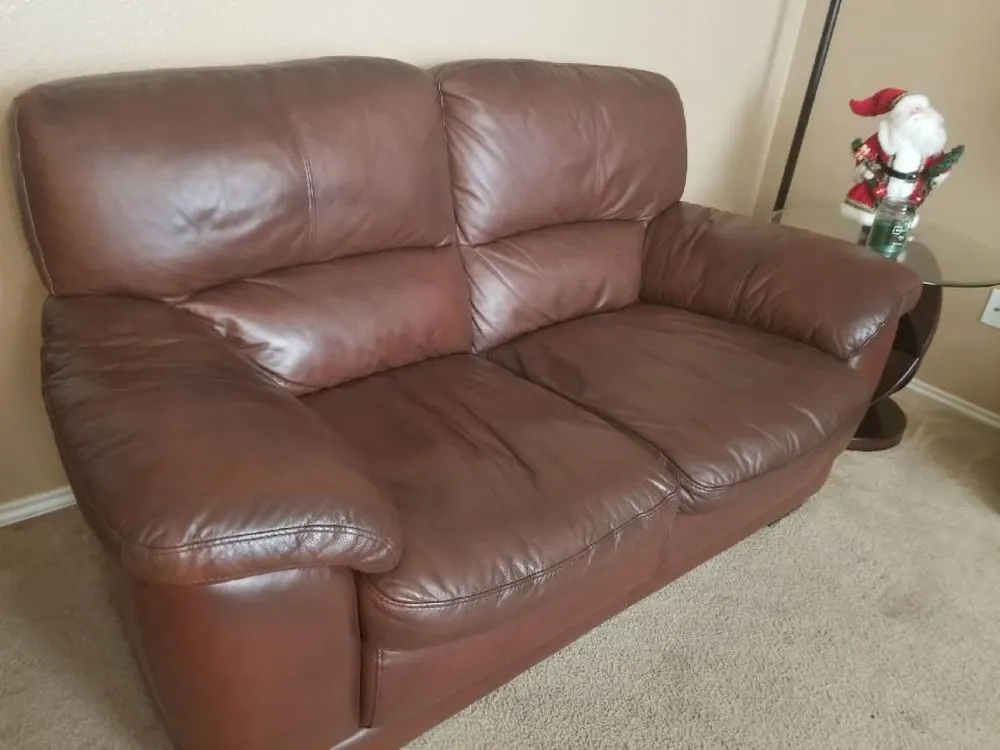
A leather recliner fails first in five places: the headrest, the armrests, the footrest fold lines, the seat cushion and the side panels. All five are surface repairs done in your living room anywhere in Dallas–Fort Worth, in one visit, and the chair is back in service the same evening. The one thing leather repair does not fix is the reclining mechanism, which is a separate trade.
Quick answer
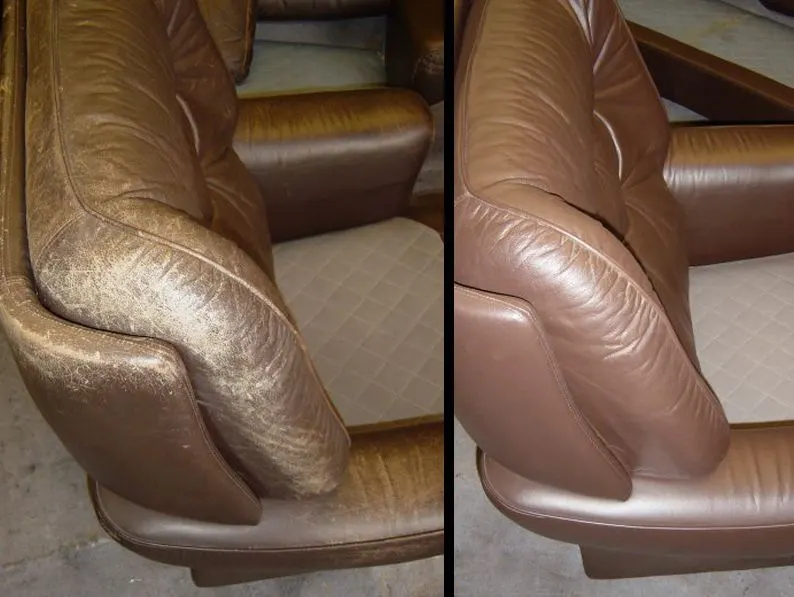
A leather recliner fails in five predictable places: the headrest darkens and loses color from hair and skin oils, the armrests wear through where hands rest, the footrest cracks along its flex lines, the seat cushion cracks and flattens, and the side panels get scuffed by the mechanism and by walls. All five are surface repairs that happen on-site — cleaned, repaired, recolored and sealed in your living room. The one thing leather repair does not fix is the reclining mechanism itself, which is a hardware job, not an upholstery job.
At a glance
| Headrest | Body oils darken and strip color — degrease, then refinish |
|---|---|
| Armrests | The highest-wear surface; recolored and sealed in place |
| Footrest | Cracks along flex lines; repaired with flexible fill |
| Seat | Cracking and flattening; surface repair plus foam if needed |
| Mechanism | Not an upholstery job — we say so from your photos |
Why recliners wear out faster than sofas
A recliner is the most-used seat in most houses, and it is the only one that moves.
It belongs to one person, who sits in exactly the same position every evening. A sofa spreads its use across three cushions and several people; a recliner concentrates all of it on one set of surfaces.
It also flexes. Every time the footrest comes up or the back goes down, the leather over the moving sections bends along the same lines. Leather handles load well and repeated creasing less well.
And it sits in the television corner, which in a Texas living room is often beside a window — so one arm and one side panel quietly fade for years while the rest keeps its color.
The result is a chair that looks ten years older than the sofa it was bought with, even though they are the same age and the same hide.
The good news is that this wear is concentrated, predictable, and almost entirely on the surface — which is exactly the kind of damage leather repair handles best.
Leather recliner repair in Dallas: the five wear points at a glance
Leather recliner repair comes down to five wear points and one thing that is not leather work at all. The table shows what each looks like on the chair and what the repair is.
Our leather recliner repair page covers the leather itself, recliner repair covers padding and fabric or vinyl chairs, foam cushion replacement covers a seat that has gone flat, and leather recoloring covers a sun-faded side. For the two most common failures in detail, read recliner headrest grease repair and recliner footrest crack repair; for why the dark patches form at all, greasy patches on headrests and armrests.
| Where | What you see | The repair |
|---|---|---|
| Headrest | A dark, sticky patch, later lighter in the middle | Degreased, the finish rebuilt, then refinished and sealed |
| Armrests | Color dulls and thins; the base shows at the front edge | Cleaned, rebuilt where rough, recolored to match and sealed |
| Footrest and fold lines | Creases that stay, then cracks along them | Rebuilt with maximum-flex fillers and finishes |
| Seat cushion | Surface cracking; a flat, low sit | Cracks filled and refinished; new high-density foam inside the existing cover |
| Side panels | Scuffs, pet scratches, one sun-faded side | Surface repair; the faded side recolored to match |
| Mechanism | Will not recline, jams, or the motor stops | Not upholstery work: a separate trade, and we say so from your photos |
How to read this table: the first five rows are leather and padding work done in place in one visit, and the chair is usable the same day. Only the last row is outside what we do, and it is the first thing to rule out before spending anything on the leather.
The headrest: oil damage, not age
The dark, slightly sticky patch where a head rests is the most common recliner complaint, and it is chemistry rather than wear.
Hair and skin oils are absorbed into the finish night after night. Over a few years they soften it, darken it, and finally lift the color off the hide — which is why the patch eventually turns lighter at its center while its edges stay dark.
Cleaning at that stage cannot fix it, because the oil is in the finish, not on it. Scrubbing harder just strips the weakened color faster.
The repair is a proper degrease that draws the oil out of the finish, then rebuilding the color and sealing the area so the next years of evenings land on the sealant rather than the hide.
We covered the full process in our guide to recliner headrest grease repair — it is the same failure on every brand, from budget chairs to premium ones.
Once repaired, a throw or a washable headrest cover is the unglamorous accessory that keeps hair and skin oils off the new finish.
Armrests: the highest-mileage surface in the house
Armrests take hands, forearms, drinks, remotes and the push of getting up — thousands of contacts a year on two narrow strips of leather.
The wear pattern is always the same: the color dulls, then thins, then the gray or tan base of the hide starts to show through at the front edge where palms push down.
Caught while the leather itself is still sound, this is a straightforward refinishing repair: cleaned, lightly filled where the surface has roughened, recolored to match the rest of the chair and sealed.
Caught late, after the surface has cracked open and the damage has reached into the hide, it becomes a bigger repair — still worth doing on a good chair, but no longer a quick one.
The difference between those two stages is usually about a year of looking at it and deciding it is not that bad yet.
Color matching matters more on armrests than anywhere else, because they sit in direct line of sight next to panels that still hold the original color.
The footrest: cracking along the flex lines
The footrest is the moving part, and its leather lives the hardest life on the chair.
Every cycle folds the material along the same lines, heels rest and rub on it for hours, and on many chairs it faces the window. Flexing, abrasion and UV on one panel.
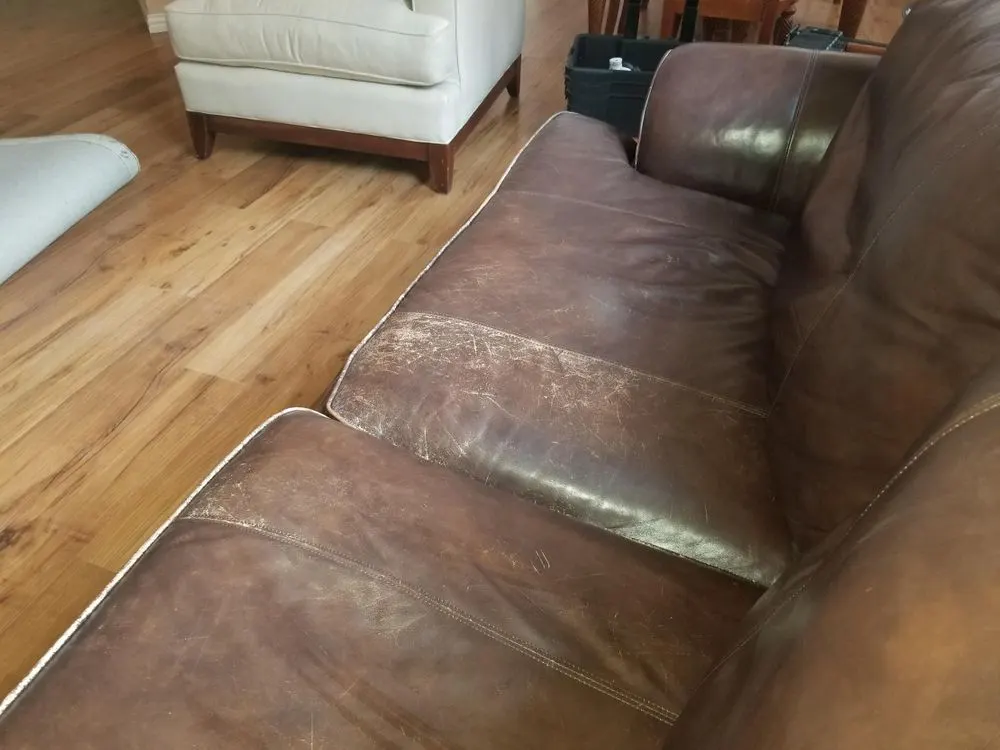
The first sign is deep creasing that no longer relaxes flat. Then the finish cracks along the crease lines, and finally the cracks open into the hide itself.
Repair uses flexible fill and coatings on exactly this kind of panel, because anything rigid would crack again the first evening the footrest came up.
Our article on recliner footrest crack repair goes through the stages in detail, including the point where a crack has become a tear and the repair changes shape.
A footrest repaired early is the smaller job. One repaired after the cracks reach the hide holds too, but it takes more work, so the window matters.
Seat, side panels, and the sun problem
The seat cushion ages the way car seats do: cracking across the sitting area from load, flexing, and the slow loss of the leather's plasticizers in a dry, air-conditioned room.
Surface cracking repairs well while it is still surface — filled, retextured, recolored. A flattened cushion is a foam job inside the existing cover, often done in the same visit.
Side panels collect a different kind of damage: scuffs from the mechanism, scrapes from walls and vacuum cleaners, and cat scratches on the corners. All standard surface repairs.
The sun-side panel deserves a mention of its own. A recliner that has sat beside a west window for years is visibly two colors, and recoloring the faded side back to match is routine work.
Moving the chair out of the window line, or filming the glass, is what stops the repair from being needed again — the fix and the cause are two different conversations.
None of this requires the chair to leave the house. Recliner work happens in place, in a living room, in hours.
The one thing leather repair does not fix
A recliner that will not recline is not an upholstery problem, and it is worth being clear about the boundary.
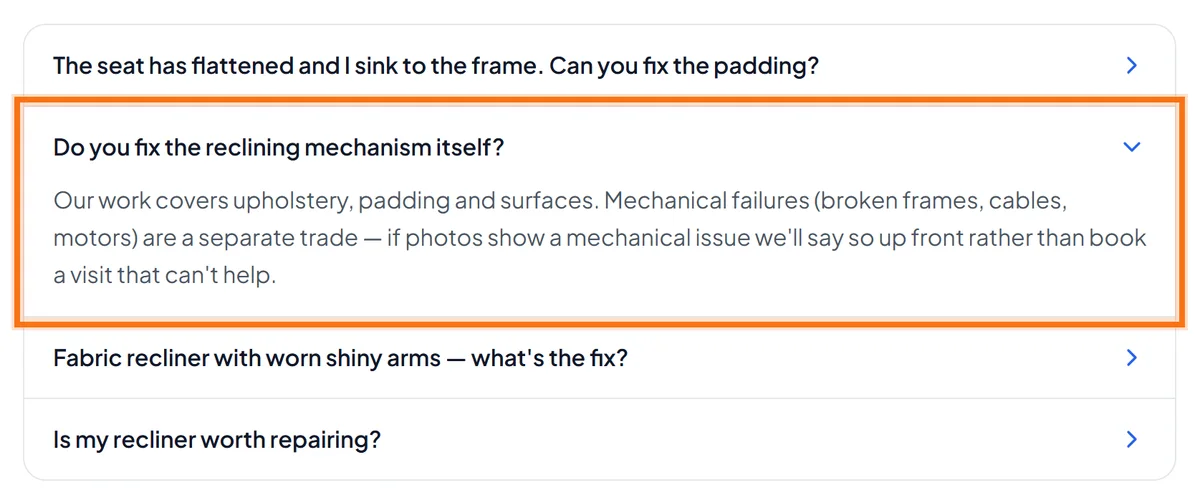
The mechanism — the springs, the linkage, the ratchet, the motor on a power chair — is hardware. When it jams, sags or stops, that is a furniture-mechanic or manufacturer-parts job, not a leather job.
What we can tell you honestly, usually from photos and a description before any visit is booked, is whether the slump you are feeling is mechanical or whether it is collapsed cushion foam, because the two feel similar from the seat and have very different fixes.
Foam is repairable from our side: new foam inside the existing leather covers restores the sit without touching the upholstery's appearance.
A broken mechanism on a chair with good leather is worth fixing at a furniture shop. Good mechanism, tired leather is our side of the line. Both failed at once on a budget chair is usually the end of the road.
That three-way split — mechanism, foam, surface — is the honest structure of every repair-or-replace decision on a recliner.
Power recliners, pets, and the other common questions
Power recliners change nothing about the leather work and one thing about the diagnosis: a chair that stops moving mid-recline is an electrical or motor fault, and the first check is the plug and the transformer under the seat before anyone worries about the mechanism.
The leather on a power chair wears exactly like the manual version, with one addition — the button panel area on the arm collects the same oil-and-contact wear as a headrest, and refinishes the same way.
Pets treat recliners as furniture with a built-in warm person, so cat scratches on the side panels and dog-claw scuffs on the seat edge are everyday recliner repairs.
Scratches that have not torn through repair the way any surface scratch does: the raised fibers are sealed down, the area is filled where needed, recolored and sealed. Trimming the fibers or picking at them beforehand makes the repair larger.
Chewed corners and piping are a different grade of damage — rebuildable, but closer to a panel repair than a touch-up.
The one honest warning on pets: a scratching spot gets re-used, so keep the cat away from the repaired corner while it cures and give it somewhere else to scratch.
Making the repair last
A repaired recliner goes back into the hardest service in the house, so the aftercare is worth the two minutes it takes.
The repaired areas should rest through the light-touch window you are given at the visit. Our repairs cure fast and a recliner is back in service the same evening, so that window is usually a few hours rather than days.
After that, the routine is the same one that would have prevented half the damage: a wipe-down with a barely damp cloth every few weeks, a professional cleaning about every six months for a chair in daily use, and conditioning every 6–12 months rather than monthly.
A washable cover on the headrest and a throw where the dog lands are the two accessories that keep oil and claws off the repaired areas.
If the chair sits by a window, either move it out of the direct line or film the glass — the recolored panel will fade on the same schedule the original did if the sun stays on it.
Handled that way, a refinished wear area lasts years, and the chair gets maintained in occasional small visits instead of being replaced.
Repair or replace: the recliner arithmetic
The decision on a recliner comes down to two checks: the mechanism and the leather.
The comfortable recliners people actually want to keep were often bought years ago and are no longer made in the same build quality.
Against that, every wear point on the list above — headrest, arms, footrest, seat, panels — can be repaired in one visit, and recliner replacement costs far exceed typical repair pricing.
The test is the leather itself. Press a thumb into an undamaged area: hide that flexes and returns supports repair everywhere it has worn. Hide that is stiff and cracking across the whole chair has aged out, and repairs on it are patches on a sinking ship.
Age of damage matters too: wear repaired in its first year is always a smaller job than the same wear after five.
Send photos of each worn area in daylight through the free photo estimate page, or text them to (972) 522-9763, and the honest answer — repair, partial repair, or save the money — comes back before any visit is booked. We repair recliners in place across Dallas–Fort Worth. For motorized chairs, read power recliner leather repair.
Questions we get asked next
- Is a leather recliner worth repairing in Dallas?
- If it is comfortable and the mechanism works, almost always. Headrest, arm, footrest, seat and panel wear are repaired in one visit at your home anywhere in Dallas–Fort Worth, and recliner replacement costs far exceed typical repair pricing. Photos get you a firm number to decide with.
- Can a worn leather recliner really be repaired instead of replaced?
- In most cases, yes. The five common failures — darkened headrest, worn armrests, cracked footrest, cracked seat and scuffed side panels — are all surface repairs done on-site. The deciding factor is the hide itself: if undamaged areas still flex and return under a thumb, repair holds; if the whole chair is stiff and cracking, the leather has aged out.
- How is the dark greasy patch on the headrest fixed?
- The area is professionally degreased to draw the absorbed hair and skin oils out of the finish, then recolored and sealed. Cleaning alone cannot fix it because the oil sits inside the finish, and scrubbing strips the weakened color faster. After the repair, a washable cover is what keeps it from returning.
- My recliner sags when I sit in it. Is that a leather problem?
- It is one of two things: collapsed cushion foam, which is repaired by fitting new foam inside your existing leather covers, or a worn mechanism, which is a furniture-hardware job rather than an upholstery one. Photos and a description usually tell us which you have before a visit is booked, and if it is mechanical we say so up front.
- Does the recliner need to go to a workshop?
- No. Headrest, armrest, footrest, seat and panel repairs all happen in place at your home — the chair never leaves the living room, power units stay plugged in, and it is back in service the same evening. The only recliner problem that needs a shop is a broken reclining mechanism, which is not leather work.
- recliners
- leather repair
- furniture