Can I Fix a Spot Where the Color Has Come Off My Leather Car Seat in Dallas?
A pale spot on the driver's bolster or the seat edge is worn finish, not ruined leather, and it is one of the smallest car seat repairs there is. Here is what the spot is, how it is recolored to match the rest of the seat, how long that lasts, when a DIY dye kit is worth trying, what the site says about price, and what to do with the seat until it is fixed.
Quick answer
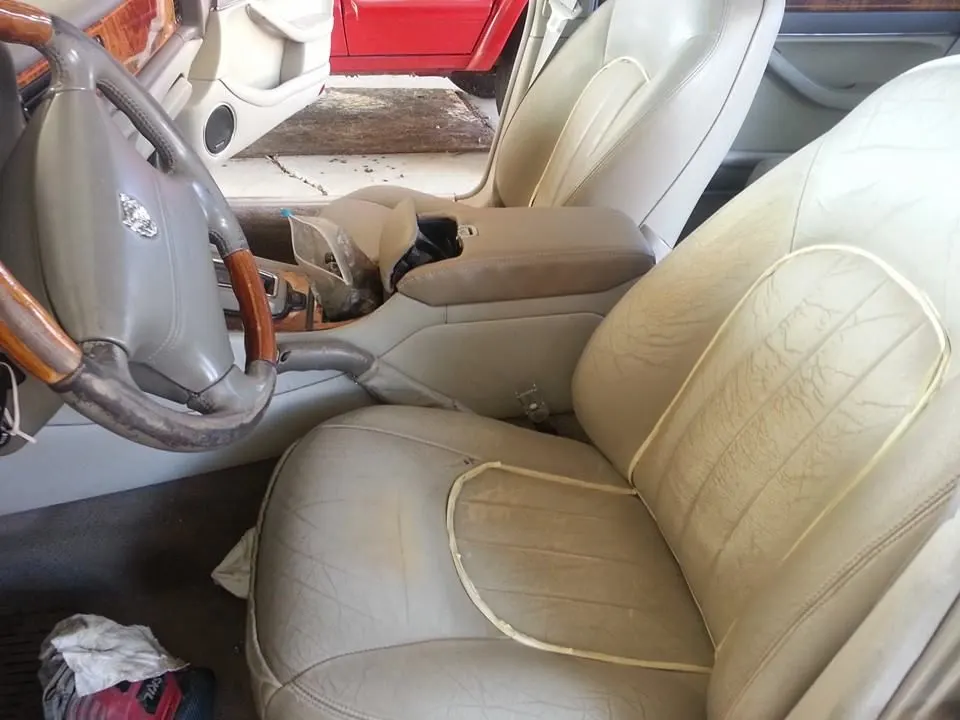
Yes. A spot where the color has come off a leather car seat can be fixed as long as the leather under it is still sound, and it is one of the smallest car seat repairs. The spot is cleaned and degreased, leveled if it has roughened, recolored with pigment mixed against your own seat, blended across the panel and sealed with an abrasion topcoat. Leather Repair Dallas does this where the car is parked, anywhere in Dallas–Fort Worth, and you drive the car the same day. The estimate is free, from photos.
At a glance
| Can it be fixed? | Yes, while the leather under the spot is still sound |
|---|---|
| What the repair is | Degrease, level, recolor to your seat, blend, seal with a topcoat |
| Color match | Mixed on-site against your actual seat, not from a chart |
| Price | Small single-area repairs start around $75; firm price from photos |
| Until then | Stop scrubbing the spot, and sit down before you swing your legs in |
Can a spot where the color has come off a leather car seat be fixed in Dallas?
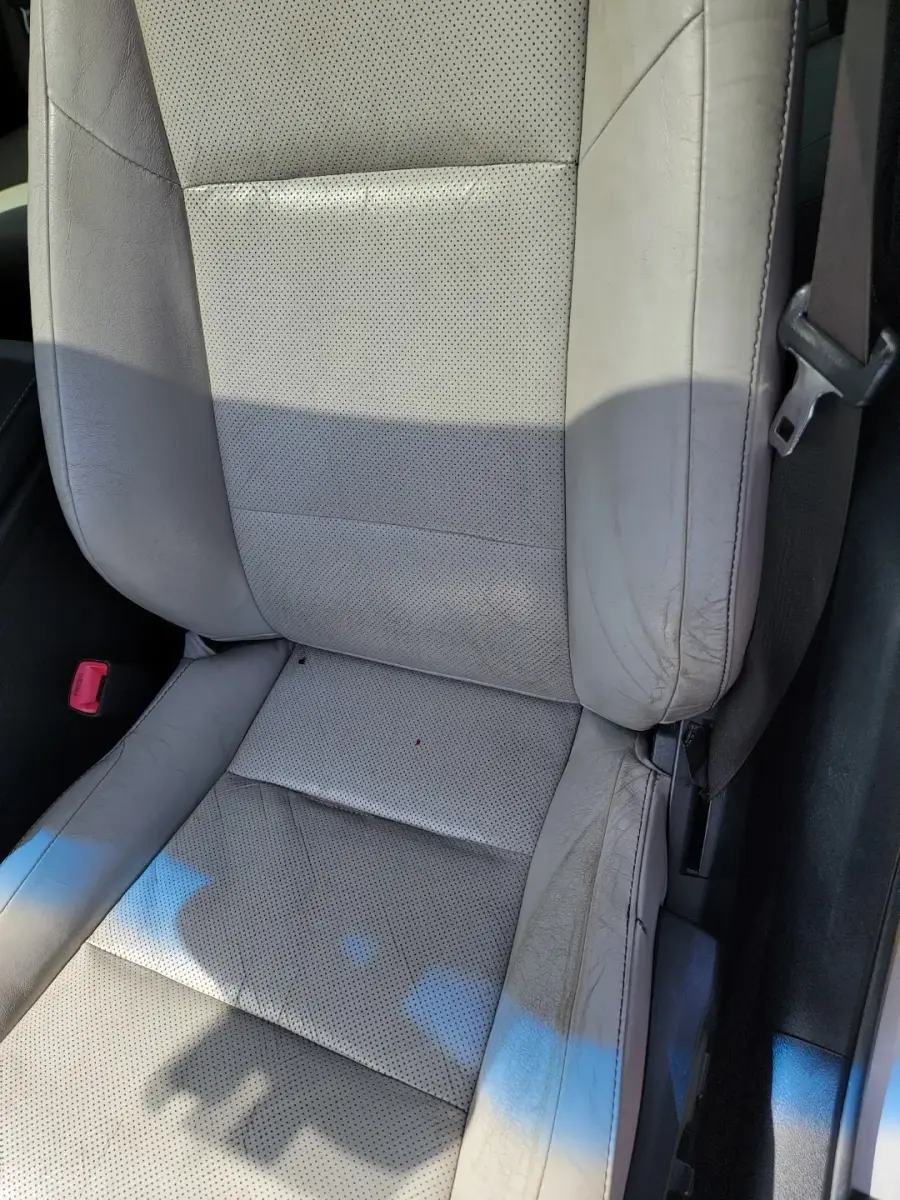
Yes. People ask it exactly this way: can I fix a spot where the color has come off my leather seats? On a car seat the answer is almost always yes, because what you have lost is a coating, not the leather. Car leather is finished in layers: the hide, a pigment layer that gives the color, and a clear topcoat that protects it. A pale spot means the top two have worn through in one place. The hide under them is usually fine.
That is why this is a small job. The worn area is prepared, the color is put back and sealed, and the seat stays in the car. It is on the damage list of our leather car seat repair page, where worn, pale entry bolsters sit beside cracks and tears.
Where the spot is tells you a lot about what caused it and what the repair involves. Find your spot in the table.
| Where the spot is | What usually caused it | The repair |
|---|---|---|
| Outer bolster of the driver's seat (the raised side you slide over) | Your full weight sliding across a curved edge, twice a trip | Bolster cleaned, leveled, recolored and sealed with an abrasion topcoat; usually the whole bolster is blended |
| Front or outer edge of the seat cushion | Legs and clothing rubbing the same strip on every entry and exit | Edge refinished and blended back to the nearest seam |
| Backrest side bolster, at hip or shoulder height | Belt buckles, rivets on jeans, a phone or keys in a back pocket | Worn patch leveled if it has roughened, then recolored and sealed |
| Steering wheel rim, console lid or door armrest | Hand oils, sunscreen and grip friction on the most-touched leather in the car | Degreased, worn zones rebuilt, color matched to the interior, sealed with a grip-rated topcoat |
How to read this table: every row is the same kind of repair, a refinish of the worn area, and none of them means a new seat cover. If your car matches more than one row, the seat and the wheel or console are normally done in one visit under one mixed color, so the repaired areas match each other: see steering wheel repair and auto leather repair.
Why the color wears off in one spot and not the whole seat
Color loss on a car seat follows friction. The clear topcoat takes the rubbing, and it wears through exactly where contact is heaviest. Once it is gone, the exposed pigment comes away on clothing, hands and cleaning cloths, and the paler, undyed tone of the hide shows. Our guide on why color rubs off leather covers that mechanism for sofas and cars alike.
On most cars the heaviest contact is the outer bolster of the driver's seat. You sit onto the edge, then slide across it under your full weight, every time you get in and out. Why the driver-side bolster wears first walks through the stages, from a dull finish to a pale band to a split.
Dallas speeds it up. A Texas summer puts the cabin at around 140 degrees, with UV coming through the side glass onto the same panel. Heat dries and stiffens the finish, and a stiff finish wears away under friction instead of flexing.
First, check what kind of spot it is
Not every pale or odd-colored patch is worn color, and the fix depends on which it is. Two minutes of checking saves a wrong repair.
1. Look at where it is. Wear sits where you touch the seat. Sun fading sits where the light lands, usually the top of the backrest and the shoulders, and covers a whole panel.
2. Do the white-cloth test once. Rub a hidden part of the pale area gently with a dry white cloth. Color on the cloth means the topcoat is gone and the pigment is exposed. No color means the finish is intact and the problem is fading or dirt. Do it once, then stop: every rub takes more color off.
3. Run a fingertip over it. Smooth and pale is color loss only. Rough, with fine lines you can feel, means the leather has started to crack and needs filling before color.
One more thing changes the products, not the answer: many cars sold with leather seats have vinyl bolsters and sides. Is my car seat leather or vinyl shows how to tell.
| What you see | What it is | What fixes it |
|---|---|---|
| Smooth pale spot where you slide in; color comes off on a white cloth | Topcoat worn through, pigment exposed | Spot refinish: recolor and seal the panel |
| Pale spot that feels rough, with fine lines | Color loss plus early cracking | Cracks filled with flexible compound, re-grained, then recolored and sealed |
| Whole panel lighter, mostly where the sun lands; nothing on the cloth | UV fading | Recoloring of the faded panels |
| Blue, gray or dark patch on a light seat | Dye transfer or a stain on top of the finish | Stain treatment or recoloring, depending on how far the dye has gone in |
| Split leather, or padding showing | The material itself has failed | A structural repair, or a new panel from a trim shop if it is worn thin all over |
How to read this table: the first two rows are the subject of this article and both are routine. The last row is a different job. If you cannot tell which you have, send a photo of the spot and one of the whole seat.
How a worn spot is recolored on a car seat
The work is a refinish of the worn area, done with the seat in the car. These are the steps, in order.
1. Cleaning and degreasing. Car interiors collect sunscreen, hand lotion, hand sanitizer and protectant sprays, and no finish bonds over them. On a worn spot this stage matters most, because oil has reached exposed pigment.
2. Stabilizing the edge. The finish around the spot is keyed where it is sound and taken back where it has broken down, so the new color has a solid edge to blend into.
3. Leveling. Where abrasion has roughened the surface, flexible filler goes on in thin layers, and grain is pressed into the last layer so the texture continues across the repair.
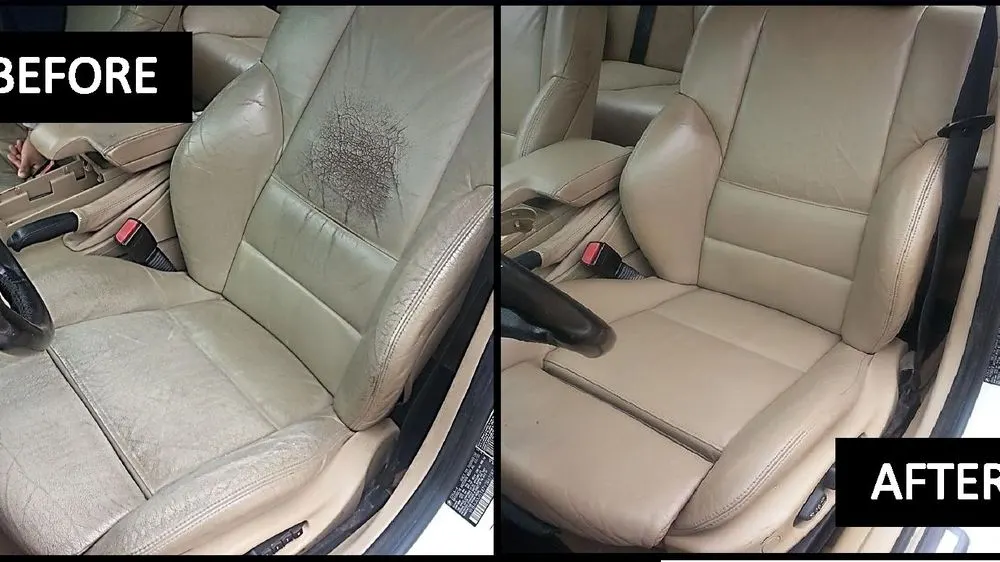
4. Color. Pigment is mixed on-site against an undamaged part of your own seat, tested, then applied in thin coats and feathered well past the worn area. On a bolster that usually means the whole bolster.
5. Topcoat. An abrasion topcoat seals the color and is matched to the original sheen. This is the layer that wore away in the first place, and without it new color rubs off again.
Perforated, heated and ventilated seats are routine: the holes are kept open through the fill and the finish, and the heat and cool functions keep working. The color method is the one on our leather recoloring page.
Want to know what your spot would involve? Text a photo to (972) 522-9763 or use the free photo estimate form. You get a firm price back before anyone visits.
Will the repaired spot match the rest of the seat?
Nobody wants to trade a pale spot for a dark patch. Two things decide the match: where the color comes from, and how far it is blended.
The color comes from your seat. We match to the actual leather in front of us, and factory color references by seat code help confirm the mix. A code on its own describes the car as it left the plant, and a seat that has spent years in Texas sun has shifted since. How factory interior color is matched on an older vehicle explains why the mix is built on the car, and on-site color mixing shows how it is tested before it touches a visible surface.
Then the repair is blended. **A perfectly matched dab on a slightly aged panel still shows as a dab, so the color is feathered across the panel to a seam, where the eye expects a break.** That is why a spot the size of a coin is often quoted as a bolster. Sheen is matched as well, because a repair with the right color and the wrong gloss shows from the driver's door.
Light two-tone interiors and perforated panels beside solid ones are harder to match. That does not rule a repair out; it is a reason to send a photo of the whole seat and not only the spot.
Will the new color last, or wear off again?
A refinished spot on sound leather does not have a countdown of its own. With normal use and basic care, a professionally refinished surface wears like a factory finish: years, not months. On a bolster it wears at the same rate as the leather around it.
What shortens it is what caused the spot in the first place: sliding across the bolster on every entry, full sun, and harsh cleaners or household wipes. How long a leather repair lasts lists the reasons repairs fail early.
On the day, the car is usable. Finishes cure to handling quickly, so you drive the same day, with a specific light-touch window given at the visit, usually a few hours. Avoid sliding across the repaired bolster in those first hours. Dallas summer humidity can stretch a cure, so the time is confirmed at the visit. When leather is safe to use again has the detail.
DIY leather dye or a repair kit vs a professional refinish
Sometimes a kit will do. On a small, flat, low-flex area of a dark, uniform interior, a kit color can work.
A car seat spot is rarely that. The bolster and the seat edge flex and take friction on every trip, and kit color applied without stabilizing the worn edge and without a topcoat tends to lift within months. A generic kit shade is also a near-match, and a near-match looks wrong in daylight.
A kit that fails has a cost: cured residue has to be removed before a proper repair can start. Using a leather product on a vinyl bolster, or the reverse, is the other common way kits disappoint.
| What differs | DIY dye or color kit | Professional refinish |
|---|---|---|
| Where it can work | A small, flat, low-flex area on a dark, uniform interior | Bolsters, seat edges and other spots that flex and take friction |
| Color | A generic shade from the kit | Pigment mixed on-site against your own seat |
| Preparation | Usually a wipe; oils and old dressings stay under the color | Cleaned and degreased, worn edge stabilized, surface leveled |
| Blend | The spot only, so the edge of the color shows | Feathered across the panel to a seam |
| Seal | Often none | Abrasion topcoat matched to the original sheen |
How to read this table: if the spot is on a flat, dark panel and you accept a near-match, a kit may be enough. If it is on the bolster or a light interior, get the free photo price first, so you know what the professional job costs before deciding.
What it costs to fix a worn spot in Dallas–Fort Worth
Small, single-area leather repairs start around $75, and a worn spot of color on otherwise healthy leather is that kind of job. It is the only number we publish, because everything above it depends on the size of the area and the leather around it.
Your real number comes from photos. The estimate is free and firm: the price quoted from photos is the price, unless the damage turns out to be materially different in person, which is rare and is discussed before any work starts. A seat in Fort Worth, Frisco or Mansfield pays the same as one in Dallas, with no distance surcharge.
Three things move the price of a spot: how much of the panel needs color, whether the surface has started to crack, and whether anything else is done in the same visit, because setup and color mixing are shared. The full breakdown is in what leather car seat repair costs in Dallas–Fort Worth.
For scale: one seat repair typically costs a small fraction of a replacement seat cover, and nothing has to be removed from the car.
What to do with the spot until it is repaired
A spot with no topcoat keeps growing. None of the steps below cost anything, and each one keeps the repair small.
1. Stop cleaning the spot. A cleaner on exposed pigment takes more color off with every pass.
2. Do not condition it either. Conditioner on exposed pigment can lift it, and it cannot restore a coating that is gone.
3. Keep hand sanitizer, alcohol wipes and all-purpose sprays off the seat. They dissolve the finish that is left.
4. Change how you get in. Sit down onto the seat first, then swing both legs in. This removes most of the slide across the bolster.
5. Take keys and your phone out of your back pocket, and watch the belt buckle on the driver's side.
6. Park in shade where you can. Cooler leather flexes; hot, stiff leather wears.
7. Photograph it now, in daylight with the door open and no flash, so there is a record of how big it was.
Why Dallas–Fort Worth drivers call Leather Repair Dallas for a worn spot
Leather Repair Dallas, legally Dallas Leather Reconditioning Specialist, is owned by technician Francisco Avila, who has worked in leather repair and restoration since 2005. The service is mobile: the work is done where the car is parked, in your driveway, your office lot or a parking garage, anywhere in Dallas–Fort Worth. Nothing is dropped off and the seat stays in the car.
For a worn spot, three things matter most: the color is mixed on-site against your seat, the full panel is refinished so there is no patchy touch-up look, and the car is drivable the same day. If the photos show a seat that is past a refinish, you hear that before you spend anything.
To get a firm price, send three photos: the whole seat from the open door, the spot square-on from about a foot away, and the same panel on the passenger seat. Add the year, make and model, and anything already used on the spot. Photos for a leather repair estimate shows the angles.
Text them to (972) 522-9763 or send them through the free photo estimate form. Hours are Monday to Friday 9 to 5 and Saturday 10 to 4, and most appointments are scheduled within days of estimate approval.
Questions we get asked next
- Can I fix a spot where the color has come off my leather seats?
- Yes, if the leather under the spot is still sound. The spot is cleaned and degreased, leveled if needed, recolored with pigment mixed against your own seat, blended across the panel and sealed with a topcoat. On a car seat this is one of the smallest repairs.
- Can you repair just the spot, or does the whole seat need recoloring?
- Just the affected panel in most cases. The color is feathered past the worn area, usually across the whole bolster or to the nearest seam, so no edge shows. The whole seat is recolored only when several panels have worn or faded.
- Will leather conditioner bring the color back?
- No. Conditioner can darken the spot for a short time, but it cannot replace pigment or a worn topcoat, and on exposed pigment it can lift more color. Only recoloring puts the color back.
- Does a leather dye pen or touch-up kit work on a car seat?
- On a small, flat, low-flex area of a dark, uniform interior it can. On a bolster or seat edge the leather flexes and takes friction, and kit color applied without preparation and a topcoat tends to lift within months. Kit residue also has to be removed before a proper repair.
- How much does it cost to fix a worn spot on a leather car seat in Dallas?
- Small single-area repairs start around $75. Your exact price comes from photos, free, and it is firm. Fort Worth and the suburbs pay the same as Dallas, with no distance surcharge.
- How soon can I drive the car after the spot is recolored?
- The same day. Finishes cure to handling quickly, and we give you a specific light-touch window at the visit, usually a few hours. Avoid sliding across the repaired bolster during that time.
- My seats are perforated or heated. Can the spot still be recolored?
- Yes. Perforated panels take extra care: the holes are kept open through the fill and the finish. Heated and ventilated seats keep working after the repair.
- car seats
- color loss
- recoloring
- bolster
- dallas